
Professional standards, training and membership.







Professional standards, training and membership.
Ethics in IEMT Practice: Lesson 3.2
Communication and Therapeutic Boundaries with Young Clients
Welcome
In this lesson, we explore how to build safe, respectful, and effective therapeutic relationships with children and young people. Strong communication and clear boundaries are key to supporting change work in a way that is both ethical and developmentally appropriate.
Learning Objectives
By the end of this lesson, you will be able to:
- Communicate effectively with young clients at different developmental stages.
- Set and maintain appropriate therapeutic boundaries.
- Understand how to adapt IEMT practices for younger clients.
- Recognise boundary-pushing behaviours and respond appropriately.
Communicating with Young Clients
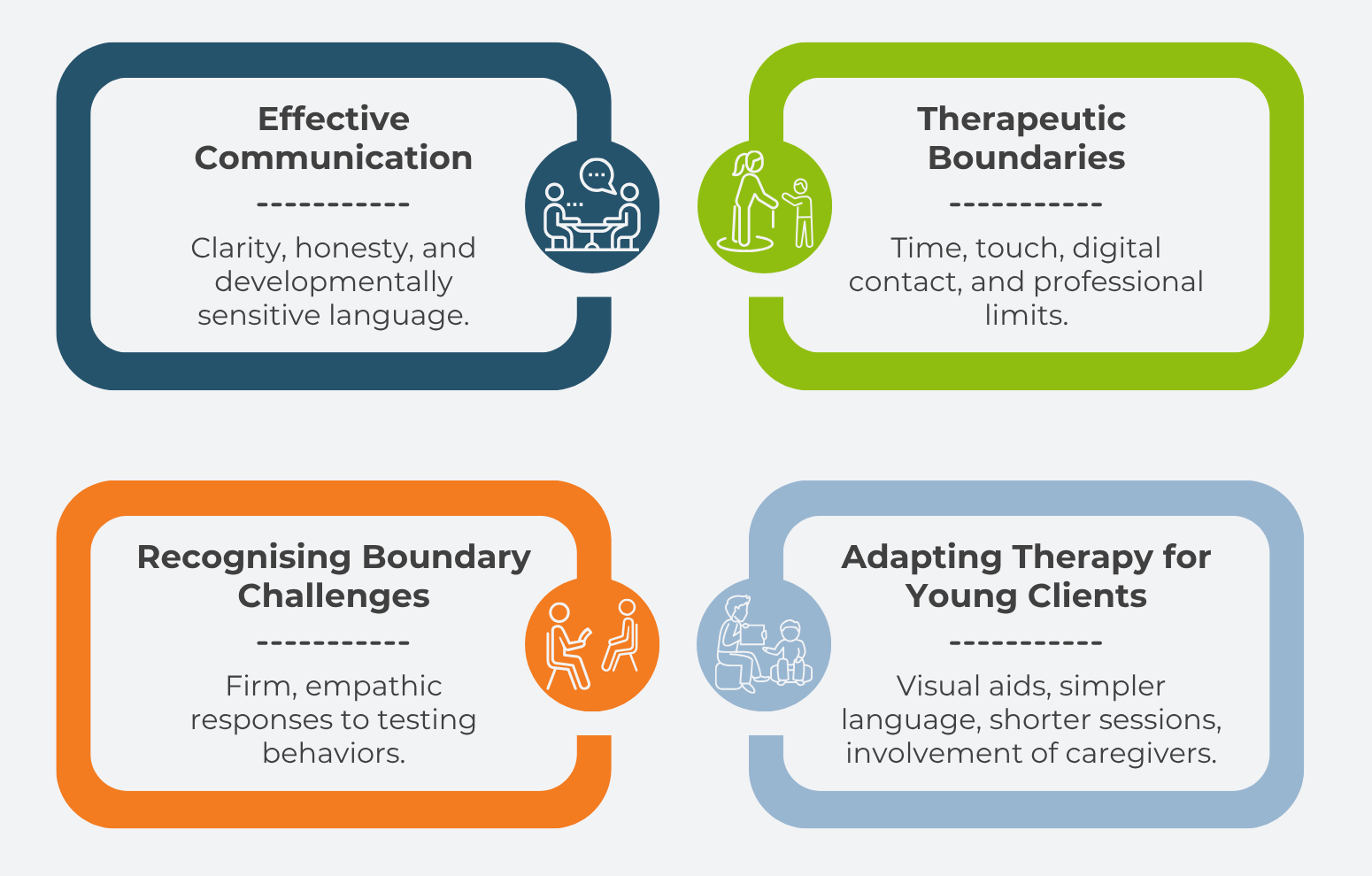
Effective communication with young clients in IEMT practice demands a deliberate synthesis of clarity and developmental sensitivity, as the therapy’s reliance on verbal exchange and emotional processing must be tailored to the cognitive and emotional capacities of children and adolescents.
The brevity and intensity of IEMT sessions necessitate that practitioners distil complex concepts—such as the role of eye movements in emotional change—into language that resonates with a young person’s lived experience without diluting the therapeutic intent.
This process involves simplifying terminology and embedding explanations within relatable contexts, such as school or play, to bridge the gap between abstract technique and concrete understanding. By fostering an interactive dialogue that invites questions and validates the client’s perspective, practitioners uphold the ethical principle of autonomy, ensuring that young clients feel actively engaged rather than passively directed.
Children and teenagers require communication that is clear, honest, and age-appropriate.
Good communication includes:
- Using language they understand without being patronising.
- Checking for understanding and encouraging questions.
- Listening actively and with empathy.
- Being honest about what IEMT is and how it might help.
Adolescents, in particular, value autonomy and respect. Avoid lecturing or taking a parental tone.
Maintaining Boundaries in Youth Therapy
Maintaining therapeutic boundaries with young clients in IEMT practice serves as a critical mechanism for establishing a secure relational framework, particularly given the potential for rapid emotional connection inherent in the therapy’s conversational approach.
Children and adolescents, whose prior experiences of boundaries may vary widely, often rely on the practitioner to model consistency and predictability—qualities that can enhance their sense of safety and trust.
In IEMT, where the focused nature of sessions might otherwise blur the line between professional support and personal rapport, practitioners must vigilantly uphold limits around time, touch, and digital interaction.
This vigilance not only mitigates the risk of dependency or misinterpretation but also aligns with the principle of non-maleficence, protecting young clients from the confusion or harm that could arise from an overly permeable therapeutic relationship.
Boundaries help young clients feel safe. They also model healthy adult relationships.
Key boundaries to uphold:
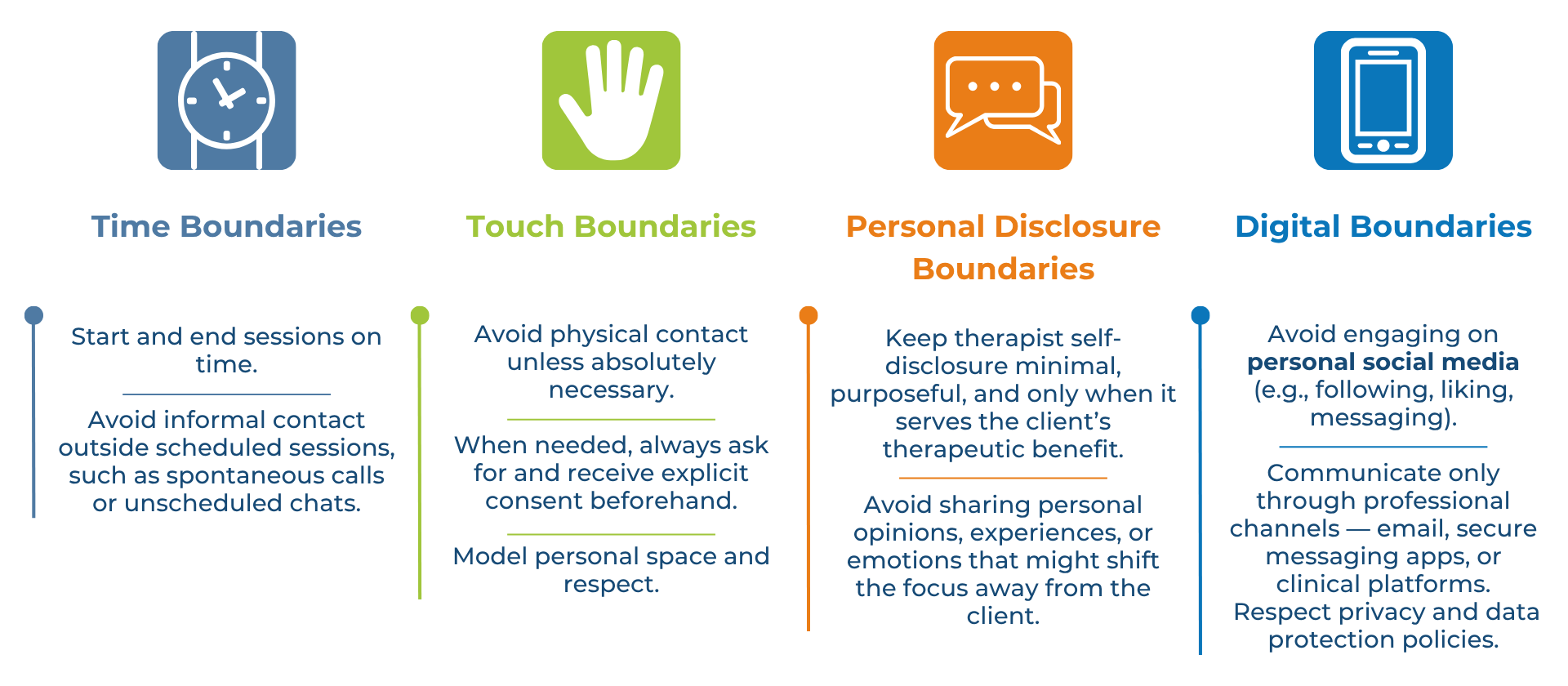
Be especially cautious with clients, who may idealise the therapist or seek friendship.
Recognising and Managing Boundary Challenges
Boundary challenges in IEMT practice with young clients often emerge as a reflection of their developmental stage or past relational dynamics, requiring practitioners to respond with both firmness and empathy.
Adolescents, in particular, may test limits to assert independence or seek validation, behaviours that can manifest as requests for informal contact or attempts to shift the therapeutic dynamic toward friendship.
In the context of IEMT’s rapid pace, such challenges can intensify quickly, necessitating a proactive stance that reinforces the therapeutic frame without alienating the client.
Practitioners must draw on supervisory support to navigate these moments, ensuring that their responses—whether a gentle redirection or a documented escalation—preserve the integrity of the process.
This approach safeguards the client’s well-being and reinforces the ethical mandate of justice by maintaining equitable treatment across diverse client presentations.
Young clients may test boundaries, especially if they have experienced inconsistent caregiving or trauma.
Watch for signs such as: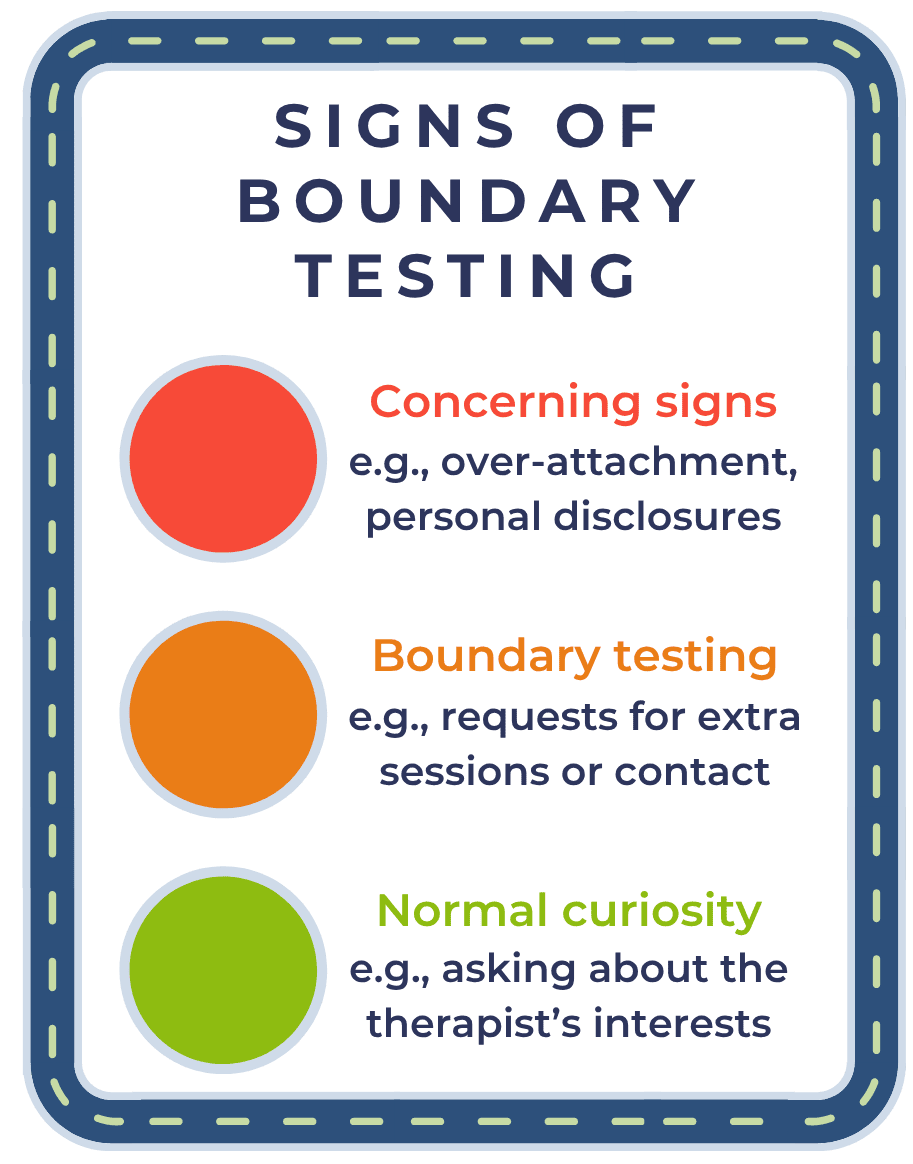
- Wanting extra contact outside sessions.
- Become excessively attached or dependent.
- Sharing intimate or inappropriate content.
- Trying to befriend or impress the therapist.
Respond by:
- Gently reaffirming the therapeutic frame.
- Consulting a supervisor if unsure.
- Keeping written records of concerns or incidents.
Adapting IEMT for Younger Clients
Adapting IEMT for younger clients involves strategically recalibrating the therapy’s structure to accommodate their developmental needs, ensuring that its change-oriented potential remains accessible without overwhelming their capacities.
The use of visual aids or concrete metaphors—such as likening emotional patterns to a “map” that can be redrawn—can anchor abstract processes in a tangible framework, enhancing comprehension and engagement.
Similarly, incorporating frequent breaks or shorter session segments acknowledges the limited attention spans or emotional stamina of younger clients, aligning with the principle of beneficence by prioritising their comfort and efficacy.
These adaptations require practitioners to balance fidelity to IEMT’s core methodology with flexibility, a task that demands both technical skill and ethical discernment to ensure that the therapy remains a supportive rather than coercive experience.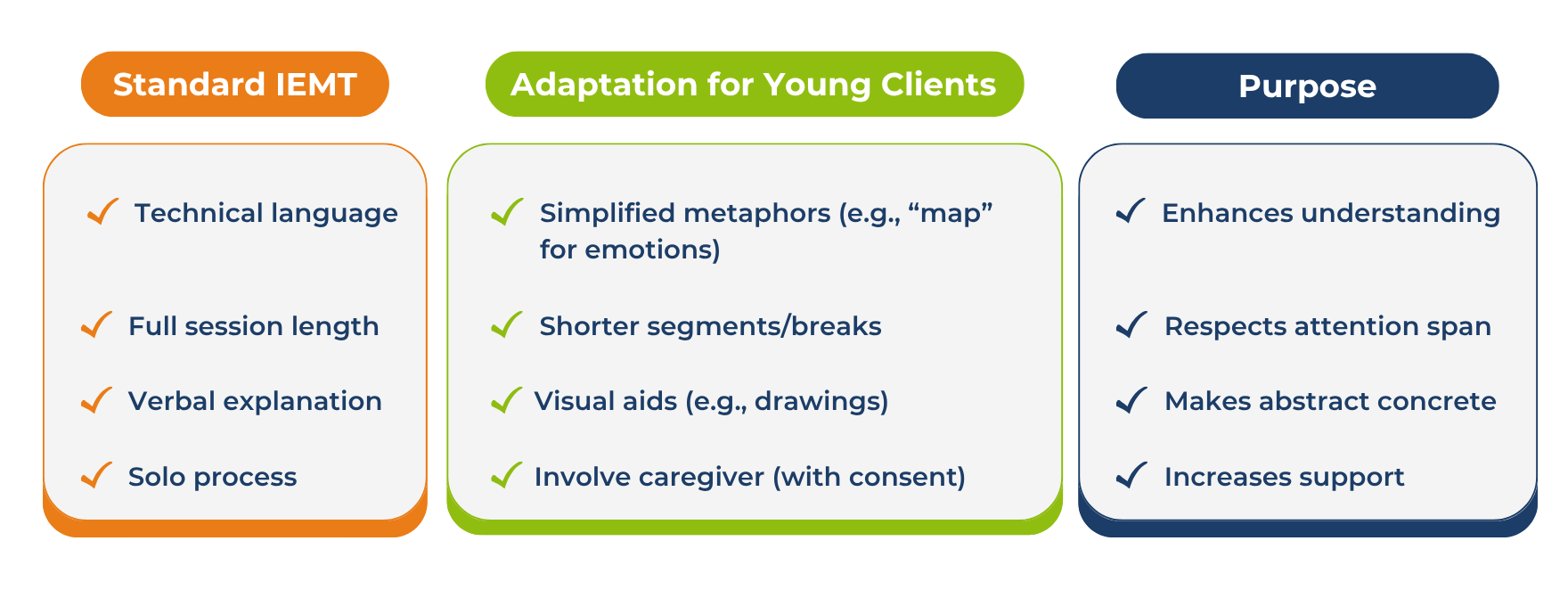
While IEMT is a structured, change-focused modality, some adaptations may help with younger clients:
- Use visual aids or simplified metaphors.
- Take breaks more frequently if needed.
- Avoid technical language or overly abstract concepts.
- Involve a parent or caregiver when appropriate (with consent).
Always check that the client feels safe and supported during the process.
Self-Reflection Exercise
Think about a recent or hypothetical session with a young person:
- How would you explain IEMT in a way that makes sense to them?
- What boundaries would you need to establish clearly?
- What adjustments might you make to support their engagement and understanding?
Write down 2–3 strategies you would use.
Key Takeaways
- Communication should be clear, age-appropriate, and respectful.
- Strong boundaries promote safety, trust, and emotional containment.
- Adaptations to IEMT may be needed to meet the developmental needs of younger clients.
Next Steps
In Lesson 3.3, we’ll explore how to handle disclosures and reporting obligations, including when and how to involve other professionals or services.
This ethics series is produced by The Association for IEMT Practitioners and is intended for professional development purposes. Always adhere to local laws, safeguarding requirements, and your professional judgement when applying ethical principles in practice.