
Professional standards, training and membership.







Professional standards, training and membership.
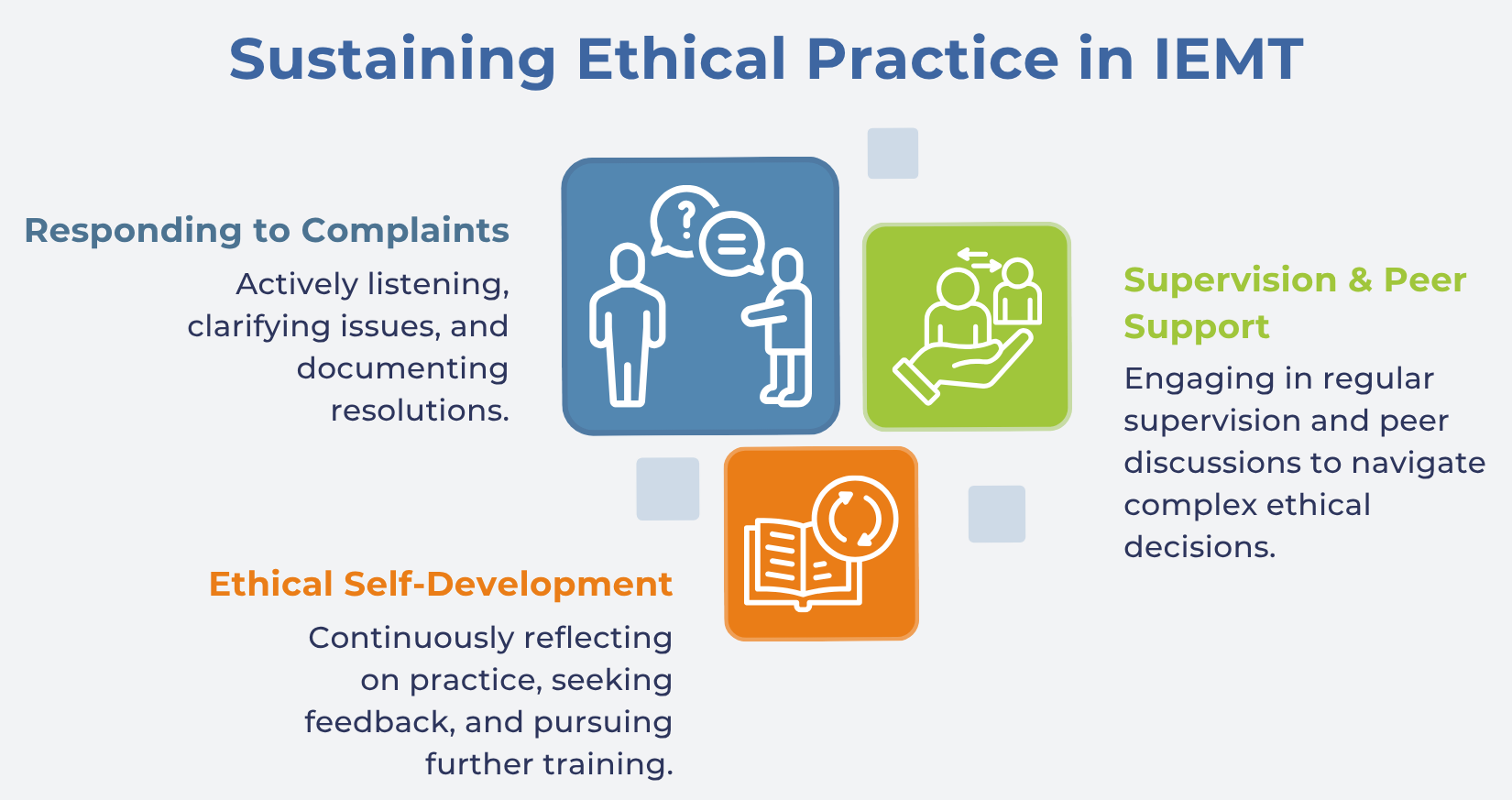
Ethics in IEMT Practice: Lesson 4.3
Complaints, Supervision and Ongoing Ethical Development
Welcome
This lesson looks at how to keep your ethical standards up over time: how to respond when a client is unhappy or makes a complaint, how supervision supports good decisions, and how to keep learning and look after yourself. Ethical practice is not something you achieve once. It grows through reflection, feedback and development.
Learning Objectives
By the end of this lesson, you will be able to:
- Respond to a client’s concern or complaint openly and professionally.
- Explain how the Association handles complaints, and what fairness you can expect if a complaint is made about you.
- Describe what supervision is for, and how to use it well.
- Plan continuing professional development that responds to your own needs.
- Recognise when your own wellbeing may affect your practice.
Responding to a complaint or concern
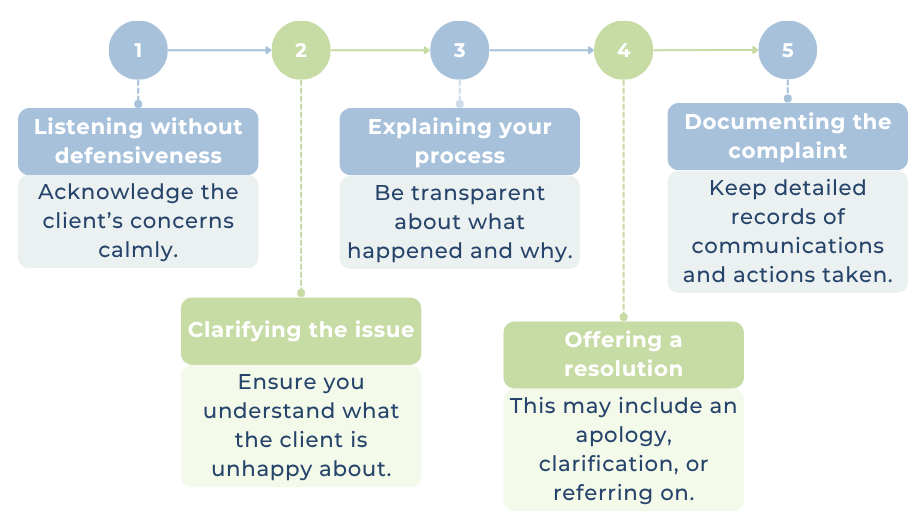
Complaints are uncomfortable, but they are also a chance to put things right and to learn. The way you respond often matters more to the person than the original problem. The picture shows the five stages of a professional response.
| Do | Do not |
|---|---|
| Listen calmly, and thank the person for telling you. | Get defensive, argue, or blame the client. |
| Ask what happened and what outcome they want, until you understand the issue. | Assume they are wrong, or that it is minor. |
| Explain what happened and why, honestly and in plain language. | Make excuses, or hide behind jargon. |
| Offer a proportionate response: an apology, an explanation, a correction, a refund, or a referral on. | Offer something you cannot deliver, or pressure them to accept. |
| Keep a record of every communication and every action. | Alter or delete records. |
| Tell the client that they can complain to the Association, and how. | Discourage a complaint, or use confidentiality as a reason to stop them. |
The last point matters. The Association’s Standards of Competence say that you must not “alter records, discourage complaints or use confidentiality language to prevent lawful reporting”. Good practice is to have a short written complaints procedure of your own and to share it with clients at the start, including the Association’s contact details. If the client has been harmed, or something has gone wrong, the Duty of Candour applies as well (Lesson 4.4).
If a complaint is made to the Association about you
The Association has a Complaints Officer who is the first point of contact. Anyone who receives, requests or is affected by an IEMT service may complain, and so may someone acting on their behalf. A complaint can be about the quality of a service, boundaries, confidentiality, misleading advertising or qualifications, conduct on social media, or any breach of the Association’s policies. If you are on the receiving end, expect the process in the Membership Disciplinary Policy to be fair. In outline:
- The Complaints Officer acknowledges the complaint, checks membership and jurisdiction, and considers whether there is any urgent safety or safeguarding issue.
- The matter may be closed, redirected, resolved informally or referred for formal investigation. Informal resolution is not used where there is serious harm, abuse, dishonesty or a continuing risk to the public.
- You receive the substance of the allegations and have a reasonable period to respond, normally in writing. You can point to evidence or witnesses.
- The investigator looks at evidence that supports and evidence that undermines the allegation. Facts are decided on the balance of probabilities.
- A decision is made, with reasons. Outcomes range from no case to answer, through advice, education or supervision, formal warnings and conditions, to suspension or removal from membership.
- You may appeal in writing within 21 calendar days on specified grounds: serious procedural unfairness, significant new evidence, a decision not reasonably supported by the evidence, or a clearly disproportionate sanction.
An allegation is not a finding. The Association may use temporary, precautionary measures to protect clients while it looks into a case, but these do not mean it has decided that the allegation is true. The Association does not replace the police, the courts, safeguarding services or health regulators, and where those agencies are involved their work comes first.
Stay calm and take a day to think before replying. Do not contact the person in a way that could feel like pressure. Tell your insurer promptly, because your policy may require it. Keep and protect all records, without changing anything. Get support from your supervisor or a trusted colleague. Cooperate honestly with any review. For complaints about the Association itself, the Grievance Policy applies.
Supervision and peer support
Supervision is a cornerstone of ethical practice. It gives you a safe and confidential space to look at your work, an outside view on your decisions, and support when work is hard. Used well it helps with:
- reflecting on challenging cases and your own reactions to them;
- working out what to do when something is unclear: risk, boundaries, consent or competence;
- spotting the edge of your competence, and when to refer on;
- keeping to the technique as you were trained to use it;
- preventing burnout and keeping your wellbeing in view.
The Association strongly encourages supervision, and does not make it compulsory. Its Standards of Competence say that you should have regular supervision that is proportionate to your experience, workload, client group, risk and complexity, and that you should seek extra supervision promptly if you have an ethical uncertainty, a deterioration in a client, or a boundary concern. The Association does not fix how often. The more complex or risky your work, the more often you should expect to use it. You can find Association supervisors on the Supervisors page, and practitioners from other professions can keep working with their existing supervisors.
Getting the most from supervision
- Choose someone who understands your work and challenges you kindly.
- Agree how you will work together, including confidentiality and how clients’ details will be protected. Anonymise cases wherever you can.
- Bring the difficult cases, not just the comfortable ones.
- Be honest, because ethical growth comes from openness and not from appearing perfect.
- Remember that supervision does not replace a report. If someone is at risk, act first (Lesson 3.3), and talk it through afterwards.
Continuing development and reflection
The Standards of Competence ask you to complete at least 30 hours of relevant continuing professional development in each membership year, unless the Association publishes a different requirement, and to choose it in response to identified needs rather than just favourite topics. After a long break, a competence concern or a major change in the technique, you should also undertake a refresher or supervised practice. Staying ethically aware means:
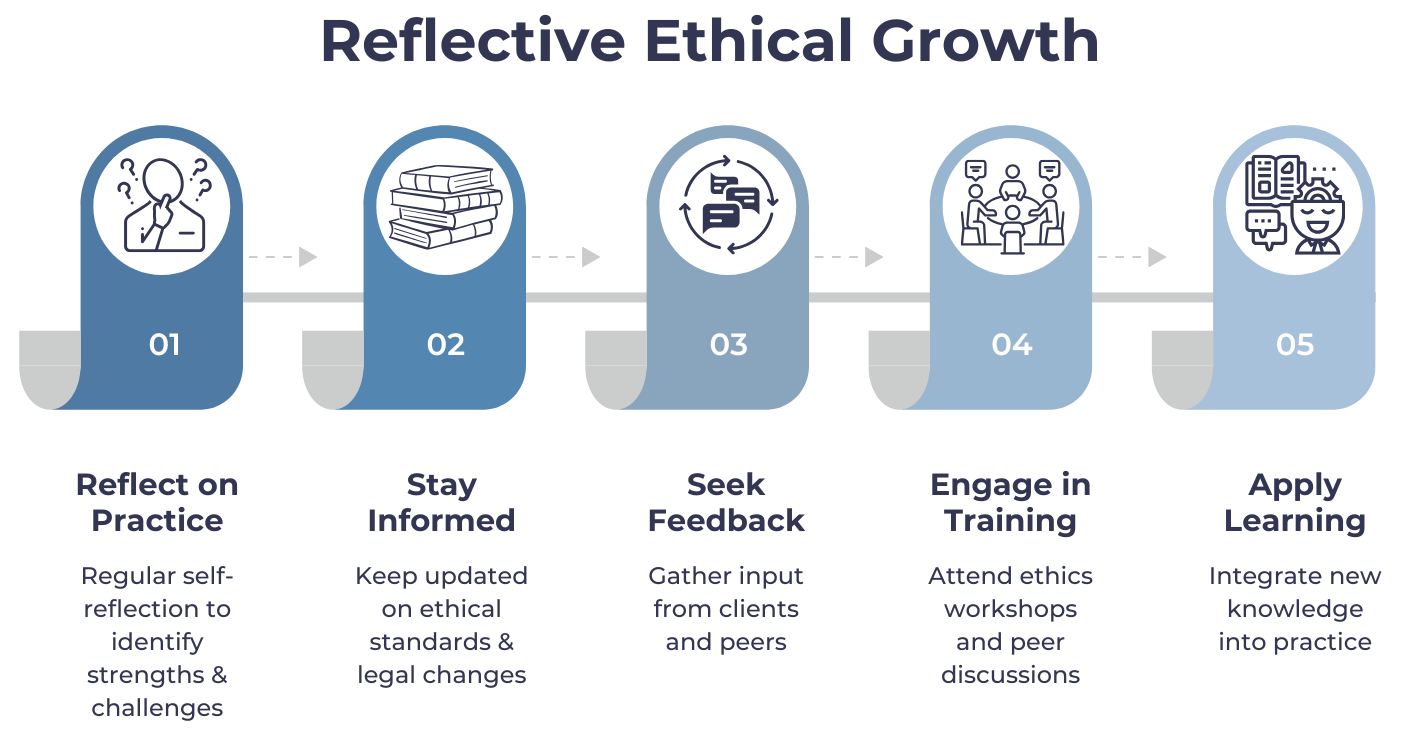
- reflecting regularly on your practice, ideally in writing;
- keeping up with changes in law, guidance and professional standards;
- asking clients and colleagues for feedback;
- joining ethics training, practice groups or discussion groups, and recording your learning in your CPD declaration.
Ask yourself how often you reflect on dilemmas, how you keep up with changes, and what you could do to deepen your ethical practice. Reviewing your own work over time helps you notice patterns of strength and weakness, and it protects against “ethical drift”, the gradual slide into habits you would not once have accepted.
Looking after yourself
Good practice depends on a practitioner who is well. The Association’s Standards ask you to monitor your physical and mental health, fatigue, workload and personal circumstances, and to reduce, adapt or stop practice when they could affect your judgement. You are also expected to hold appropriate professional indemnity insurance, and any public liability, cyber or remote-practice cover you need.
I WILL ATTEND TO my own health, well-being, and abilities in order to provide care of the highest standard.
World Medical Association, Declaration of Geneva (2017 version)
The Policy on Handling Errant Practitioners explains this to the public. The Association is a membership body and not a statutory regulator. It has no legal power to license, suspend or prosecute practitioners, and it cannot compel non-members to take part. For members, outcomes can include guidance and education, a written reprimand shown on the directory profile for 12 months, or suspension or removal from the directory. The policy says the Association aims to acknowledge a complaint within 5 working days and to finish its investigation within 28 calendar days, and to keep people updated if more time is needed. Those are targets, not guarantees.
Self-Reflection Exercise
Think about your professional development over the past year:
- Have you faced a situation that changed how you think about ethics?
- How do you use supervision at the moment, and what would make it more useful?
- If a client complained about you tomorrow, would you know exactly what to do?
Write a short professional development plan that includes one ethical goal and a date.
Key Takeaways
- Respond to complaints with listening, honesty and fairness, and never discourage a client from complaining.
- The Association’s complaints process is fair: you will be told what is alleged and given a chance to respond, and you can appeal.
- Supervision is strongly encouraged and essential for sound ethical practice, but it never replaces a report.
- Complete at least 30 hours of relevant CPD a year, based on your needs.
- Look after your own wellbeing, because it affects your judgement.
Next Steps
Lesson 4.4 looks at honesty when things go wrong: the Duty of Candour, adverse-event reporting, and how to raise concerns about others.