
Professional standards, training and membership.







Professional standards, training and membership.
Ethics in IEMT Practice: Lesson 3.3
Managing Disclosures and Reporting Obligations
Welcome
In this final lesson of Module 3, we focus on how to manage disclosures of harm or risk and understand your reporting obligations. IEMT practitioners must be prepared to respond ethically and confidently when a young person shares sensitive or concerning information.
Learning Objectives
By the end of this lesson, you will be able to:
- Recognise disclosures that may indicate a safeguarding concern.
- Respond appropriately and ethically when a young client shares something distressing.
- Understand when and how to break confidentiality.
- Navigate the reporting process and your role within it.
Understanding Disclosures
The management of disclosures in IEMT practice with young clients requires a sophisticated interplay of ethical sensitivity and procedural rigour, given the therapy’s potential to surface sensitive material within a compressed timeframe.
Young people may disclose experiences of harm indirectly or tentatively, using the therapeutic space to probe the practitioner’s trustworthiness before fully revealing their concerns.
In IEMT, where emotional shifts can occur rapidly, such disclosures might emerge unexpectedly, demanding that practitioners remain attuned to both verbal cues and non-verbal signals—such as changes in affect or metaphorical expressions—that hint at underlying risk.
This heightened vigilance aligns with the ethical principle of beneficence, as it positions the practitioner to act as a protective intermediary, ensuring that the therapeutic process does not inadvertently exacerbate a young client’s vulnerability.
A disclosure is when a client shares information suggesting they or someone else may be at risk of harm. Disclosures may be:
- Direct ("My dad hits me.")
- Indirect ("I don’t like going home.")
- Through behaviour, artwork, or metaphor.
Children and teens may test the water before fully disclosing. Always take concerns seriously, even if they seem uncertain or incomplete.
How to Respond to a Disclosure
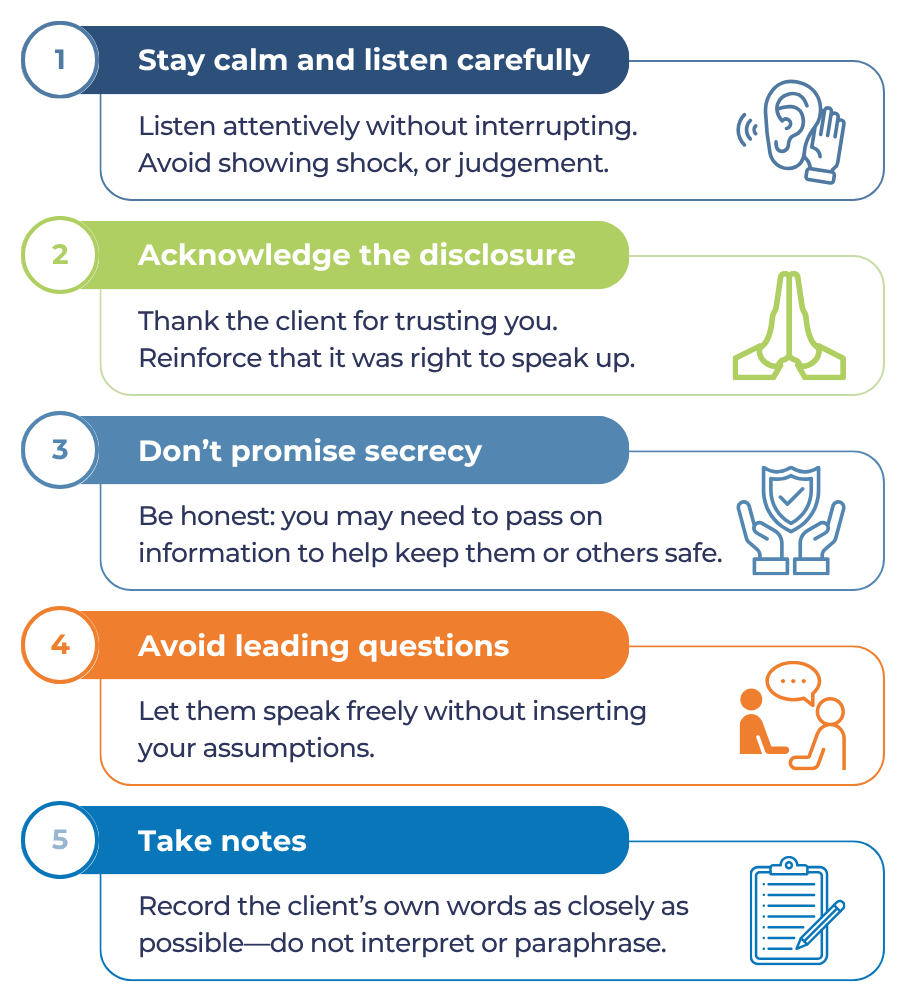
Responding to disclosures in IEMT practice necessitates a balanced approach that preserves the client’s dignity while fulfilling safeguarding obligations, a task complicated by the therapy’s conversational and client-led nature.
Practitioners must resist the impulse to over-direct the conversation, allowing the young person’s narrative to unfold organically while refraining from assumptions that could distort their account.
This restraint not only upholds the principle of autonomy by honouring the client’s voice but also ensures the accuracy of the information recorded—a critical factor should reporting become necessary.
Simultaneously, the ethical imperative to avoid promising absolute confidentiality requires practitioners to communicate limits with clarity and compassion, framing any potential breach as a protective measure rather than a betrayal.
This transparency fosters trust, even in moments of uncertainty, and prepares the client for subsequent steps in the safeguarding process.
When to Break Confidentiality
The decision to break confidentiality in response to a disclosure represents a pivotal ethical juncture in IEMT practice, where the practitioner must weigh the immediate needs of the client against broader duties of care.
In the context of working with young people, the threshold for significant harm—whether to the client or others—can be particularly nuanced, as developmental factors may amplify the impact of abuse or neglect. IEMT’s rapid engagement with emotional content heightens the urgency of this judgement, requiring practitioners to act decisively yet judiciously when risk emerges.
Seeking immediate supervisory input or safeguarding expertise not only mitigates the emotional burden of such decisions but also reinforces the principle of integrity by grounding actions in a collaborative and accountable framework. This process underscores the practitioner’s role as both advocate and gatekeeper within the therapeutic encounter.
Confidentiality should be breached when:
- A child is at risk of significant harm.
- Someone else is at risk.
- There is a legal obligation (e.g., court order or criminal activity).
Breaking confidentiality can feel difficult, but it is part of your duty of care.
Best practice:
- Inform the client (if safe) before taking action.
- Be transparent and compassionate.
- Seek supervision or safeguarding advice immediately.
The Reporting Process
Understanding and following your local safeguarding procedures is paramount. The following pathway outlines the key steps in managing and reporting a disclosure:
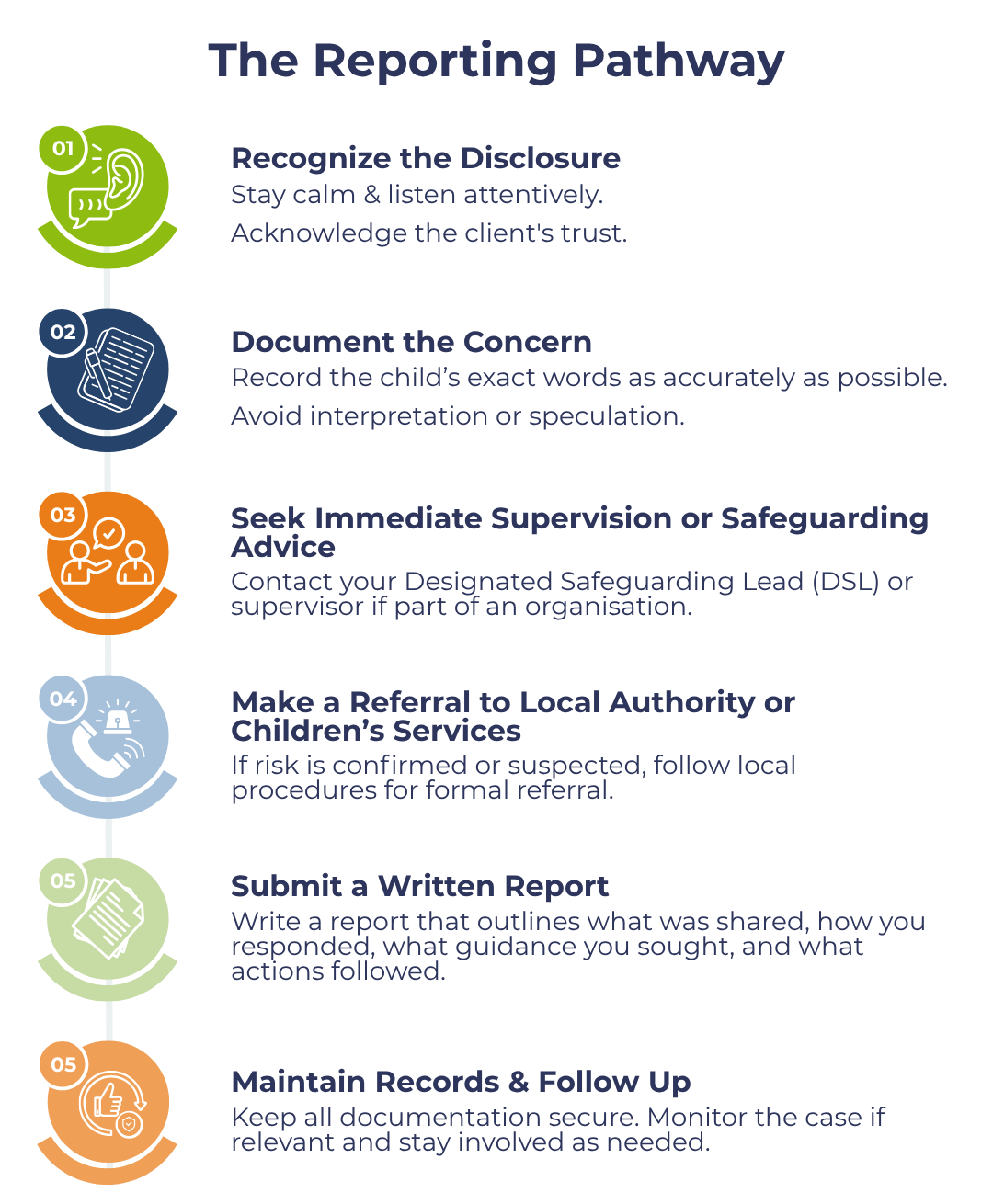
Navigating the reporting process in IEMT practice with young clients demands a meticulous adherence to local protocols, ensuring that ethical intent translates into effective action. The compressed nature of IEMT sessions may limit the time available to deliberate, placing a premium on practitioners’ prior familiarity with safeguarding pathways—such as the contact details of local children’s services or the procedural steps for referral.
The act of documenting disclosures and subsequent responses serves as both a legal safeguard and an ethical commitment, preserving a transparent record that can withstand scrutiny while protecting the client’s narrative.
This documentation must be precise yet sensitive, capturing the essence of the concern without sensationalising or overstepping the practitioner’s role.
By embedding these practices into their workflow, IEMT practitioners uphold the principle of justice, ensuring that vulnerable young clients receive equitable and timely support within a system designed to prioritise their safety.
Know your local safeguarding procedures. This usually involves:
- Contacting your Designated Safeguarding Lead (if part of an organisation).
- Making a referral to the local authority or children’s services.
- Submitting a written report outlining concerns and evidence.
Keep clear records of:
- The disclosure.
- Your response.
- Any advice sought or decisions made.
Self-Reflection Exercise
Have you ever received a disclosure or imagined how you’d handle one?
- How would you balance compassion with your reporting duty?
- Who would you contact first?
- Do you have easy access to your local safeguarding procedures?
Write a short checklist of actions you’d take in response to a safeguarding concern.
Key Takeaways
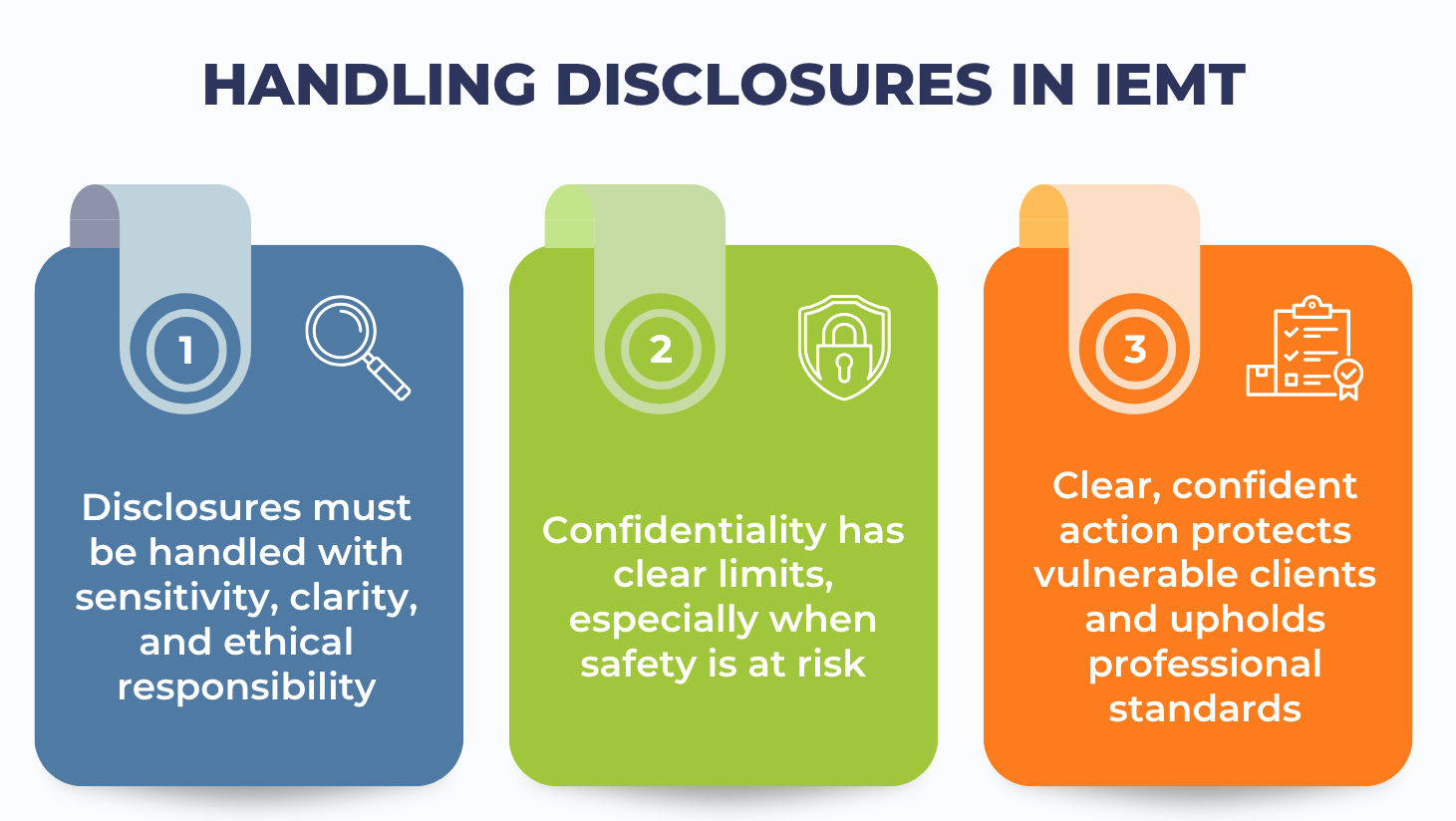
- Disclosures must be handled with sensitivity, clarity, and ethical responsibility.
- Know when to break confidentiality and how to do so professionally.
- Clear, confident action protects vulnerable clients and upholds professional standards.
Next Steps
In Module 4, we shift focus to professional conduct, integrity, and accountability in IEMT practice. Lesson 4.1 will explore what it means to practise with integrity and uphold professional values in all client interactions.
This ethics series is produced by The Association for IEMT Practitioners and is intended for professional development purposes. Always adhere to local laws, safeguarding requirements, and your professional judgement when applying ethical principles in practice.