
Professional standards, training and membership.






Professional standards, training and membership.
Ethics in IEMT Practice: Lesson 4.1
Practicing with Integrity and Professionalism
Welcome
Welcome to Module 4 of the Ethics in IEMT Practice series. This module addresses the core values and behaviours that underpin professional conduct in therapy. In Lesson 4.1, we focus on what it means to practice with integrity and how to embody professionalism in every client interaction.
Learning Objectives
By the end of this lesson, you will be able to:
- Define professional integrity in the context of IEMT.
- Identify behaviours that reflect ethical professionalism.
- Understand how to maintain trust and credibility with clients.
- Recognise the importance of transparency and accountability.
What is Professional Integrity?
Professional integrity in IEMT practice represents a multifaceted commitment that transcends mere adherence to ethical guidelines, embedding itself in the practitioner’s character and approach to every therapeutic interaction.
Given IEMT’s status as a non-statutory modality, the absence of formal regulatory oversight amplifies the importance of self-directed integrity, requiring practitioners to internalise a moral compass that guides their conduct.
This integrity manifests not only in transparent communication about the therapy’s scope and limitations but also in a steadfast refusal to exploit the trust inherent in the client-practitioner relationship.
By anchoring their practice in consistency and authenticity, IEMT practitioners cultivate a reputation that strengthens the therapeutic alliance and elevates the credibility of the field within the broader landscape of mental health support.
Integrity means doing the right thing—even when no one is watching. In IEMT, it includes:
- Being honest about what IEMT can and cannot achieve.
- Accurately representing your qualifications and experience.
- Maintaining consistency between your words, actions, and ethical principles.
Practising with integrity builds client trust, supports ethical decision-making, and upholds the credibility of the profession.
Hallmarks of Professionalism in IEMT
The hallmark of clarity and transparency in IEMT practice serves as a critical bridge between ethical intent and client empowerment, particularly in a modality that relies on rapid emotional engagement.
Practitioners must navigate the temptation to oversimplify or overpromise, ensuring that explanations of IEMT’s mechanisms and potential outcomes remain both accessible and grounded in reality.
This transparency extends to financial dealings and professional qualifications, where any obfuscation could undermine the client’s ability to make informed decisions—a violation of the ethical principle of autonomy.
In the context of IEMT’s conversational tone, which might otherwise foster an informal impression, practitioners must deliberately reinforce this clarity, presenting their expertise and limitations with precision to foster trust and mitigate misunderstandings that could erode professional credibility.
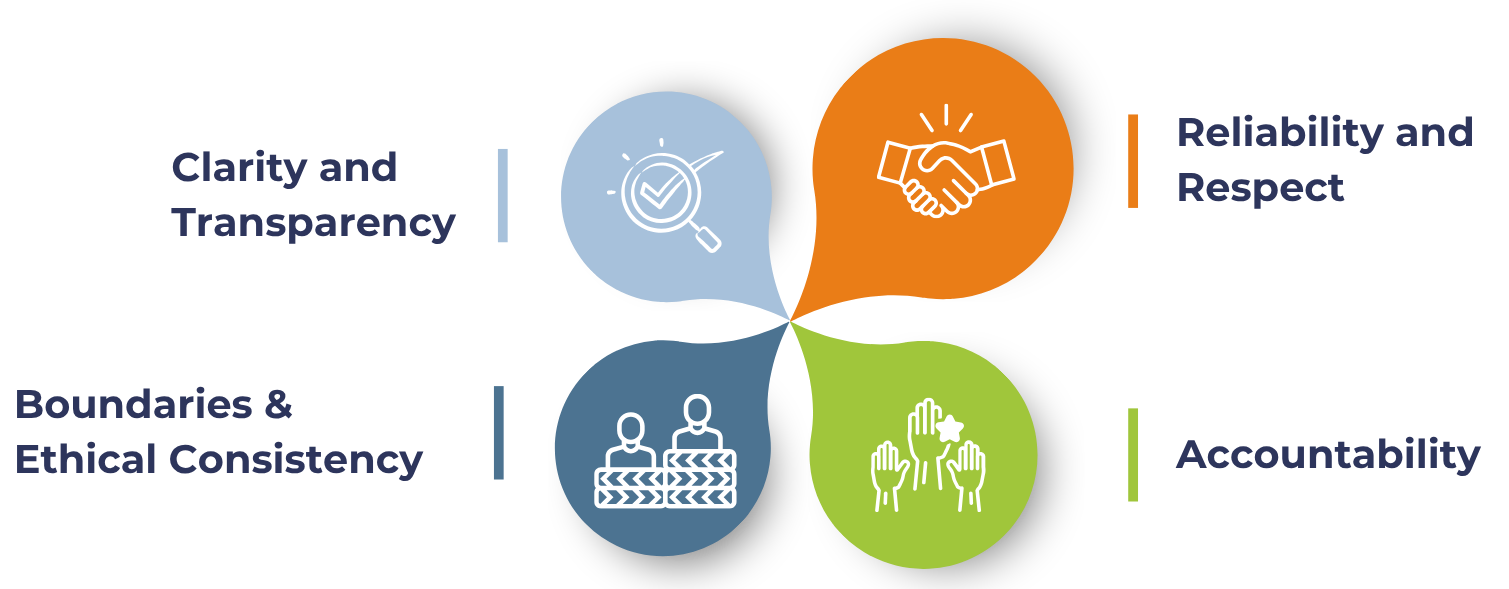
1. Clarity and Transparency
- Be open about your training, fees, and what clients can expect.
- Avoid jargon or mystifying the process.
- Offer realistic, not exaggerated, outcomes.
2. Reliability and Respect
- Keep time commitments.
- Honour confidentiality agreements.
- Treat all clients with equal dignity, regardless of background.
3. Accountability
Accountability in IEMT practice emerges as a dynamic process that requires practitioners to embrace vulnerability as a strength, acknowledging the limits of their knowledge or the inevitability of occasional missteps. The rapid, change-oriented nature of IEMT can place practitioners under pressure to deliver results, yet true professionalism demands the courage to admit uncertainty or seek external guidance when faced with complex client needs.
This accountability is not merely a reactive stance but a proactive commitment to continuous improvement, evidenced through regular supervision and reflective practice.
By modelling this openness, practitioners align with the principle of integrity, demonstrating to clients that ethical conduct includes owning one’s humanity rather than projecting an infallible facade—a stance that ultimately deepens the therapeutic relationship.
- Take responsibility for your decisions and actions.
- Admit when you don’t know something or have made a mistake.
- Seek supervision when needed.
4. Boundaries and Ethical Consistency
- Uphold boundaries even under pressure.
- Avoid cutting corners or justifying exceptions for convenience.
- Align practice with both legal requirements and ethical standards.
Misconduct and Misrepresentation
The risks of misconduct and misrepresentation in IEMT practice carry profound ethical implications, as even minor lapses can ripple outward to damage both individual trust and the profession’s collective standing.
While a strength, the brevity of IEMT sessions may tempt practitioners to exaggerate outcomes or credentials to attract clients, particularly in a competitive therapeutic market.
Such actions contravene the principle of non-maleficence by risking client disillusionment or harm while also undermining justice by creating unequal expectations among those seeking support.
Practitioners must therefore exercise rigorous self-scrutiny, ensuring that their public representations—whether through marketing materials or direct interactions—reflect an unwavering commitment to truthfulness and ethical consistency.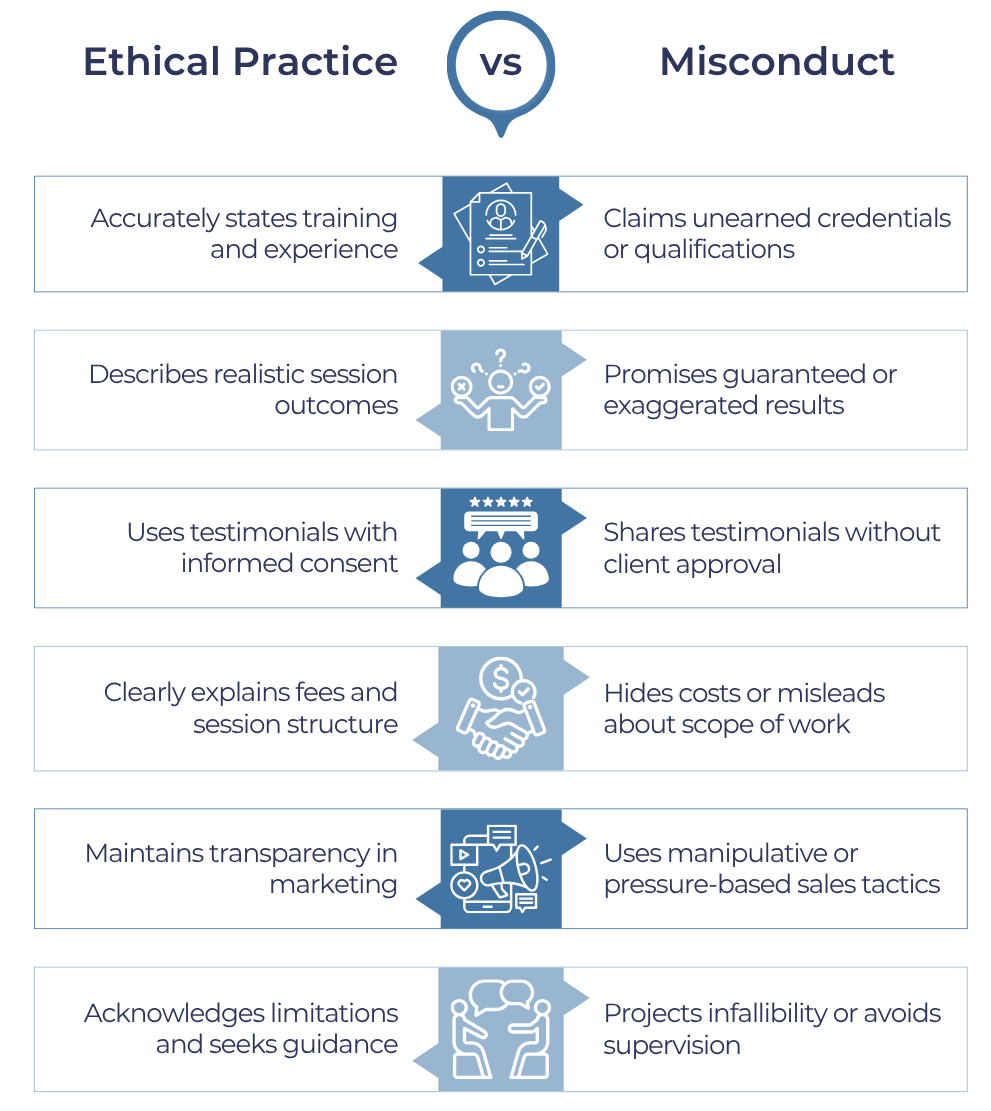
This diligence not only safeguards clients but also reinforces the integrity of IEMT as a legitimate and trustworthy modality.
Even small ethical slips can erode trust. Examples of misconduct include:
- Claiming credentials or outcomes that are untrue.
- Failing to disclose conflicts of interest.
- Sharing testimonials without consent.
- Using unethical sales tactics or pressuring potential clients.
Self-Reflection Exercise
Consider your public presence as a practitioner:
- Does your website or profile clearly reflect your training and ethical approach?
- Have you made any claims that could be misinterpreted or overstated?
- How do you handle client dissatisfaction or misunderstanding?
Identify one way you could strengthen your public or private professionalism.
Key Takeaways
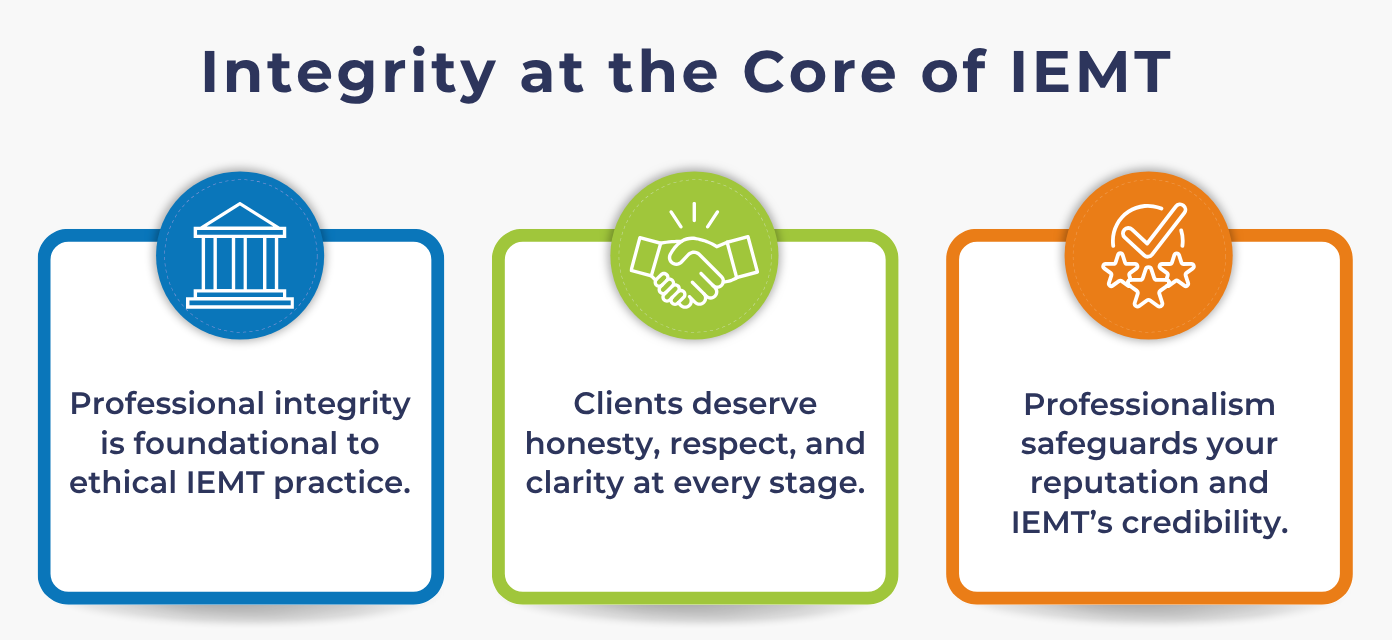
- Professional integrity is foundational to ethical IEMT practice.
- Clients deserve honesty, respect, and clarity at every stage.
- Upholding professionalism protects your reputation and the wider field of IEMT.
Next Steps
In Lesson 4.2, we’ll examine ethical dilemmas and “grey areas” that arise in practice, with strategies for resolving them responsibly.
This ethics series is produced by The Association for IEMT Practitioners and is intended for professional development purposes. Always adhere to local laws, safeguarding requirements, and your professional judgement when applying ethical principles in practice.