






The Vagus Nerve
The Vagus Nerve and Beyond
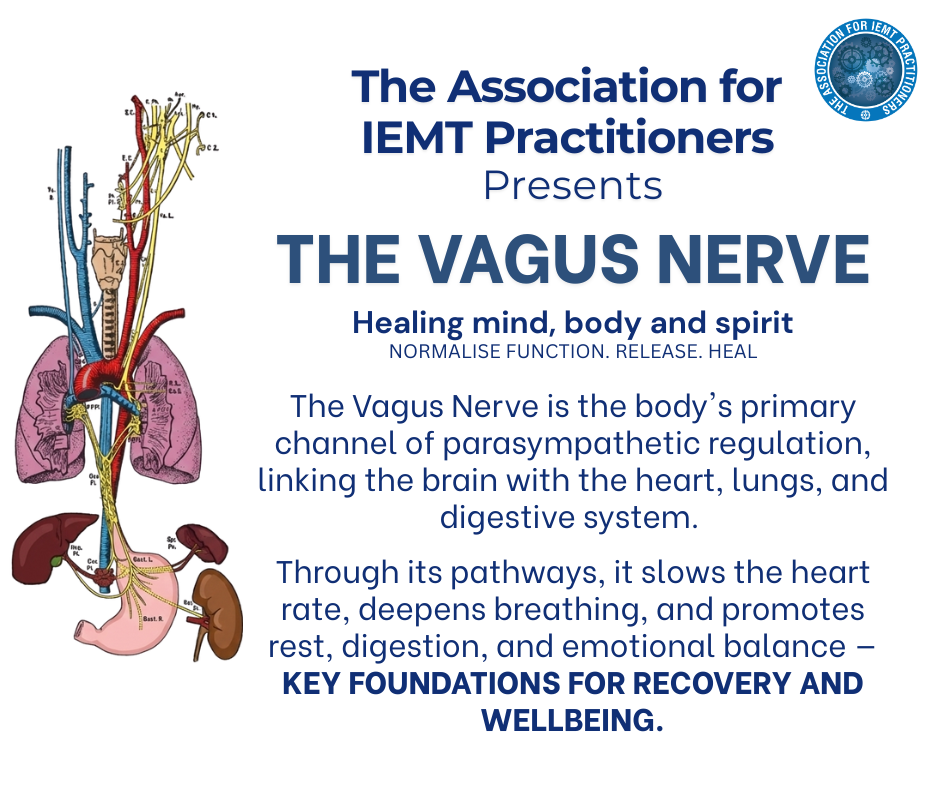
The vagus nerve, also known as the “wandering nerve” (also "The tenth cranial nerve" or "nerve "X"), is the primary communication channel between the body and the brain. Extending from the brainstem through the heart, lungs, and digestive system, it regulates vital functions such as breathing, heart rate, and digestion, while also influencing mood, emotional regulation, and social connection.
Modern research, particularly through Polyvagal Theory, has revealed that vagal activity plays a central role in how we respond to stress, recover from trauma, and maintain overall well-being. Understanding the vagus nerve and its pathways offers powerful insights into the mind–body connection that underpins both emotional and physical health, a foundation directly relevant to the practice of Integral Eye Movement Technique (IEMT).
Information Pages
Foundations and anatomy
- The Vagus Nerve – Bridging Body and Emotion
- The Autonomic Nervous System
- Anatomy and Physiology of the Vagus Nerve
- Historical Context – From Galen to Polyvagal Theory
- Afferent (Sensory) vs. Efferent (Motor) Fibres
- The Vagal Branches: Cardiac, Pulmonary, Gastrointestinal, Auricular
- The Vagus Nerve Anatomy
Regulation and clinical relevance
- The Gut–Vagus–Brain Loop: Microbiome, Inflammation, and Mood Regulation
- The Polyvagal Theory: Ventral and Dorsal Vagal Systems
- Clinical Relevance in Emotional and Somatic Disorders
- Vagal Tone and Measurement
- IEMT and Vagal Regulation: A Hypothesis
- Depression and the Vagus Nerve
- Polyvagal Theory: Overview
- Polyvagal Theory and the Gut-Brain Axis
- Eye Movement Therapy, the Vagus Nerve, and Polyvagal Theory
Stimulation and interventions
Products

Training Courses