







Clinical Relevance in Emotional and Somatic Disorders
The Polyvagal Theory provides a framework for understanding how disruptions in autonomic regulation contribute to a wide range of emotional and somatic disorders. By mapping physiological states to patterns of behaviour, emotion, and bodily experience, the theory highlights how chronic stress, trauma, and dysregulation of the vagus nerve can underlie both mental and physical symptoms.
Autonomic Dysregulation and Emotional Disorders
Emotional disorders, such as anxiety, depression, and post-traumatic stress disorder (PTSD), are increasingly recognised as manifestations of dysregulated autonomic functions. Persistent sympathetic activation (“fight or flight”) or dorsal vagal dominance (“shutdown” or dissociation) can impair perception and memory and disrupt regulation.
- Anxiety and hyperarousal: Linked with excessive sympathetic activation and reduced vagal tone, leading to rapid heart rate, shallow breathing, and hypervigilance.
- Depression and hypoarousal: Associated with patterns of reduced autonomic flexibility, including features consistent with dorsal vagal–mediated shutdown, such as low energy, social withdrawal, and emotional blunting.
- PTSD: Characterised by oscillations between hyperarousal and shutdown states. Trauma exposure can bias the nervous system toward persistent threat detection even in objectively safe environments, disrupting “neuroception of safety”.
Interventions that enhance ventral vagal engagement, such as paced breathing, mindfulness, somatic therapy, and relational safety, help restore balance and facilitate emotional regulation.
Somatic Manifestations and Functional Disorders
Autonomic dysregulation extends beyond emotion, influencing a range of somatic and functional disorders, including:
- Irritable bowel syndrome (IBS): Dysregulated gut–brain communication via the vagus nerve contributes to visceral hypersensitivity, pain, and motility changes.
- Fibromyalgia and chronic fatigue syndrome (CFS/ME): Both are associated with impaired parasympathetic tone, heightened inflammatory markers, and low energy availability consistent with dorsal vagal dominance.
- Functional neurological disorder (FND): Emotional and physiological shutdown mechanisms may manifest as a loss of voluntary motor control, frequently subsequent to trauma or chronic stress.
- Cardiorespiratory symptoms: Palpitations, breathlessness, and vasovagal syncope may reflect unstable vagal–sympathetic balance rather than purely organic pathology.
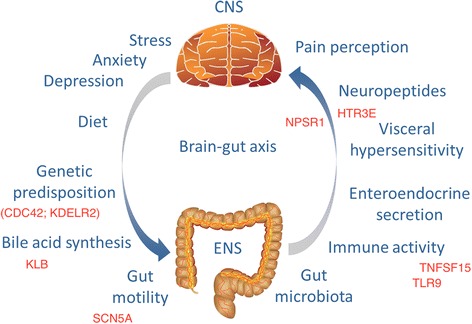
CNS central nervous system, ENS enteric nervous system. Prominent proposed IBS-risk genes are also reported, with their positions based on their (most likely) mechanistic involvement in the mentioned pathways.
Source: Henström, M., & D’Amato, M. (2016). Genetics of irritable bowel syndrome. Molecular and Cellular Pediatrics, 3, 7.
Understanding these conditions through a polyvagal lens encourages clinicians to view symptoms as adaptive physiological responses rather than purely psychological or “psychosomatic”. This reframing reduces stigma and supports integrative mind–body approaches.
Fibromyalgia and Chronic Fatigue Syndrome (CFS/ME)
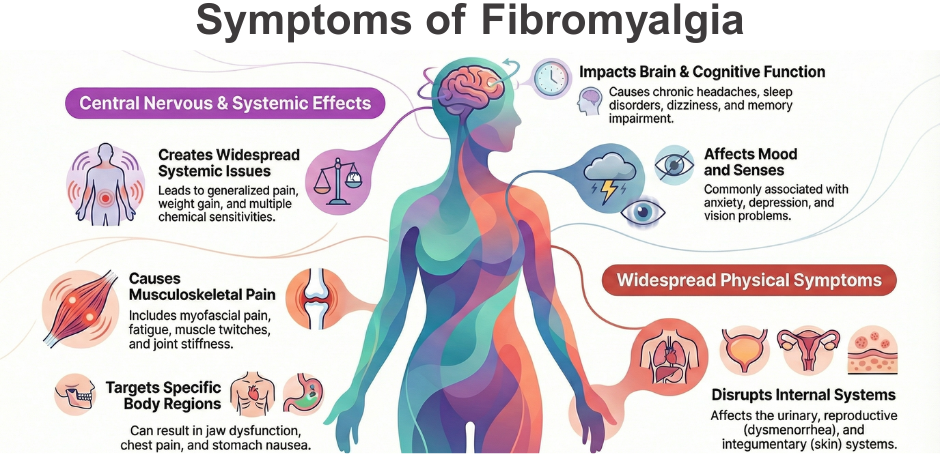
Fibromyalgia and Chronic Fatigue Syndrome (also known as Myalgic Encephalomyelitis, or CFS/ME) are chronic, overlapping conditions characterised by widespread pain, profound fatigue, cognitive difficulties (“brain fog”), and autonomic dysregulation. Although their exact causes remain unclear, both are increasingly understood as disorders of stress physiology and energy regulation.
From a polyvagal perspective, these conditions reflect a dominance of the dorsal vagal system, the branch of the vagus nerve associated with energy conservation, shutdown, and immobilisation. Persistent activation of this system can produce feelings of exhaustion, numbness, and low motivation, while sympathetic overdrive may contribute to pain sensitisation and sleep disturbances.
Neuroimmune research also shows elevated inflammatory cytokines, oxidative stress, and impaired mitochondrial function in both disorders, suggesting that chronic stress physiology and reduced autonomic flexibility may contribute to sustained inflammation and altered cellular energy metabolism.
Common Features:
- Chronic, unexplained muscle and joint pain
- Unrefreshing sleep and severe fatigue after minor exertion (“post-exertional malaise”)
- Headaches, dizziness, and temperature sensitivity
- Cognitive impairments such as memory lapses or difficulty concentrating
- Digestive disturbances (e.g., IBS-type symptoms)
Interventions aimed at indirectly supporting vagal tone and restoring autonomic balance (including paced breathing, gentle movement, mindfulness, and trauma-informed therapy) may help regulate energy levels, reduce pain, and improve overall well-being.
Inflammation, Immune Modulation, and the Vagus Nerve
The vagus nerve exerts anti-inflammatory effects through the cholinergic anti-inflammatory pathway. Reduced vagal tone has been associated with elevated cytokines such as IL-6 and TNF-α, contributing to the inflammatory components of depression, chronic pain, and fatigue syndromes.
Interventions that improve vagal tone (such as vagus nerve stimulation (VNS), meditation, yogic breathing, and biofeedback) have shown promise in lowering systemic inflammation and improving both mood and energy regulation.
The Cholinergic Anti-Inflammatory Pathway
The cholinergic anti-inflammatory pathway is a key mechanism by which the vagus nerve regulates immune function and controls inflammation throughout the body. This pathway links the autonomic nervous system to the immune system, forming a crucial component of the body’s homeostatic regulation.
When the vagus nerve is activated, either naturally through parasympathetic dominance or therapeutically via vagus nerve stimulation (VNS), its efferent fibres release the neurotransmitter acetylcholine. Acetylcholine binds to alpha-7 nicotinic acetylcholine receptors (α7nAChRs) on immune cells such as macrophages and dendritic cells, inhibiting the release of pro-inflammatory cytokines, including TNF-α, IL-1β, and IL-6.
Key Features:
- Neuroimmune communication: The vagus nerve provides a direct neural route for the brain to modulate immune activity in real time.
- Anti-inflammatory effect: Acetylcholine signalling reduces excessive immune activation and protects tissues from damage.
- Clinical relevance: Impaired vagal tone or reduced cholinergic signalling has been observed in inflammatory and autoimmune conditions such as rheumatoid arthritis, inflammatory bowel disease (IBD), and chronic fatigue syndrome.
- Therapeutic potential: Techniques that increase vagal tone (such as slow breathing, meditation, biofeedback, or direct electrical stimulation) may help lower systemic inflammation and improve overall health.
This pathway exemplifies how psychophysiological regulation (via the vagus nerve) can influence immune responses, bridging the gap between emotional well-being, inflammation, and physical health. In the context of the gut–vagus–brain axis, the cholinergic anti-inflammatory pathway is central to maintaining balance between stress response, immunity, and emotional regulation.
Therapeutic Implications
Clinicians and therapists can apply polyvagal principles to enhance therapeutic safety and regulation:
- Creating safety cues—such as a gentle tone of voice, a predictable rhythm, and a relaxed posture—activates the client’s ventral vagal system.
- Tracking physiological states: Observing changes in breathing, facial tone, or vocal prosody helps identify shifts between sympathetic and dorsal dominance.
- Somatic co-regulation: The therapist’s regulated nervous system can serve as a stabilising influence, supporting the client’s physiological shift toward greater safety and regulation.
- Bottom-up regulation: Techniques such as grounding, breathwork, and body awareness can restore vagal regulation before cognitive interventions are attempted.
In this way, therapy becomes not just a cognitive process but a physiological collaboration - guiding clients from defensive states toward connection, curiosity, and resilience.
Integrating the Polyvagal Perspective
Incorporating Polyvagal Theory into clinical practice invites a biopsychosocial model of care, recognising that emotions, bodily sensations, and interpersonal interactions are interwoven through shared autonomic circuits. Emotional and somatic disorders are thus reframed as expressions of survival physiology rather than weakness or malfunction.
By restoring ventral vagal function and enhancing neuroception of safety, practitioners help patients move from survival to connection: the foundation of emotional well-being and physical health.