


Model, training and certification
How IEMT is structured
IEMT has two core areas of practice, Emotional Engineering and Identity Reimprinting, supported by a progressive training route from Practitioner to Advanced Practitioner and, by invitation, Approved Trainer.
The core model
The model separates a learned emotional response from a learned way of organising identity. This distinction determines the questions, observations and eye-movement patterns used by the practitioner.
Part 1
Emotional Engineering
This area addresses emotional imprints, the learned links between cues, internal representations and emotional or bodily responses. The practitioner tracks how the response changes during structured eye-movement work.
Part 2
Identity Reimprinting
This area addresses persistent patterns of self-experience, identity language and unconscious state accessing. It uses different procedures from those applied to a specific emotional imprint.
The practical session structure
IEMT is taught as a responsive process rather than a single fixed script. Practitioners learn to identify the type of pattern present, apply the relevant protocol, observe change, and decide what to address next.
1. Assess
Clarify the issue, suitability, scope, safety and the most useful starting target.
2. Elicit
Identify the emotional imprint, identity pattern, physiological cue or maintaining process.
3. Apply
Use the appropriate questions and guided eye-movement pattern while tracking change.
4. Review
Reassess the response and decide whether to continue, change target, stop or refer.
Level 1
IEMT Practitioner training
Practitioner training introduces the complete foundation model in two connected parts.
Emotional Engineering
- Introduction to the IEMT structure
- Eye movement and three-dimensional accessing
- Introductory exercise and calibration of representational change
- The K-Protocol and imprint tracking
- Post-traumatic stress and time coding
- Development and correct application of the K-Protocol
Identity Reimprinting
- The structure of identity
- Pronoun references: I, me, self and you
- Additional identity markers
- The simple and complex Identity Patterns
- Physiological State Accessing Cues
- Changing unconscious state accessing
- Working with negative kinaesthetic and somatic imprints
Level 2
Advanced Practitioner training
Advanced training develops session design, formulation and work with recurring or chronic patterns.
- Systems theory and the rationale of the IEMT structure
- Problematic emotional archetypes
- Schemas and recurring patterns in chronicity
- Metaphor and storytelling in state fractionation
- The Three Pillars model
- Advanced use of the “What if...” model of chronicity
- Social Panoramas and identity exercises
- Personification of disease processes
- Advanced treatment algorithms
- Choosing and sequencing interventions
By invitation only
Trainer Training
Trainer Training prepares experienced practitioners to deliver the approved IEMT curriculum and to represent the method accurately. It includes training structure, assessment, course delivery, professional responsibilities, learner support, client recruitment, business and marketing.
Training and certification are related but not identical
People may attend approved Practitioner training for professional development or personal learning. Certification is a separate, optional process requiring the applicable evidence and assessment. Only people who meet the relevant requirements should present themselves as certified IEMT practitioners.
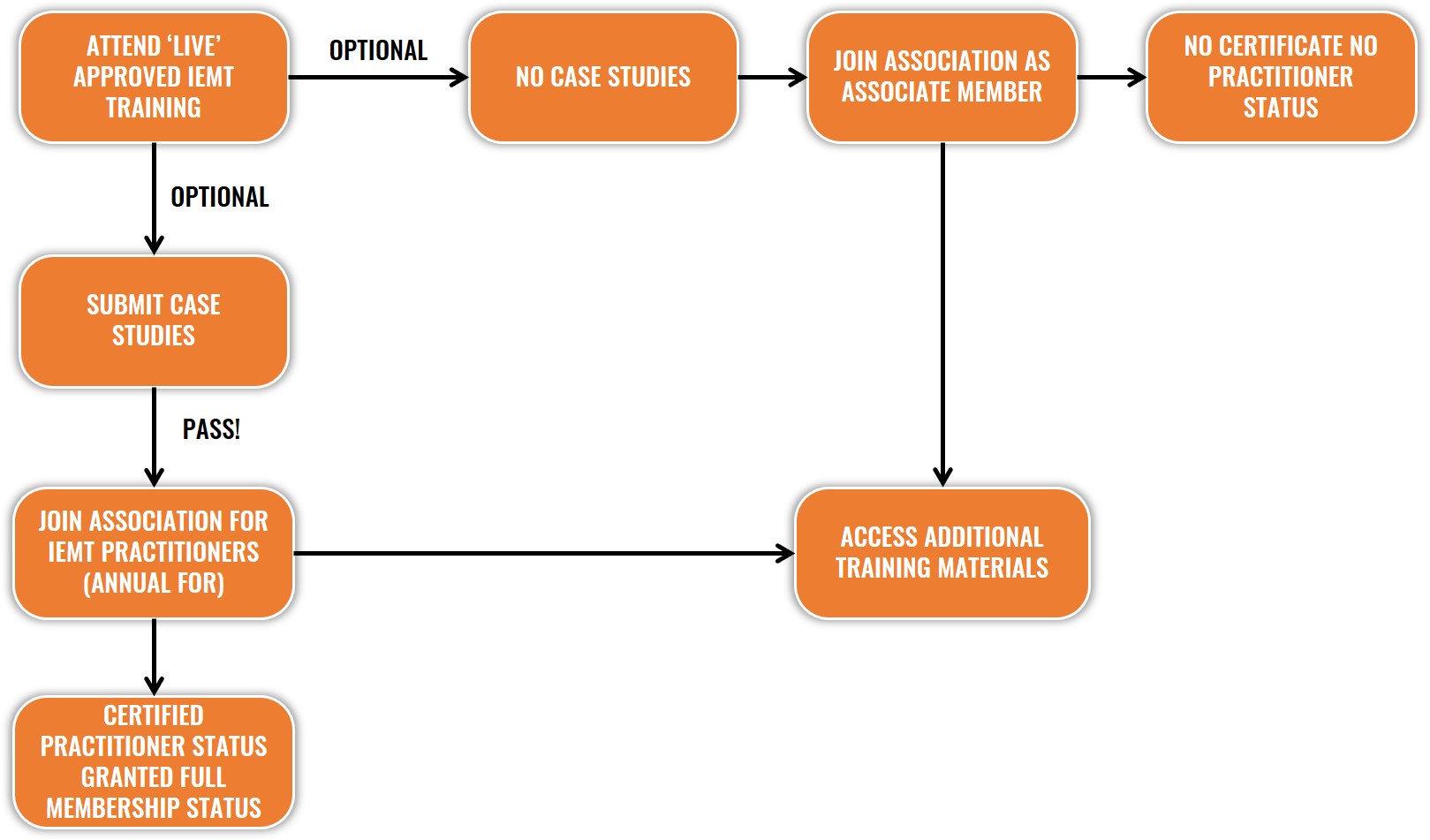
Step 1
Attend approved training
Choose a course delivered by a current Approved Trainer.
Step 2
Complete certification
Submit the evidence and assessments specified in the current certification criteria.
Step 3
Practise responsibly
Maintain competence, insurance where required, ethical practice and appropriate professional support.
CPD and insurance: approved courses may carry CPD recognition, and IEMT Practitioner is recognised by a number of therapy insurers. Recognition and cover vary by insurer, occupation and country. Trainees and practitioners must check their own policy and professional requirements before practising.
Choose your next step
Compare upcoming courses, review Approved Trainers or read the complete certification requirements.