






Cold Water, the Vagus Nerve, and the Autonomic Nervous System
Cold-water immersion and splashing cold water on the face are often promoted as ways to "activate the vagus nerve" and regulate the nervous system. There is a genuine physiological basis for these claims, but the mechanisms are more nuanced than many popular accounts suggest. This page outlines the underlying neurophysiology, clinical relevance, and cautions, with a focus on the vagus nerve and related autonomic reflexes.
The Mammalian Dive Reflex (Trigeminovagal Reflex)
The most direct link between cold water and the vagus nerve is the mammalian dive reflex, sometimes called the trigeminovagal reflex. This is a conserved response seen across many mammals when the face is exposed to cold water.
Trigeminal Nerve (Cranial Nerve V)
The trigeminal nerve is the largest cranial nerve and the primary sensory nerve of the face. It carries information about touch, temperature, pain, and pressure from the skin, sinuses, eyes, nasal cavity, and oral structures. It also supplies the muscles involved in chewing.
It has three major branches:
• Ophthalmic (V1): Sensory fibres from the forehead, scalp, upper eyelid, and the eyes’ surface.
• Maxillary (V2): Sensory fibres from the cheeks, lower eyelid, upper lip, nasal cavity, and upper teeth.
• Mandibular (V3): Both sensory and motor fibres, supplying the lower jaw, lower teeth, parts of the tongue, and the muscles of mastication.
The trigeminal nerve plays a central role in several brainstem reflexes. Notably, cold stimulation of areas served by V1 and V2 contributes to the mammalian dive reflex, sending signals to autonomic centres that influence vagal output and slow the heart rate.

Key sensory pathway
- Stimulus: Cold water contacting the face, particularly around the forehead, eyes, and nose.
- Afferent nerve: Branches of the trigeminal nerve (cranial nerve V) in the ophthalmic and maxillary regions detect the cold.
- Central integration: Signals converge in the brainstem, especially in the medulla, where autonomic nuclei, such as the nucleus tractus solitarius (NTS) and the dorsal motor nucleus of the vagus, integrate this information.
- Efferent output: Increased activity in the vagus nerve (cranial nerve X) to the heart and other organs.
Physiological effects
- Bradycardia: Heart rate slows due to enhanced vagal efferent activity to the sinoatrial (SA) node.
- Peripheral vasoconstriction: Sympathetic vasoconstriction reduces blood flow to the limbs and skin, preserving perfusion of the heart and brain.
- Reduced oxygen consumption: Metabolic rate drops slightly, mirroring aquatic mammal adaptations.
- Shift toward parasympathetic dominance: Once the initial shock has passed, the autonomic balance can move towards increased parasympathetic (vagal) influence.
In humans, even brief immersion of the face in cold water can significantly reduce heart rate and modulate autonomic tone. This response is most pronounced when the person holds their breath during immersion, which amplifies the dive reflex.
Cold Water to the Face and Acute Anxiety or Panic
Because the dive reflex rapidly increases vagal output to the heart and dampens sympathetic arousal, it has been explored as a practical intervention in acute anxiety states.
Mechanism of action in panic states
- Rapid autonomic shift: Splashing cold water on the face or immersing the face in a basin of cold water can induce bradycardia and reduce sympathetic overdrive.
- Interruption of hyperventilation: Brief breath-holding during facial immersion can interrupt the cycle of hyperventilation common in panic attacks.
- Interoceptive reset: The intense sensory input from the cold acts as a strong interoceptive signal, which may help “re-anchor” attention to the body and present moment.
Clinically, some patients report that cold face immersion or applying a cold pack to the forehead and cheeks can reduce panic symptoms, particularly when combined with slow, controlled breathing. This is consistent with the known physiology of the dive reflex and vagal modulation of heart rate variability (HRV).
Physiology of the Dive Reflex
The dive reflex is an automatic brainstem-mediated response triggered when cold water contacts the face, particularly around the forehead, eyes, and nose. Sensory fibres of the trigeminal nerve detect the cold and relay signals to autonomic centres in the medulla, where cardiovascular and respiratory reflexes are coordinated.
Key features include:
• Bradycardia: Increased vagal efferent activity slows the heart rate, conserving oxygen.
• Peripheral vasoconstriction: Blood flow is reduced to the limbs and skin, preserving circulation to the brain and heart.
• Respiratory adjustments: Breath-holding enhances the reflex and suppresses unnecessary respiratory muscle activity.
• Autonomic shift: Sympathetic vascular responses combine with strong parasympathetic cardiac control, creating a unique mixed autonomic state.
In humans, this reflex provides a rapid way to modulate vagal tone and may help reduce acute stress or panic, though it must be used cautiously in individuals with cardiovascular vulnerabilities.
Whole-Body Cold Water Immersion and the Vagus Nerve
Full-body cold-water immersion (e.g., cold showers, cold baths, or open-water swimming) affects the autonomic nervous system in a time- and intensity-dependent manner. The vagus nerve is involved, but the response is not purely “calming”.
Phase 1: Cold shock response
The first 20–60 seconds of sudden immersion in cold water (especially <15°C) typically provoke a pronounced sympathetic surge:
- Gasp reflex: Involuntary deep inspiration, which can be dangerous if the face is underwater.
- Tachycardia: Heart rate rises sharply due to sympathetic activation.
- Hyperventilation: Rapid breathing, often with reduced CO₂, which may increase feelings of anxiety or dizziness in susceptible individuals.
- Elevation of blood pressure: Sudden vasoconstriction raises cardiac afterload and blood pressure.
This initial phase is dominated by sympathetic activation, not vagal activity. For people with cardiovascular disease, arrhythmias, or uncontrolled hypertension, this phase can be hazardous.
Gasp Reflex
The gasp reflex is an involuntary, rapid inhalation that occurs when the body is suddenly exposed to cold, especially during abrupt immersion in cold water. It is part of the cold shock response and is mediated by robust sympathetic activation.
Key features include:
• Sudden inspiratory burst: A large, automatic intake of air that can occur even when trying to control breathing.
• Thoracic expansion and increased ventilation: Breathing rate rises sharply, often leading to hyperventilation.
• Sympathetic surge: Heart rate and blood pressure increase as the body reacts to the perceived threat.
• Potential danger in open water: If the face or mouth is underwater during the reflex, the sudden inhalation can draw in water, increasing drowning risk.
Although the gasp reflex is protective in evolutionary terms (priming the body for survival), it represents the opposite of the calming vagal response seen in the dive reflex. It must be managed carefully during cold exposure practices.
Phase 2: Adaptation and parasympathetic rebound
If the person remains in the water and maintains controlled breathing, a secondary phase often follows:
- Heart rate begins to fall from its initial peak.
- Vagal tone increases as the body adapts to the cold stimulus.
- Subjective calm may emerge as both sympathetic and parasympathetic influences reach a new equilibrium.
- Repeated cold exposure over days or weeks has, in some studies of healthy individuals, been associated with modest improvements in resting HRV and perceived stress.
From an autonomic perspective, cold-water immersion is a strong stimulus that initially stresses the system but, with gradual and safe adaptation, may enhance vagal regulation and stress resilience for some individuals.
Specific Vagal Pathways and Structures Involved
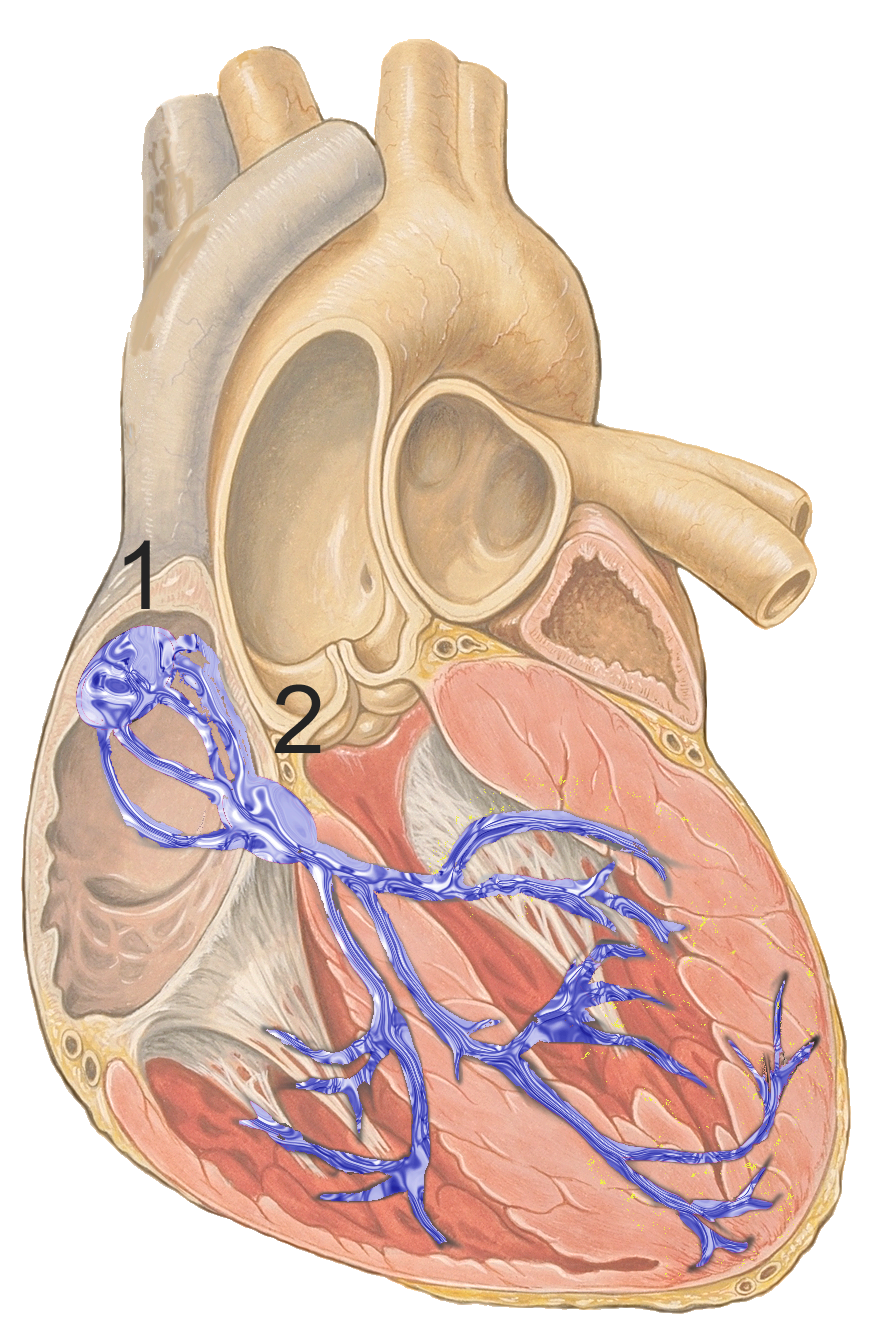
Cardiac vagal efferents
The vagus nerve provides parasympathetic fibres to the heart, primarily influencing:
- (1) Sinoatrial (SA) node: Modulates heart rate (chronotropy).
- (2) Atrioventricular (AV) node: Influences conduction velocity.
Activation of the dive reflex increases activity in these cardiac vagal fibres, resulting in bradycardia and increased beat-to-beat variability, often measurable as an increase in high-frequency HRV.
Nucleus tractus solitarius (NTS) and central integration
Cold facial stimulation and visceral feedback from cold exposure converge in the nucleus tractus solitarius in the medulla. The NTS integrates:
- Trigeminal sensory input from the face.
- Baroreceptor and chemoreceptor signals from the cardiovascular system.
- Visceral afferent input from the vagus nerve (e.g., from the lungs and gut).
From the NTS, signals are relayed to other autonomic centres (e.g., the dorsal motor nucleus of the vagus, the nucleus ambiguus, and the hypothalamus), coordinating the overall pattern of the autonomic response to cold.
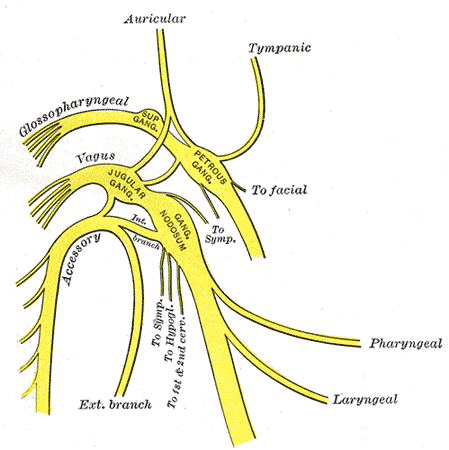
Auricular branch of the vagus (Arnold’s nerve)
The auricular branch of the vagus nerve innervates parts of the external auditory canal and auricle. In some individuals, stimulation of this region (for example, during ear cleaning or contact with cold water) can trigger:
- Ear–cough reflex (Arnold’s reflex): Stimulation leads to coughing via vagal activation.
- Vasovagal responses: Rarely, bradycardia and syncope (fainting) can occur in susceptible individuals.
This illustrates that cold water reaching the ear canal can, in principle, activate vagal reflexes, though this is not the primary mechanism in typical cold face immersion practices.
Inflammation, Mood, and the Cholinergic Anti-inflammatory Pathway
The vagus nerve is central to the so-called cholinergic anti-inflammatory pathway, a reflex in which vagal efferent signals modulate immune activity and cytokine release. Experimental and clinical studies of vagus nerve stimulation (VNS) have shown reductions in pro-inflammatory mediators such as tumour necrosis factor (TNF-α) and interleukin-6 (IL-6) in certain conditions.
Cold exposure, by shifting autonomic balance and potentially enhancing vagal tone, has been hypothesised to indirectly influence inflammatory processes. While:
- Cold exposure can acutely increase noradrenaline and stress hormones.
- Repeated cold exposure may modulate inflammatory markers and mood in some individuals.
The evidence base is still developing. Cold water practices should not be regarded as a stand-alone treatment for depression, anxiety disorders, or inflammatory diseases, but rather as a possible adjunct within a broader, evidence-based care plan.
Cholinergic Anti-Inflammatory Pathway
The cholinergic anti-inflammatory pathway is a neural reflex in which the vagus nerve regulates immune activity and reduces excessive inflammation. Sensory vagal fibres detect inflammatory signals in the body and relay this information to the brainstem. In response, efferent vagal fibres activate immune-modulating circuits that suppress the release of pro-inflammatory cytokines.
Key features include:
• Vagal signalling to immune organs: Vagal efferents influence splenic and systemic immune cells through acetylcholine-mediated mechanisms.
• Acetylcholine–macrophage interaction: Acetylcholine binds to α7 nicotinic receptors on macrophages, inhibiting the release of cytokines such as TNF-α, IL-1β, and IL-6.
• Rapid, reflex-like control: This is not a slow hormonal process but a fast neural feedback loop maintaining immune balance.
• Clinical relevance: Dysregulation of this pathway is implicated in inflammatory disorders, while electrical or behavioural vagus nerve stimulation can modulate cytokine levels in certain conditions.
This pathway illustrates the close functional link between the nervous and immune systems and underpins much of the interest in vagal therapies for inflammatory and stress-related illnesses.
Practical Applications and Techniques
1. Cold face immersion for autonomic “reset”
A simple method to engage the dive reflex and vagal pathways is:
- Fill a bowl or sink with cold water (optionally with ice cubes, but avoid extremes that cause pain or skin damage).
- Take a normal breath in and out, then a comfortable inhalation.
- Gently immerse the face (especially the forehead, eyes, and nose area) and hold the breath for 10–20 seconds, or as tolerated.
- Lift the head, exhale slowly, and return to normal breathing.
- Repeat a few times if helpful, monitoring for dizziness or discomfort.
This may be used as a brief, acute intervention for high arousal, but it does not replace psychological therapy or medication when indicated or emergency care in severe crises and should be introduced cautiously in individuals with cardiac anxiety or health-related obsessions to avoid reinforcing fear of bodily sensations.
2. Cold packs to the face and neck
For people who are unable or unwilling to immerse the face, placing a cool (not extreme) pack or flannel on the forehead, cheeks, or upper neck can provide milder trigeminal and cutaneous stimulation. This may still help shift autonomic tone without the intensity of full immersion.
3. Gradual cold showers or baths
For whole-body cold exposure, a gradual approach is safer:
- Start with short periods of cool water, then colder water at the end of a warm shower.
- Focus on counteracting the cold shock response.
- Increase duration and intensity over days or weeks rather than in a single session.
This kind of progressive conditioning is more likely to support adaptive changes in HRV and stress tolerance without excessive risk.
Risks, Contraindications, and Clinical Cautions
Although cold water–induced vagal activation can be beneficial for some people, it is not risk-free. Important cautions include:
- Cardiovascular disease: Individuals with ischaemic heart disease, arrhythmias, heart failure, or uncontrolled hypertension may be at increased risk of adverse events during cold shock (e.g., arrhythmias, myocardial ischaemia). Medical advice is recommended before undertaking intense cold immersion.
- History of syncope (fainting): Strong vagal responses can provoke vasovagal syncope, particularly when combined with standing, dehydration, or emotional distress.
- Bradyarrhythmias: People with baseline bradycardia or conduction abnormalities may experience excessive heart rate slowing with strong vagal stimulation.
- Cold-water and open-water risks: In open water, the initial gasp reflex can lead to water inhalation and drowning if the mouth and nose are underwater. Open-water cold immersion should never be done alone and should only be attempted with safety supervision, gradual entry, and thermal protection.
- Trauma and dissociation: For some individuals with trauma histories, the intense bodily sensation of cold shock can be experienced as threatening, potentially exacerbating dissociation or flashbacks. In such cases, any experimentation with cold exposure should be gentle, titrated, and ideally integrated within a therapeutic context.
As with other interventions that influence the autonomic nervous system, it is important to balance potential benefits against individual vulnerabilities and medical conditions.
Cold Water, Vagal Tone, and Everyday Practice
Cold water exposure is best understood as a strong autonomic stimulus that initially activates the sympathetic nervous system and, with controlled exposure, may later enhance parasympathetic (vagal) regulation. The vagus nerve plays a central role in the dive reflex and in the adaptive changes that may occur with repeated, controlled exposure. However:
- Its effects are context-dependent: abrupt cold shock is not the same as calm, controlled cold exposure.
- It should not be marketed as a universal cure for mental health or physical conditions.
- Integrating cold exposure with breathwork, pacing, therapeutic work, and medical oversight (where needed) is more responsible than using it as a stand-alone “hack”.
For practitioners, understanding how cold water and the vagus nerve interact can inform psychoeducation about autonomic regulation, help explain why some clients find cold water grounding, and support the design of safe, individually tailored self-regulation strategies.
It’s also worth knowing this
https://youtu.be/T1PKst8cBGs?si=rn_O79AKzllDHGbq