





Shaking, the Psoas Muscle, and the Vagus Nerve: Somatic Tremor Responses in Trauma Recovery
In the study of trauma physiology, involuntary shaking or muscular trembling is increasingly recognised as a key somatic process by which the body 'discharges' hyperarousal and restores autonomic balance. This phenomenon is frequently observed in the psoas muscle complex, a deep core muscle group intimately involved in posture, locomotion, and visceral regulation. The relationship between the psoas, trauma, and the vagus nerve forms a central theme in the somatic models of trauma resolution, as elaborated by clinicians such as Dr Robert Scaer, Peter Levine, and Bessel van der Kolk.
The Neurophysiology of Shaking and Tremor
Following a traumatic or overwhelming event, the body’s autonomic nervous system (ANS) engages the fight–flight–freeze response via sympathetic activation. In the aftermath, as the immediate danger subsides, mammals - including humans - may exhibit spontaneous shaking or trembling. This motor discharge represents a physiological attempt to return to autonomic homeostasis by metabolising residual stress hormones (adrenaline, noradrenaline, and cortisol) and re-establishing vagal tone.
In The Body Bears the Burden (2001) and The Trauma Spectrum (2005), Robert Scaer emphasises that traumatic stress is not purely psychological but “an imprint of dysregulated autonomic responses within the nervous system.” He describes shaking as a “neurogenic discharge”: a spontaneous activation of subcortical motor pathways that releases the energy locked in a state of immobility. This view aligns with animal studies, in which species such as deer or rabbits shake vigorously after a predator chase before returning to normal behaviour. Scaer asserts that when individuals inhibit this discharge, the trauma becomes "somatically frozen", instilling hypervigilance and dysautonomia within the body.
The Role of the Psoas Muscle
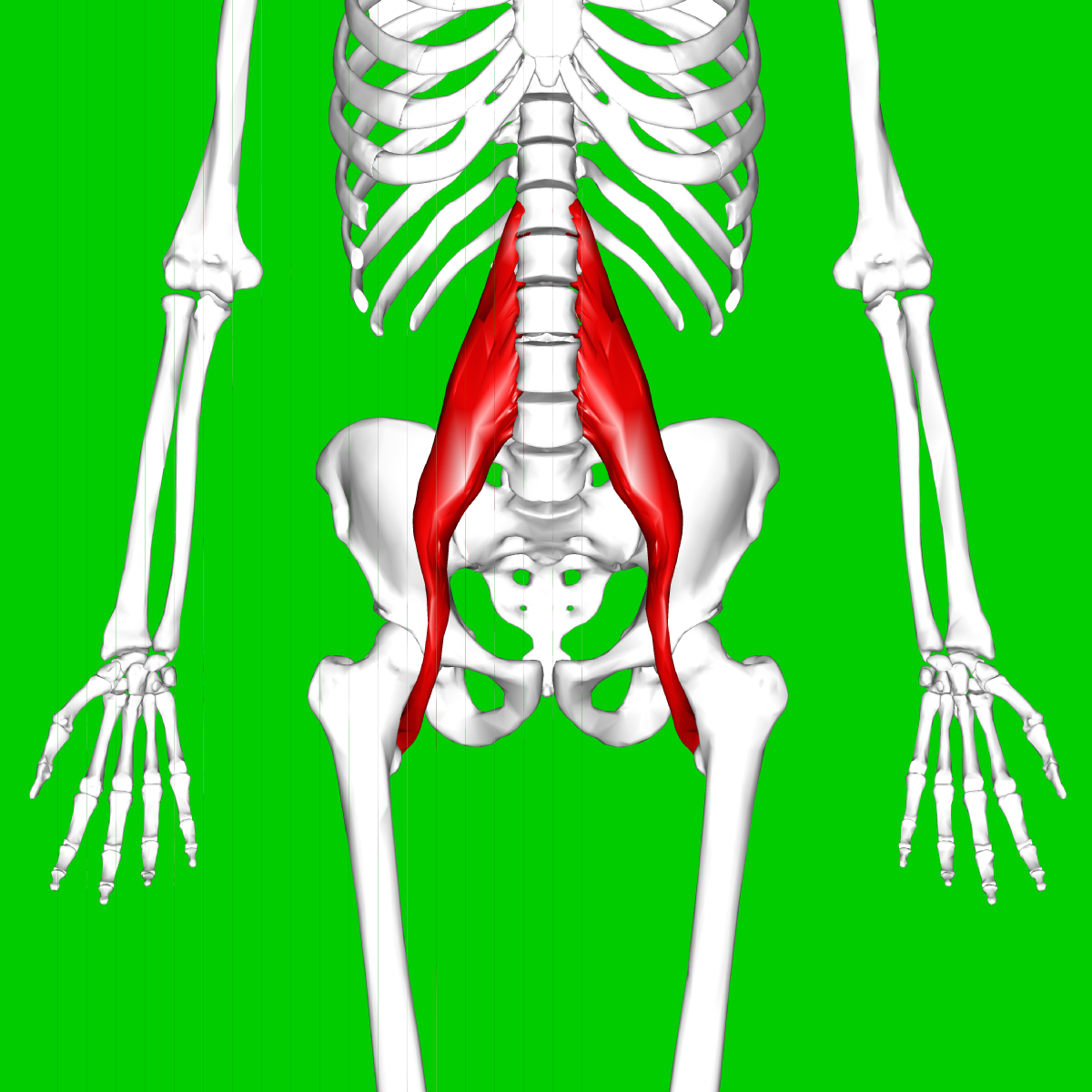
The psoas major (often referred to as the “fight-or-flight muscle”) connects the lumbar spine to the femur, bridging the somatic and visceral systems. It is among the first muscles to contract under threat, creating the instinctive flexion of the hips seen in defensive postures. Chronic contraction of the psoas is common in individuals with post-traumatic stress, prolonged anxiety, or emotional suppression.
Scaer’s clinical observations suggest that the psoas serves as a somatic barometer for unresolved defensive energy. When the body begins to tremble, the psoas often initiates or mediates this shaking, particularly during therapies that allow neurogenic release, such as Tension & Trauma Releasing Exercises (TRE), somatic experiencing, or specific yoga asanas. These tremors typically begin in the pelvic region and spread upward through the torso, reflecting the progressive reactivation of vagal regulation from the dorsal vagal shutdown toward the ventral vagal engagement associated with safety and social connection.
It is important to distinguish trauma-related neurogenic tremor from pathological neurological tremors (such as essential tremor or Parkinsonian tremor), which arise from different neurobiological mechanisms and carry different clinical implications.
About the Psoas Muscle
The psoas major is a deep core muscle that connects the lumbar spine to the femur, forming part of the iliopsoas complex. It is the only muscle linking the spine to the legs, playing a vital role in posture, gait, and core stability. Anatomically, it runs alongside major organs and blood vessels, placing it at the intersection of the musculoskeletal and visceral systems.
Beyond its structural role, the psoas is highly responsive to emotional and autonomic states. During threat or stress, it contracts as part of the fight–flight reflex, flexing the hips to prepare for action. Chronic stress or trauma can lead to long-term contraction, contributing to lower back pain, pelvic tension, and a sense of “holding” in the body’s core.
Because of its proximity to the diaphragm and vagus nerve branches, the psoas also influences breathing patterns and autonomic regulation. When relaxed, it supports deeper diaphragmatic breathing and parasympathetic (rest-and-digest) tone. Somatic therapies that release tension in the psoas, such as yoga, TRE, or gentle shaking practices, can therefore help restore calm, balance, and embodied safety.
Vagal Pathways and the Resolution of Immobilisation
The vagus nerve mediates both the immobilisation and recovery phases of the trauma response. The dorsal vagal complex - originating in the nucleus ambiguus and dorsal motor nucleus - facilitates the immobilisation seen in extreme threat or helplessness. The ventral vagal system, however, underlies self-soothing, social engagement, and restoration. Scaer and others have argued that tremor and shaking episodes mark the body’s attempt to shift dominance from dorsal vagal inhibition to ventral vagal activation.
When spontaneous shaking occurs, heart rate variability (HRV) may show increased parasympathetic activity, consistent with enhanced vagal tone in some individuals. This suggests that neurogenic tremor is not a pathological sign but a healthy mechanism of reintegration. It reflects the re-establishment of communication between the brainstem and limbic circuits, allowing the organism to move from defence to connection.
Clinical and Observational Examples
- Animal analogues: Scaer draws attention to ethological observations, such as gazelles shaking violently after escaping a predator, resuming grazing immediately afterwards. The shaking represents the completion of the survival response.
- Human trauma therapy: In somatic experiencing sessions, clients often exhibit psoas-driven tremors when the body transitions from hypoarousal (numbness, dissociation) toward reactivation. The trembling indicates release rather than distress.
- Post-exercise release: Military and emergency service personnel sometimes report involuntary leg tremors after intense stress exposure, signifying delayed discharge of sympathetic activation.
- Yoga and movement therapies: Certain postures—particularly those that lengthen and fatigue the psoas, such as bridge pose or supported pelvic lifts—induce spontaneous trembling interpreted as neurogenic release. Practitioners describe subsequent calm, warmth, or tears as parasympathetic dominance resumes.
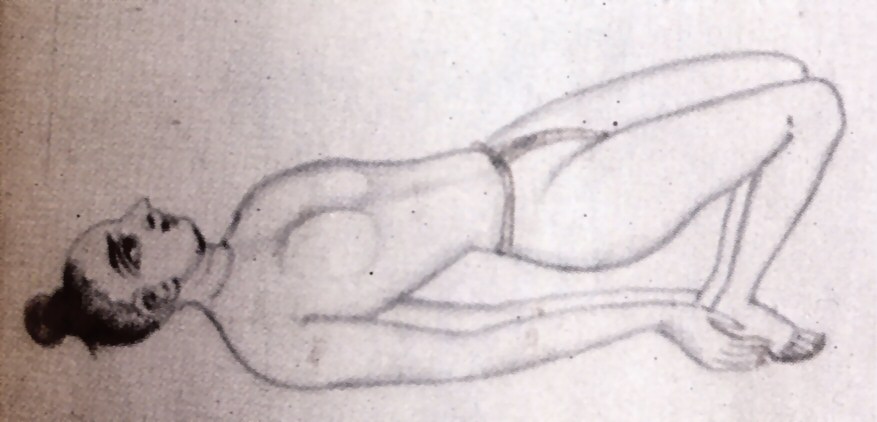
Source: Mummadi Krishnaraja Wodeyar (before 1868), reproduced in Sjoman, N. E. (1999), The Yoga Tradition of the Mysore Palace (author’s scan).
Implications for Trauma Recovery
Scaer’s model bridges neurobiology and somatics by viewing trauma not as a psychological memory but as a physiological loop of incomplete reflexes. Shaking interrupts this loop, completing the motor sequence and allowing the autonomic nervous system to reset. In this sense, the psoas muscle functions as a central conduit through which the body transitions from defensive contraction to release and restoration.
Therapeutic modalities that incorporate controlled induction of tremor (such as TRE or mindful shaking practices) aim to facilitate this discharge safely, supporting clients in re-establishing vagal regulation without retraumatisation. The goal is not catharsis but physiological completion: a return to flexible autonomic responsiveness.
Within the framework of trauma physiology, the shaking response represents a biological resolution of threat that engages the psoas muscle and supports the re-establishment of flexible vagal regulation. Drawing on Robert Scaer’s neurobiological model, these tremors signify the transformation of traumatic immobility into adaptive movement. As the body trembles, the brainstem re-engages with cortical regulation, converting defensive energy into restored coherence. Recognising and supporting these responses offers a non-verbal, body-centred path toward healing that complements psychological interventions and reinforces the integration of the somatic and autonomic self.
Clinical caution: While neurogenic tremor is widely observed in trauma-recovery contexts, uncontrolled or forced induction of shaking is not appropriate for all individuals. Clients with dissociative disorders, seizure disorders, unstable medical conditions, or severe autonomic dysregulation should only engage in tremor-based practices under qualified clinical supervision.
Books by Robert Scaer
Click images to purchase.
Key References
- Scaer, R. (2014). The body bears the burden: Trauma, dissociation, and disease (2nd ed.). Routledge.
- Scaer, R. (2005). The Trauma Spectrum: Hidden Wounds and Human Resiliency. W.W. Norton.
- Levine, P. A. (2010). In an unspoken voice: How the body releases trauma and restores goodness. North Atlantic Books.
- Levine, P. A. (1997). Waking the Tiger: Healing Trauma. North Atlantic Books.
- van der Kolk, B. A. (2015). The body keeps the score: Brain, mind, and body in the healing of trauma. Viking.
- Porges, S. W. (2011). The polyvagal theory: Neurophysiological foundations of emotions, attachment, communication, and self-regulation. W. W. Norton & Company.
- Thayer, J. F., & Lane, R. D. (2009). Claude Bernard and the heart–brain connection: Further elaboration of a model of neurovisceral integration. Neuroscience & Biobehavioral Reviews, 33(2), 81–88.
- Lehrer, P. M., & Gevirtz, R. (2014). Heart rate variability biofeedback: How and why does it work? Frontiers in Psychology, 5, 756.