







Historical Context – From Galen to Polyvagal Theory
Overview
The understanding of the vagus nerve has evolved over more than two millennia, reflecting broader changes in how science has interpreted the relationship between body, mind, and emotion. From early anatomical observation to modern neurophysiology, the vagus nerve has moved from being a peripheral curiosity to a central concept in the study of autonomic regulation, emotion, and social behaviour. This section traces that development from classical medicine through to contemporary theories such as the Polyvagal Model.
Early Descriptions: Galen and Classical Medicine
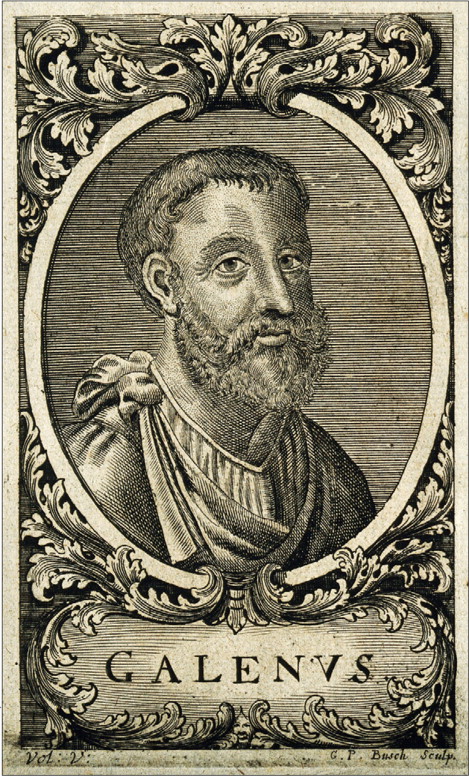
The earliest detailed descriptions of the vagus nerve are attributed to the physician Galen of Pergamon (c. 129–216 CE), whose dissections and writings shaped medical knowledge for over a thousand years. Galen referred to the vagus as one of the “nerves of the thorax”, describing its connections to the heart, lungs, and digestive organs. He observed that stimulation of the nerve could slow the heartbeat and affect breathing, early evidence of what would later be recognised as parasympathetic control.
Galen’s understanding, though based on animal anatomy, established a lasting association between the nervous system and vital bodily functions. In his framework, the “pneuma”, or vital spirit, was thought to flow through these nerves, animating the body and linking it to the soul. While the language was pre-scientific, it reflected an early intuition that emotion, breath, and vitality were deeply intertwined.
Galen of Pergamon
Galen of Pergamon (c. 129–216 CE) was a Greek physician, anatomist, and philosopher whose writings dominated Western and Islamic medicine for more than a millennium. Educated in Smyrna, Corinth, and Alexandria, Galen served as physician to Roman emperors and combined direct anatomical observation with philosophical reasoning about the nature of the body and soul.
Galen conducted animal dissections to study the nervous and circulatory systems, describing how specific nerves influenced respiration, voice, and heart function. He identified the vagus as one of the “nerves of the thorax”, observing that its stimulation could slow the heartbeat and affect breathing. Though framed within the concept of “vital spirits” rather than electrical or biochemical processes, Galen’s interpretations laid the groundwork for later understanding of autonomic and parasympathetic control.
From Renaissance to Enlightenment: Anatomy and Discovery
During the Renaissance, anatomical study advanced rapidly through human dissection. Physicians such as Andreas Vesalius (1514–1564) refined Galen’s descriptions, accurately mapping the cranial nerves and their peripheral connections. The vagus nerve, then known as the “pneumogastric nerve”, was recognised as a major communication pathway between the brain and the viscera.
In the seventeenth and eighteenth centuries, the emergence of experimental physiology transformed these observations into measurable science. Researchers such as Albrecht von Haller (1708–1777) and Luigi Galvani (1737–1798) demonstrated that nerves transmitted electrical impulses rather than vital spirits, laying the groundwork for modern neurophysiology. The vagus nerve became a focus for studying reflexes and the interplay between the nervous system and the heart.
Albrecht von Haller (1708–1777) and Luigi Galvani (1737–1798)
Albrecht von Haller and Luigi Galvani were pivotal figures in the development of modern physiology, helping to shift medicine from speculative philosophy toward experimental science. Their work in the eighteenth century transformed the understanding of how nerves and muscles function, directly influencing later discoveries in neurophysiology and electrophysiology.
Haller, a Swiss physician and anatomist, introduced the concept of “irritability” - the inherent responsiveness of muscle tissue to stimulation - and “sensibility”, the property of nerves to convey sensation. His systematic experiments established that nerve and muscle functions were distinct and measurable phenomena.
Galvani, an Italian physician and physicist, demonstrated that muscle contraction could be induced by electrical stimulation, thereby establishing the concept of “animal electricity”. His experiments with frog legs revealed that bioelectricity was an intrinsic property of living tissue, marking the beginning of electrophysiology and paving the way for the later understanding of neural conduction.
Nineteenth-Century Physiology: Reflexes and Autonomic Control
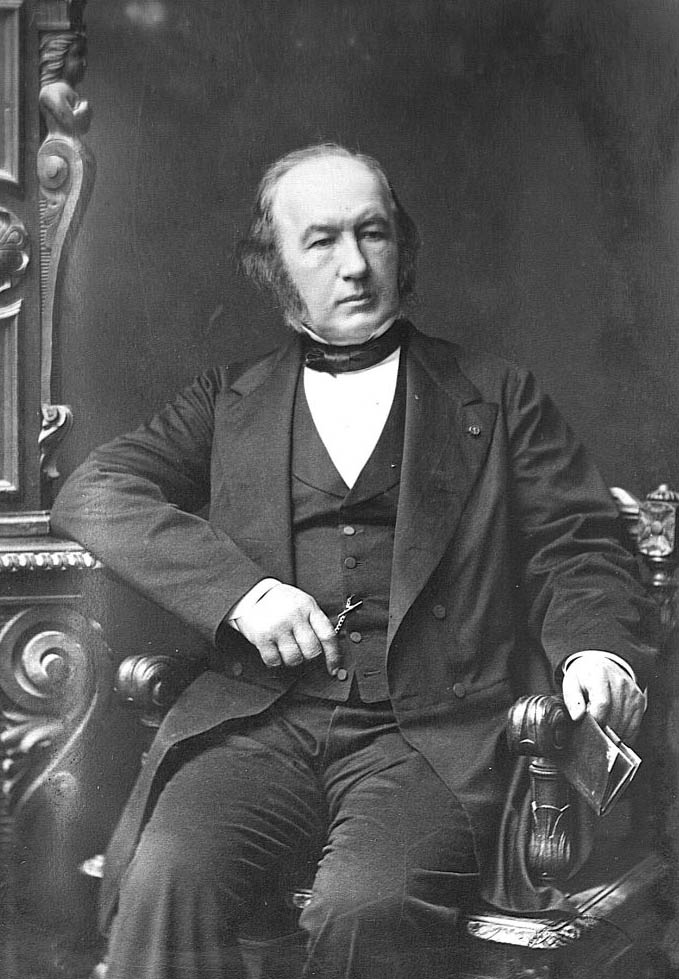
By the nineteenth century, the vagus nerve had become central to the emerging concept of the autonomic nervous system. The physiologist Claude Bernard (1813–1878) introduced the idea of the milieu intérieur (the stable internal environment maintained by the nervous system) and identified the vagus as crucial for regulating this balance. His experiments revealed that vagal stimulation slowed the heart rate, confirming its inhibitory role in cardiac control.
Subsequent research by Walter Gaskell and others further clarified the dual organisation of autonomic function into sympathetic and parasympathetic branches. This laid the conceptual foundation for understanding how the body coordinates states of mobilisation and restoration, a balance at the heart of modern interpretations of stress and emotional regulation.
Claude Bernard (1813–1878)
Claude Bernard was a French physiologist regarded as one of the founders of modern experimental medicine. His work in the nineteenth century established physiology as a scientific discipline based on observation, controlled experimentation, and reproducible evidence. Bernard’s studies clarified how internal bodily processes maintain stability despite external change, a principle he termed the milieu intérieur (“internal environment”).
Bernard demonstrated the role of the nervous system in regulating circulation, digestion, and metabolism, showing that these processes were coordinated through reflex pathways rather than direct mechanical action. His investigations into the vagus nerve revealed its inhibitory influence on the heart and its participation in maintaining physiological balance. Bernard’s concept of the <em>milieu intérieur</em> laid the foundation for later theories of homeostasis and autonomic regulation.
Twentieth Century: The Vagus in Emotion and Behaviour
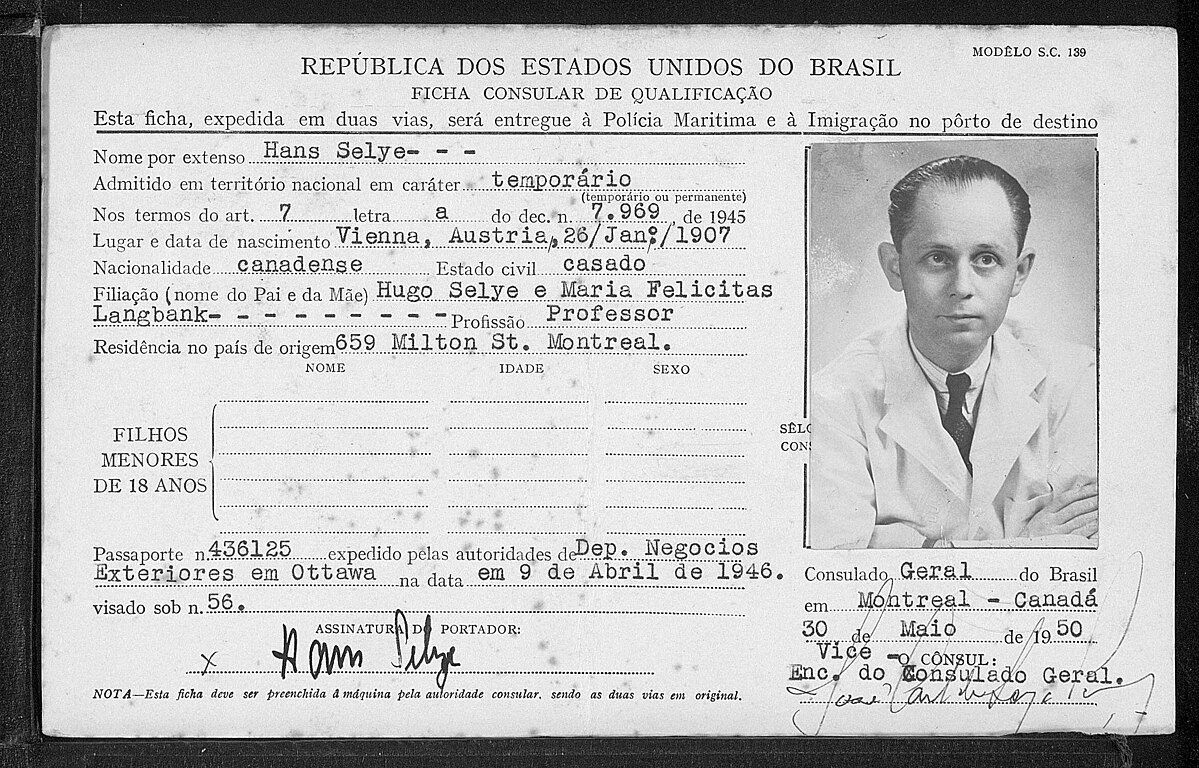
Throughout the twentieth century, the vagus nerve began to be viewed not only as a regulator of organ function but also as a mediator of emotional and social behaviour. Psychophysiological studies explored how heart rate, respiration, and facial expression corresponded with feelings of safety, fear, or engagement. Researchers such as Hans Selye (1907–1982) formalised the concept of the stress response, while others examined how parasympathetic recovery contributed to emotional stability.
Advances in neuroimaging and electrophysiology deepened this understanding, revealing the complex interplay between brainstem nuclei, limbic structures, and cortical networks in autonomic regulation. Later research also confirmed that the majority of vagal fibres are afferent, carrying interoceptive information from the body to the brain, making the vagus nerve a primary biological pathway through which bodily states influence emotional awareness and psychological experience.
By the late twentieth century, the vagus nerve was recognised as a bidirectional communication channel integrating emotion, physiology, and social behaviour.
Hans Selye (1907–1982)
Hans Selye was an Austrian-Canadian endocrinologist whose pioneering research defined the modern concept of biological stress. Active during the mid-twentieth century, Selye observed that the body responded to diverse physical and emotional challenges with a consistent physiological pattern, which he termed the “General Adaptation Syndrome”. His work established stress as a central concept in medicine, psychology, and physiology.
Selye demonstrated that prolonged activation of the hypothalamic–pituitary–adrenal (HPA) axis leads to characteristic phases of alarm, resistance, and exhaustion. These stages describe how the body mobilises energy, adapts to sustained stress, and eventually experiences depletion when demands exceed capacity. His research showed that chronic stress contributes to illness through the overuse of adaptive systems, a principle closely related to the modern understanding of allostatic load and autonomic imbalance.
Contemporary Developments: Polyvagal Theory
In the 1990s, Dr Stephen W. Porges introduced the Polyvagal Theory, which proposed a hierarchical model of vagal function reflecting evolutionary stages of defence and social engagement. According to this framework, the vagus nerve consists of two major branches with distinct roles:
- The ventral vagal complex supports calm states, social interaction, and communication.
- The dorsal vagal complex is associated with immobilisation and shutdown responses under threat.
Porges’ model reframed the autonomic nervous system as an adaptive behavioural hierarchy rather than a simple binary of activation and rest. It linked physiological states to emotional and relational capacities, profoundly influencing trauma therapy and psychophysiological research.
This framework has since become foundational in many trauma-informed therapeutic models, particularly those addressing shock, dissociation, emotional regulation, and nervous system stabilisation.
Dr Stephen W. Porges
Dr Stephen W. Porges is an American neuroscientist and behavioural researcher best known for developing the Polyvagal Theory in the 1990s. His academic career spans psychophysiology, developmental neuroscience, and the study of social behaviour, with appointments at institutions including the University of North Carolina and Indiana University. Porges’ work bridges neurobiology and psychology, exploring how physiological state shapes perception, emotion, and interpersonal connection.
Porges proposed that the vagus nerve functions as part of an evolved hierarchy of autonomic responses, supporting distinct behavioural strategies for safety, mobilisation, and shutdown. His identification of ventral and dorsal vagal pathways reframed the parasympathetic system as an adaptive, context-sensitive network rather than a single uniform mechanism. This model provided a neurophysiological explanation for how social engagement, attachment, and trauma are mediated through autonomic regulation.
Beyond Polyvagal Theory
While Polyvagal Theory remains influential, it has also prompted discussion and refinement within neuroscience. Some researchers question the strict anatomical separation proposed within the model, noting that while the behavioural patterns it describes are clinically meaningful, the precise neuroanatomical mapping of ventral and dorsal vagal pathways at the level of emotional behaviour remains an area of ongoing scientific debate. The enduring contribution of the model lies in its emphasis on the integration of physiology, emotion, and social engagement: a synthesis that echoes Galen’s earliest observations but is now grounded in modern neurobiology.