The Ethics of Marketing for IEMT Practitioners: A Classical Ethical Debate
The practice of Integrative Eye Movement Therapy (IEMT), a therapeutic approach designed to alleviate emotional distress through guided eye movements, operates within the broader domain of mental health and well-being. As IEMT practitioners seek to grow their practices, marketing strategies such as soliciting client testimonials and referrals become tempting tools for establishing credibility and attracting new clients.
However, these practices raise significant ethical questions, particularly when viewed through the lens of classical ethical principles derived from medicine and psychology: autonomy (respecting client self-determination), beneficence (acting in the client’s best interest), non-maleficence (avoiding harm), and justice (ensuring fairness). This section presents a structured debate, weighing the arguments for and against such marketing tactics to illuminate their ethical implications.
The Case For Soliciting Testimonials and Referrals
Argument from Beneficence: Proponents of asking clients for testimonials and referrals argue that these practices serve the greater good. A practitioner with a robust portfolio of positive testimonials can demonstrate efficacy, attracting clients who might benefit from IEMT but otherwise remain unaware of its potential. Similarly, encouraging satisfied clients to refer others extends the reach of a beneficial intervention, aligning with the principle of beneficence. For example, a client who has overcome debilitating anxiety through IEMT might inspire others to seek help, amplifying the therapeutic impact.
Argument from Autonomy: Soliciting testimonials and referrals can also respect client autonomy if done transparently and consensually. By asking clients voluntarily to share their experiences or recommend the service, practitioners empower them to exercise agency in supporting a practice they value. Provided there is no coercion—e.g., offering discounts or applying pressure—the client’s freedom to choose is preserved. This aligns with the psychological ethic of informed consent, a cornerstone of autonomy in therapeutic settings.
Practical Consideration: In a competitive market, IEMT practitioners, often independent professionals, rely on word-of-mouth and social proof to sustain their livelihoods. Testimonials and referrals are cost-effective marketing tools that reflect genuine client experiences, avoiding the ethical quagmire of exaggerated advertising claims. This pragmatic justification suggests a balance between professional survival and ethical conduct.
The Case Against Soliciting Testimonials and Referrals
Argument from Non-Maleficence: Critics contend that soliciting testimonials and referrals risks harming clients, violating the principle of non-maleficence. Therapeutic relationships are inherently unequal, with practitioners holding authority and influence over vulnerable clients. Asking for a testimonial may subtly pressure a client to comply, fearing disapproval or strained rapport if they decline. This dynamic could exacerbate emotional distress, particularly for clients with boundary issues or a history of trauma—common among those seeking IEMT. Moreover, public testimonials, even anonymised, may expose clients to unintended scrutiny, breaching confidentiality and causing psychological harm.
Argument from Autonomy: Far from enhancing autonomy, opponents argue that such requests can undermine it. Clients may feel obligated to agree out of loyalty or gratitude rather than genuine willingness, especially if the request comes during or shortly after therapy when emotional bonds are strong. The American Psychological Association’s Ethical Principles (Standard 3.05) caution against exploiting relationships for personal gain, suggesting that soliciting testimonials or referrals could blur professional boundaries and compromise client self-determination.
Argument from Justice: The practice also raises concerns of fairness. Clients who feel comfortable providing testimonials or referrals—often those with positive outcomes—may not represent the full spectrum of experiences. This selective portrayal risks misleading prospective clients, skewing their expectations and potentially leading to unjust disparities in access to accurate information. Medical ethics, as outlined in the Declaration of Helsinki, emphasise truthfulness and transparency, which could be jeopardised by curated marketing narratives.
Synthesis and Ethical Framework
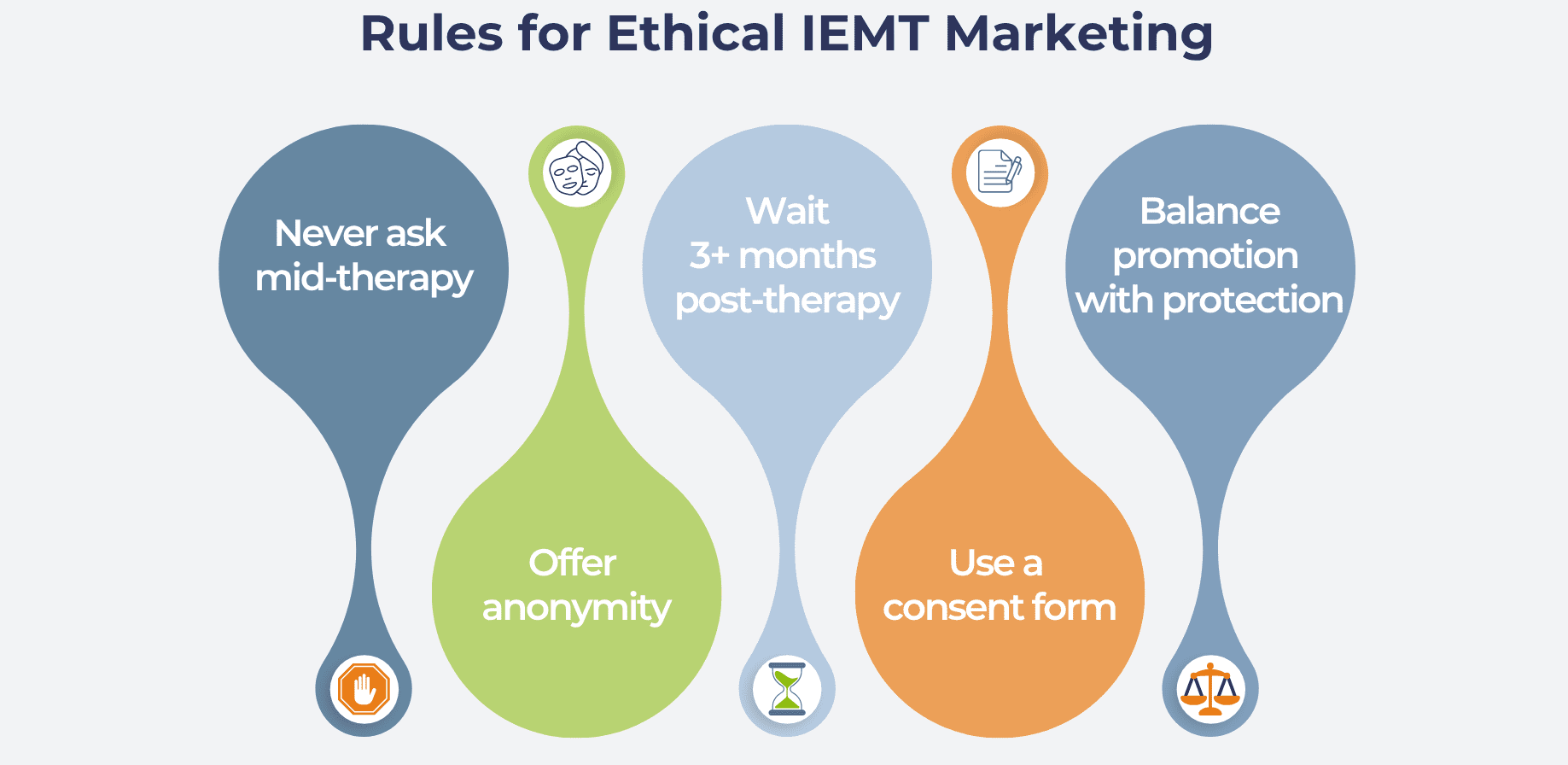
The debate hinges on a tension between promoting a valuable service (beneficence) and protecting vulnerable clients (non-maleficence), while respecting their agency (autonomy) and ensuring equitable representation (justice). A classical ethical resolution requires balancing these principles through practical guidelines:
- Informed Consent: Practitioners should only solicit testimonials or referrals with explicit, uncoerced consent, clearly explaining the purpose and potential use (e.g., website posting). Clients must feel free to decline without repercussions, safeguarding autonomy and non-maleficence.
- Timing and Context: Requests should occur post-therapy, after the professional relationship has concluded or stabilised, to minimise power imbalances and emotional influence. This aligns with psychological ethics discouraging dual relationships (APA Standard 3.05).
- Anonymity and Confidentiality: Testimonials should be anonymised or shared only with permission specifying the level of identifiability, protecting client privacy and adhering to non-maleficence.
- Transparency: Practitioners should disclose a range of outcomes—not just successes—to prospective clients, ensuring justice by presenting a fair picture of IEMT’s efficacy.
For IEMT practitioners, marketing through testimonials and referrals is neither inherently unethical nor unequivocally permissible; its morality depends on execution. Practitioners can navigate this terrain responsibly by grounding their approach in the classical ethical framework of autonomy, beneficence, non-maleficence, and justice. Soliciting client feedback or recommendations can amplify the good of IEMT, but only if it prioritises client well-being and agency over professional gain. In this delicate balance lies the ethical art of marketing within a therapeutic profession.