
Professional standards, training and membership.






Professional standards, training and membership.
Ethics in IEMT Practice: Lesson 2.2
Boundaries and Dual Relationships
Welcome
In this lesson, we explore the importance of maintaining clear therapeutic boundaries and avoiding dual relationships in IEMT practice. Boundaries safeguard both the client and the practitioner, ensuring a professional and ethical working relationship.
Learning Objectives
By the end of this lesson, you will be able to:
- Define professional boundaries and dual relationships.
- Understand why boundaries are essential for ethical practice.
- Recognise the risks and challenges of dual relationships.
- Apply practical strategies for maintaining boundaries in IEMT.
What Are Professional Boundaries?
Establishing and maintaining professional boundaries in IEMT practice serves as a critical safeguard against the erosion of the therapeutic alliance, particularly given the therapy’s conversational and emotionally evocative nature.
Boundaries delineate the parameters of the practitioner-client relationship, ensuring that interactions remain focused on the client’s therapeutic goals rather than veering into personal or ambiguous territory.
In the context of IEMT, where rapid emotional disclosure is common due to the technique’s change-oriented approach, the risk of over-familiarity or emotional entanglement becomes pronounced.
Practitioners must, therefore, cultivate a disciplined awareness of these boundaries, recognising that their role is to facilitate change within a structured framework rather than to assume an overly intimate or directive stance.
This disciplined approach not only preserves the integrity of the therapeutic process but also reinforces the ethical principle of beneficence by prioritising the client’s well-being.
Boundaries are the framework within which the therapeutic relationship occurs. They define what is appropriate in terms of
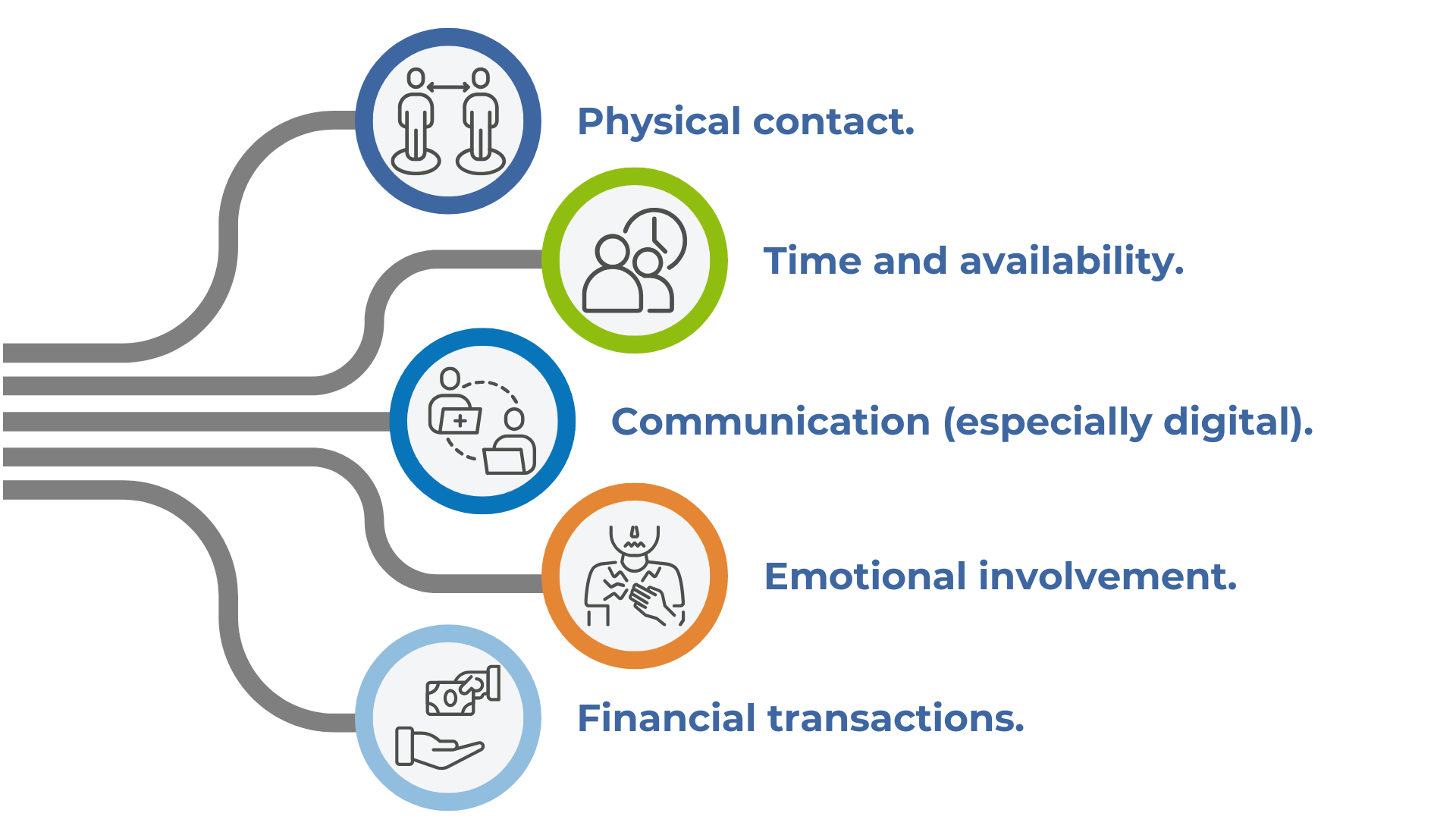
Boundaries help preserve trust and create a safe, focused space for therapeutic change.
What Are Dual Relationships?
By introducing competing roles or interests, dual relationships significantly challenge the clarity and objectivity required in IEMT practice.
The brevity and intensity of IEMT sessions may foster a sense of rapport that clients or practitioners might misinterpret as an invitation to extend the relationship beyond its professional scope.
For instance, a client who is also a social acquaintance might expect preferential treatment or informal support, blurring the lines between therapeutic and personal obligations. Such scenarios undermine the practitioner’s ability to maintain neutrality and can engender power imbalances that compromise the client’s autonomy.
Ethically, the onus falls on the practitioner to anticipate and mitigate these risks, either by declining to engage in therapy with individuals with whom they share pre-existing relationships or by establishing explicit agreements reinforcing the primacy of the therapeutic role over any other connection.
A dual relationship occurs when you have more than one type of relationship with a client. For example:
- The client is also a friend, colleague, or family member.
- The therapist has a business or social relationship outside of therapy.
Dual relationships can lead to blurred boundaries, conflicts of interest, and exploitation (even unintentionally).
Risks of Boundary Crossings
The advent of digital communication further complicates the maintenance of boundaries in IEMT practice, introducing new avenues for potential boundary crossings that require careful navigation.
The accessibility of social media and instant messaging platforms can create an illusion of constant availability, prompting clients to seek contact outside agreed-upon session times or to engage with practitioners in non-professional contexts.
For IEMT practitioners, whose work may already feel less formal due to its conversational tone, the temptation to respond informally to a client’s message or accept a social media connection could inadvertently signal a relaxation of professional standards.
To counteract this, practitioners must establish and communicate clear policies regarding digital interactions from the outset, ensuring that all exchanges remain confined to designated, secure channels. This proactive stance aligns with the principle of integrity, safeguarding the therapeutic relationship against the encroachment of digital informality.
Boundary crossings, while not inherently unethical, demand rigorous scrutiny in IEMT practice due to the potential for subtle shifts to escalate into significant ethical breaches. A seemingly minor adjustment—such as extending a session beyond its scheduled duration or offering unsolicited personal advice—may initially appear justified as an act of flexibility or care.
However, without careful reflection and documentation, such actions can erode the clarity of the therapeutic framework, leading to client dependency or practitioner overreach.
The ethical challenge lies in distinguishing between crossings that serve the client’s best interests and those that reflect the practitioner’s unexamined impulses or external pressures.
By engaging in regular supervision and self-reflection, IEMT practitioners can develop the discernment needed to navigate these grey areas, ensuring that any deviation from standard boundaries is both intentional and aligned with the client’s therapeutic needs.
- Loss of objectivity in sessions.
- Client confusion or dependency.
- Power imbalances and emotional harm.
- Legal and reputational risks.
Note: Not all boundary crossings are unethical, but all must be justified, carefully considered, and in the client's best interests.
Boundaries in IEMT Practice
Maintaining clear boundaries is vital because IEMT is often short-term, conversational, and change-oriented. Clients may open up quickly, making it essential to
- Be clear about the scope and limits of the work.
- Avoid over-involvement or emotional entanglement.
- Keep the focus on the client’s goals, not the therapist’s agenda.
Digital and Social Media Boundaries
Therapists must also navigate
- Friend/follow requests from clients.
- Public posts or comments on therapist content.
- Use of email, texting, or messaging apps for scheduling or check-ins.

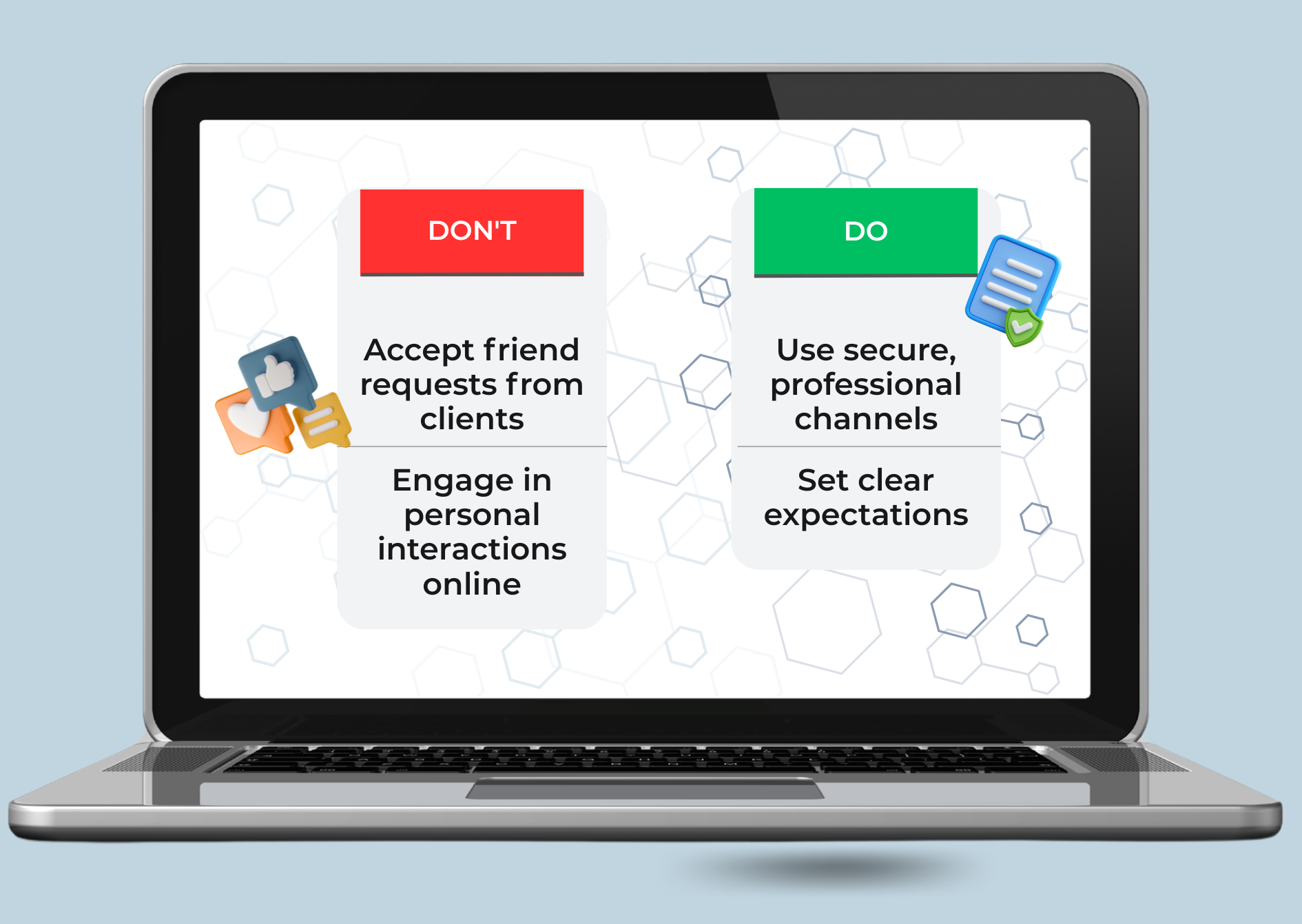
Best practice:
- Maintain professional communication channels.
- Set clear expectations from the outset.
- Avoid personal interactions online with clients.
Self-Reflection Exercise
Consider a time when a boundary was tested or crossed in your practice.
- What happened, and how did you respond?
- What impact did it have on the client and the work?
- What could you do differently in the future to reinforce or restore the boundary?
Write a short reflection or discuss this in supervision.
Key Takeaways
- Boundaries are essential for ethical, effective IEMT practice.
- Dual relationships can complicate or harm the therapeutic alliance.
- Therapists must be proactive and consistent in maintaining clear professional lines.
Next Steps
In Lesson 2.3, we’ll look at confidentiality and data protection—understanding your legal and ethical responsibilities in handling sensitive client information.
This ethics series is produced by The Association for IEMT Practitioners and is intended for professional development purposes. Always adhere to local laws, safeguarding requirements, and your professional judgement when applying ethical principles in practice.