
Professional standards, training and membership.







Professional standards, training and membership.
Ethics in IEMT Practice: Lesson 5.1
Case Reflection: Ethical Practice with Adult Clients
Welcome
Welcome to Module 5, where we apply the ethical principles explored in previous lessons to real-life scenarios. In Lesson 5.1, we reflect on ethical decision-making in sessions with adult clients. This applied approach strengthens your capacity to act with integrity under complex, real-world conditions.
Learning Objectives
By the end of this lesson, you will be able to:
- Analyse ethical concerns in practical IEMT case scenarios.
- Apply core principles (autonomy, beneficence, non-maleficence, justice, and integrity) in context.
- Reflect on your responses and develop ethical decision-making confidence.
Case Scenario 1: Client in Emotional Crisis
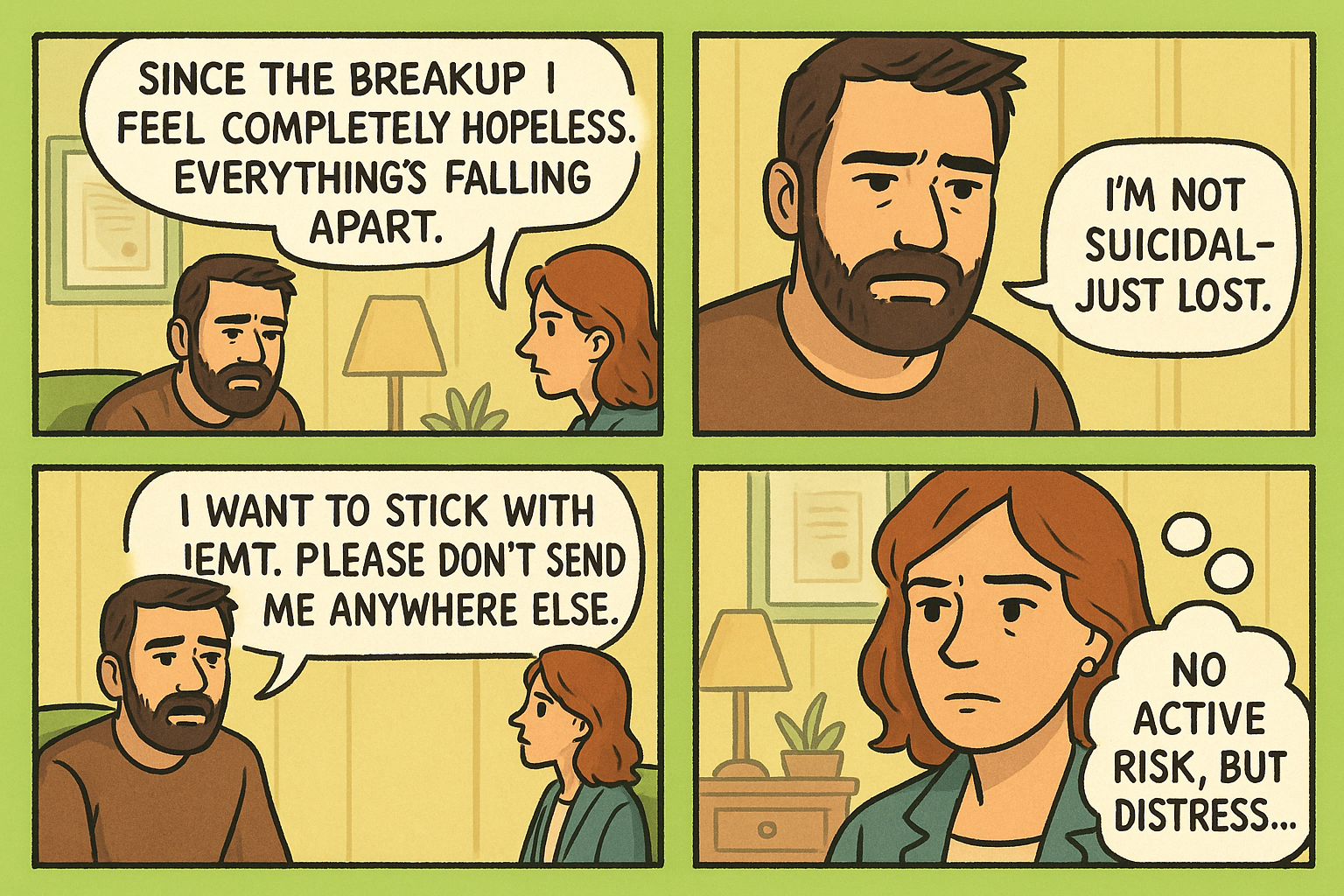
Context: A 38-year-old client presents in emotional distress, revealing a recent relationship breakdown. During the session, they express feelings of hopelessness but deny suicidal intent. They insist on continuing with IEMT and do not want to be referred elsewhere.
Ethical Considerations:
- Respecting autonomy vs. ensuring safety.
- Assessing capacity to consent in an emotionally heightened state.
- Limits of your role and competence as an IEMT practitioner.
Questions for Reflection:
- How would you assess the client's ability to consent?
- Would you continue the session, refer, or postpone?
- How might you document and communicate your decision?
The ethical landscape of IEMT practice with adult clients, as illustrated in the scenario of a client in emotional crisis, underscores the delicate balance between honouring autonomy and safeguarding well-being within a modality known for its rapid emotional engagement.
The client’s insistence on continuing IEMT amidst distress presents a tension between their self-directed choice and the practitioner’s duty to assess capacity under heightened emotional conditions—a task complicated by the therapy’s brevity, which limits the window for a more thorough evaluation.
This scenario invokes the principle of non-maleficence, as proceeding without certainty of the client’s stability risks exacerbating their hopelessness, yet halting the session might undermine their agency.
Practitioners must, therefore, employ a nuanced approach, integrating verbal assurances of safety with keen observation of non-verbal cues, ensuring that any decision to continue, postpone, or refer is grounded in both ethical reasoning and clinical judgement.
Case Scenario 2: A Client Requests a Non-Therapeutic Favour
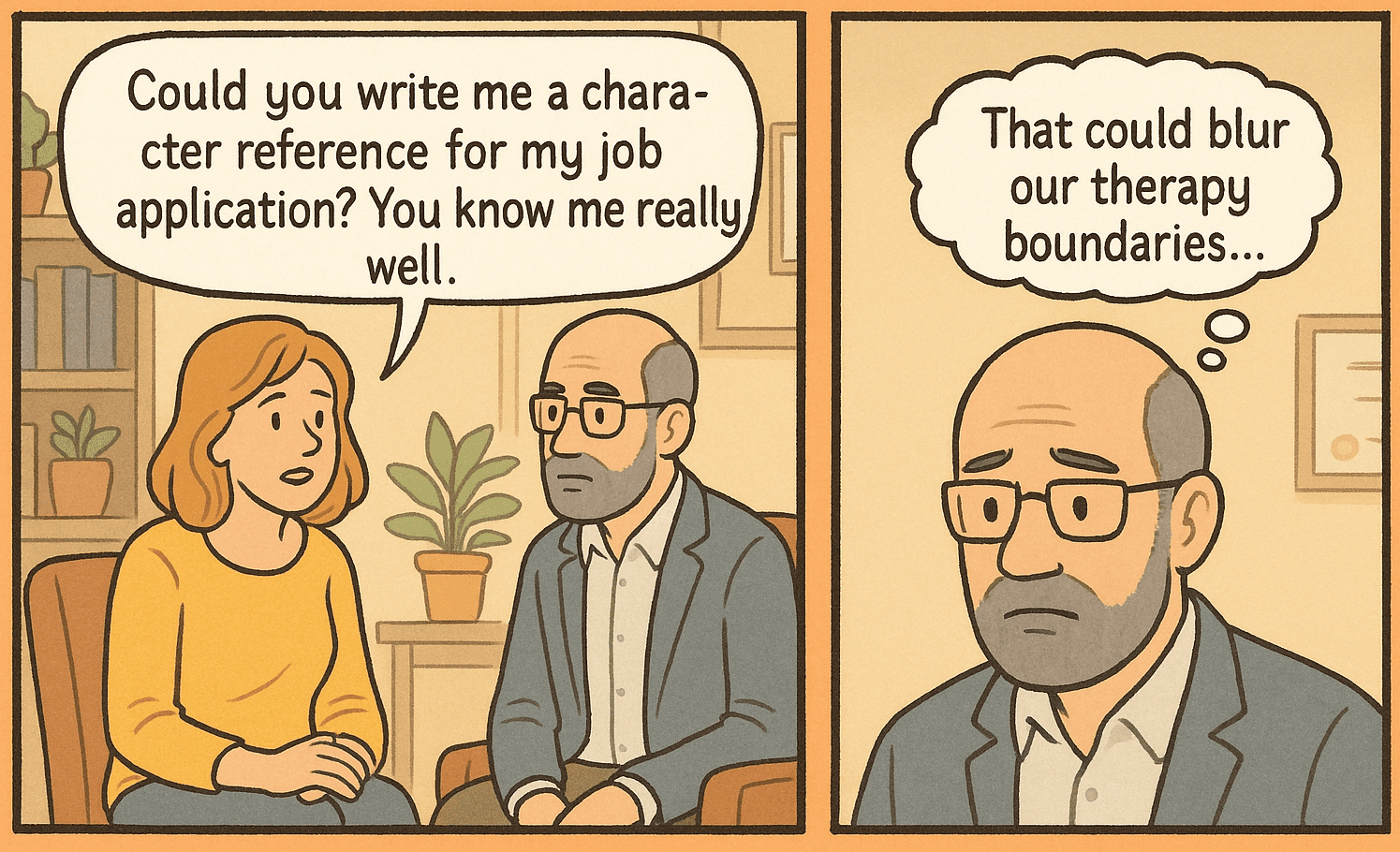
Context: A regular client asks you to write a character reference for a job application. They say you know them well and trust your opinion.
Ethical Considerations:
- Role boundaries and dual relationships.
- Integrity and objectivity.
- Risk of perceived or actual conflict of interest.
Questions for Reflection:
- Is it ever appropriate to provide a reference for a client?
- How would you explain your decision without damaging the therapeutic alliance?
The request for a non-therapeutic favour, such as a character reference, exemplifies the ethical perils of boundary crossings in IEMT practice, where the conversational rapport inherent to the modality can blur professional lines.
This situation challenges the principle of integrity, as agreeing to the request risks compromising objectivity and creating a dual relationship that could skew the therapeutic dynamic—potentially fostering a perception of favouritism or obligation.
Conversely, a blunt refusal might strain the trust cultivated through IEMT’s collaborative nature.
Practitioners must navigate this dilemma by articulating a clear policy rooted in professional standards, framing their response as a commitment to the client’s long-term benefit rather than a personal rejection.
This approach not only preserves the therapeutic alliance but also aligns with the principle of justice by maintaining equitable boundaries across all client interactions.
Case Scenario 3: Blurred Boundaries Post-Therapy
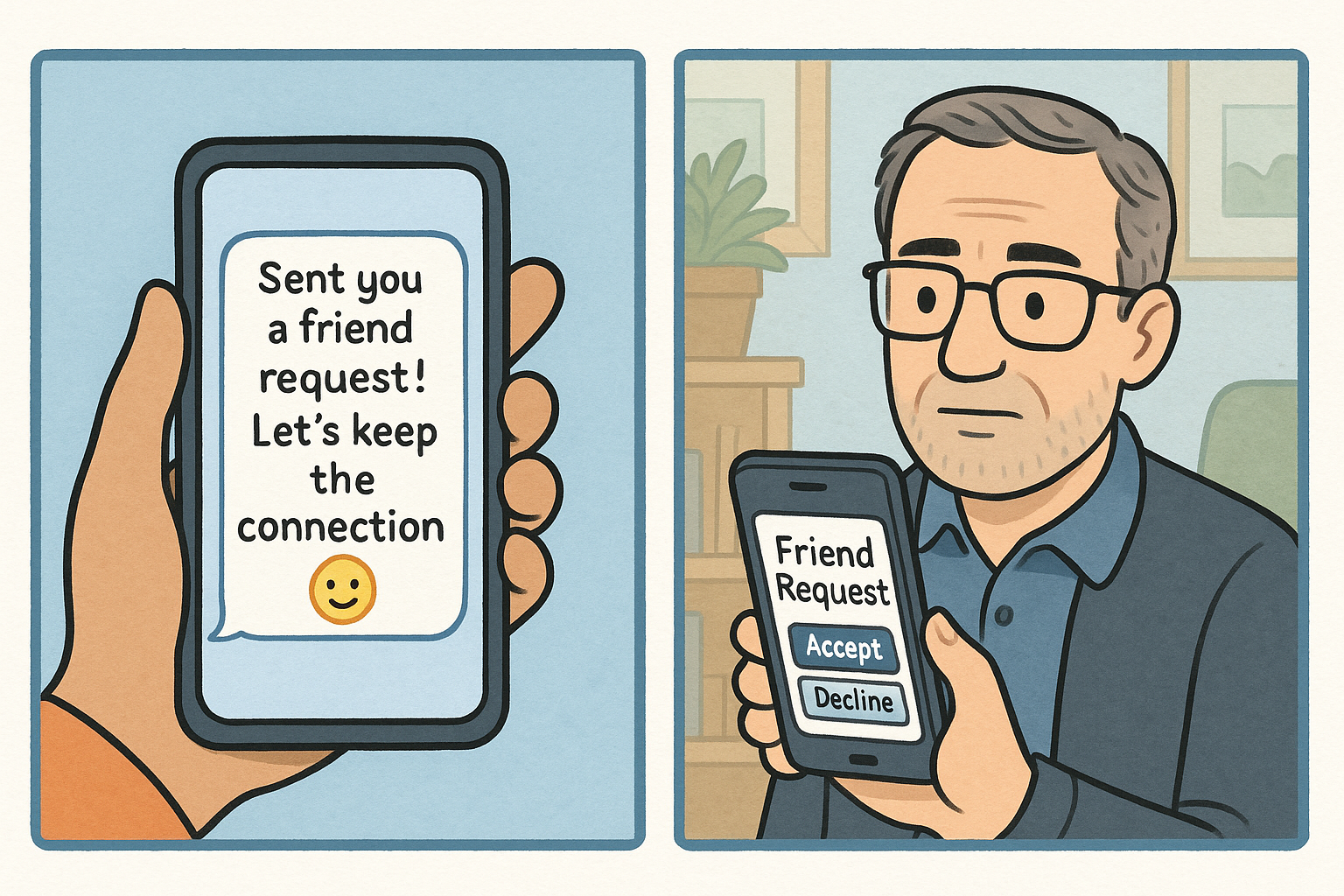
Context: After finishing a successful course of IEMT, a client sends you a friend request on social media and asks to stay in touch informally. They mention wanting to “keep the connection”.
Ethical Considerations:
- Maintaining professional boundaries post-therapy.
- Digital conduct and client expectations.
- Emotional dependency and closure.
Questions for Reflection:
- What is your current policy on post-therapy contact?
- How might you respond in a way that affirms the client’s progress while maintaining ethical boundaries?
The post-therapy boundary challenge of a social media friend request highlights the evolving nature of ethical considerations in IEMT practice, where the therapy’s success in fostering change might inadvertently cultivate client attachment.
The client’s desire to “keep the connection” engages the principle of beneficence, as their progress merits affirmation, yet it also tests the practitioner’s ability to uphold professional closure against the backdrop of digital accessibility.
In IEMT, where emotional shifts can deepen relational bonds quickly, this scenario necessitates a proactive stance on post-therapy conduct—perhaps established at the outset of treatment—to preempt such requests.
By gently redirecting the client toward their newfound independence while acknowledging their growth, practitioners reinforce the principle of autonomy, ensuring that the therapeutic relationship concludes with clarity and respect rather than lingering ambiguity.
Self-Reflection Exercise
Choose one of the above scenarios. Write a short reflection on how you would respond, including:
- Which ethical principles apply?
- What actions would you take?
- How you would ensure the client’s best interest is upheld.
Share your reflection in supervision or peer discussion for further insight.
Key Takeaways
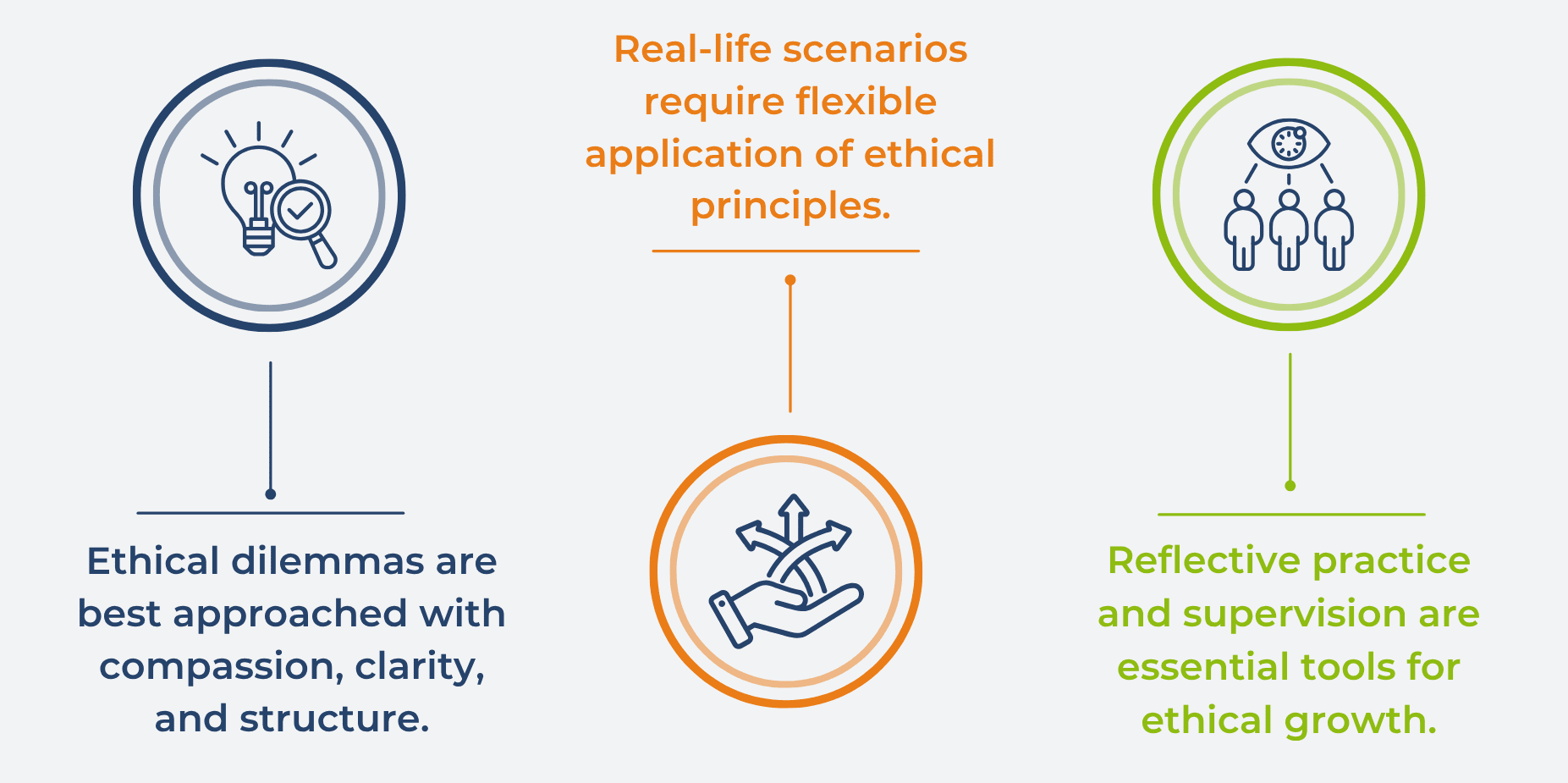
- Real-life scenarios require flexible application of ethical principles.
- Reflective practice and supervision are essential tools for ethical growth.
- Ethical dilemmas are best approached with compassion, clarity, and structure.
Next Steps
In Lesson 5.2, we will explore ethical case reflections involving children and young people, focusing on the additional responsibilities and sensitivities required in working with minors.
This ethics series is produced by The Association for IEMT Practitioners and is intended for professional development purposes. Always adhere to local laws, safeguarding requirements, and your professional judgement when applying ethical principles in practice.