Professional standards, training and membership.





Professional standards, training and membership.
Ethics in IEMT Practice: Lesson 3.1.1
Children’s Rights: A Rights-Based Approach to Ethical Practice
Welcome
Working well with children and young people takes more than good technique. It takes a clear understanding of their rights, and the habit of treating them as people with a voice, not just as recipients of care. This lesson looks at the United Nations Convention on the Rights of the Child (UNCRC), what it means in everyday practice, how to balance a young person’s wishes with their safety, and how to use your authority with care.
Learning Objectives
By the end of this lesson, you will be able to:
- Describe the main articles of the UNCRC that matter to your practice.
- Explain how to listen to, respect and involve a child or young person in decisions that affect them.
- Weigh a young person’s wishes against the duty to protect them.
- Recognise the power you hold as an adult practitioner and use it responsibly.
The UN Convention on the Rights of the Child
The UNCRC was adopted by the United Nations General Assembly on 20 November 1989 and has been ratified by almost every country in the world, including the United Kingdom. It has 54 articles setting out the civil, political, economic, social and cultural rights of every child. In the UK the Convention is not a direct source of law that you can rely on in a court in the way you can with an Act of Parliament, but it shapes legislation and guidance, and in Wales and Scotland it has been given further legal force for public bodies. It sets a standard that good practice should meet. Several articles matter especially for practitioners:
In all actions concerning children, whether undertaken by public or private social welfare institutions, courts of law, administrative authorities or legislative bodies, the best interests of the child shall be a primary consideration.
United Nations, Convention on the Rights of the Child (1989), Article 3(1)
States Parties shall assure to the child who is capable of forming his or her own views the right to express those views freely in all matters affecting the child, the views of the child being given due weight in accordance with the age and maturity of the child.
United Nations, Convention on the Rights of the Child (1989), Article 12(1)
| Article | What it says, in short | What it means for you |
|---|---|---|
| Article 3 | The best interests of the child must be a primary consideration in all actions concerning children. | Ask what is best for this child, not what is convenient for you, their parents or the Association. |
| Article 5 | Parents guide the child in a way that matches the child’s “evolving capacities”. | The older and more capable the young person, the more weight their own choices carry. |
| Article 12 | The right to express views freely and to have them given due weight, according to age and maturity. | Ask, listen, explain what you will do with what you hear, and record the young person’s views. |
| Article 13 | The right to freedom of expression, including through art and other media. | Let children express themselves in ways that suit them, such as drawing, play or storytelling. |
| Article 16 | Protection from unlawful interference with privacy, family and correspondence. | Take confidentiality seriously, and explain its limits honestly. |
| Article 19 | Protection from all forms of violence, abuse, neglect and exploitation. | This is the basis of your safeguarding duty (Lesson 3.1). |
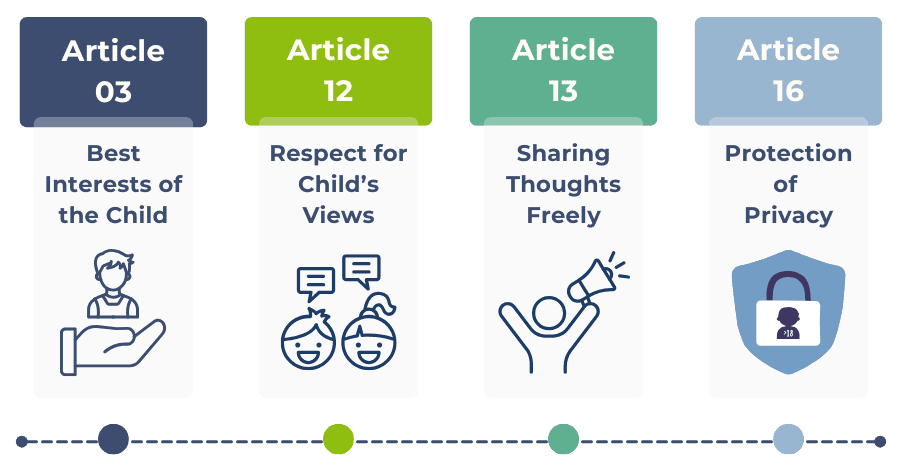
Together these articles describe a child as an active participant in decisions about their own wellbeing, whose capacity to take part grows with age and experience.
The right to be heard, respected and involved
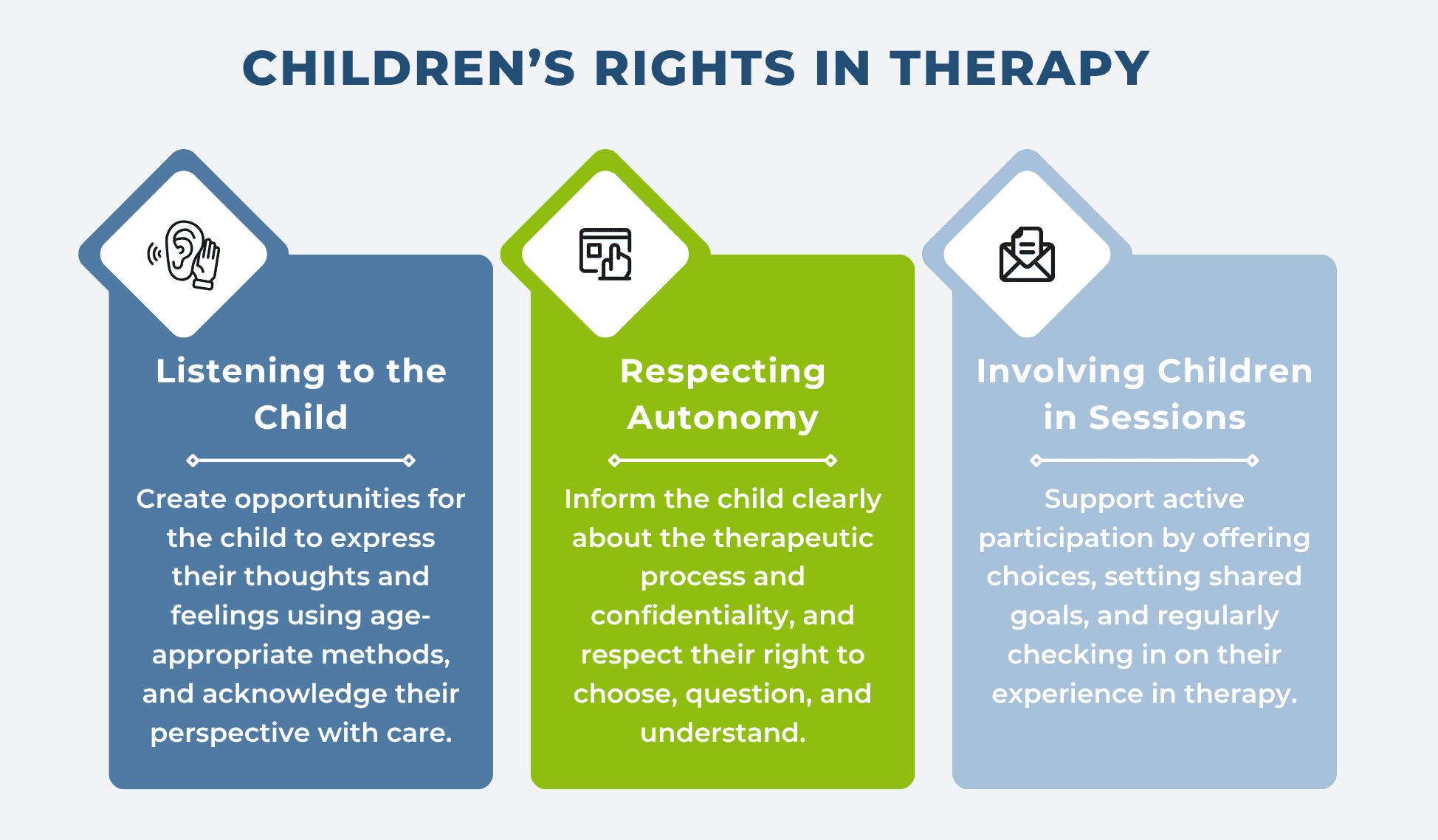
Listening to the child
- Make space for the child to say what they want, what worries them, and how they understand what is happening.
- Use language and tools that suit their age and development, such as drawing, storytelling or metaphor.
- Take their view seriously, even when it cannot be the only basis for a decision.
Respecting their choices
Respect for a young person includes respecting their right to:
- say yes or no to taking part, as far as the law and the person’s capacity allow;
- understand what you will do and why, in words they can follow;
- know how their information will be used and who it might be shared with.
Always explain confidentiality and its limits clearly, and invite questions.
Involving the child in decisions
Even young children, or children with additional needs, can take a meaningful part in decisions when given the right support. You can:
- offer real choices about the structure or content of a session;
- set goals together;
- check in regularly on how the young person is feeling about the work.
Involving a child in this way builds trust and helps them feel safe. It also gives you better information about whether the work is suitable.
Balancing rights with protection
The ethical tension
Sometimes what a child wants appears to conflict with their safety or welfare. A child might ask you not to tell anyone about abuse, or refuse help that others believe is in their best interests. This is one of the hardest areas of ethical practice, and it is why the Association’s safeguarding policy sets out a clear order of priority:
Put immediate safety before IEMT, confidentiality preferences, reputation, training relationships or membership interests.
The Association for IEMT Practitioners, Safeguarding Policy, section 3
The role of safeguarding
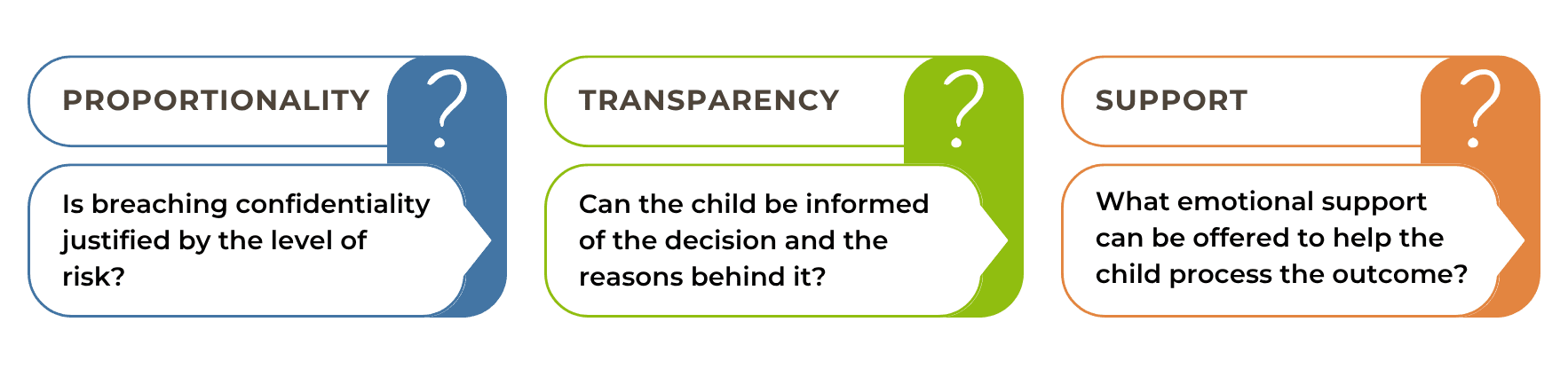
The UNCRC does not treat children’s rights as unlimited. Article 3 puts the child’s best interests first, and Article 19 requires protection from harm. You must be ready to act decisively to protect a child, even where that temporarily overrides what they have asked for. What matters is how you do it: with compassion, with honesty, and with as little loss of the young person’s sense of control as possible. In practice that means:
- telling the young person what you need to do, and why, before you do it wherever it is safe;
- giving them as much choice as you can within the limits of safety, such as how they would like to be supported;
- staying with them through the process rather than handing them over and disappearing;
- recording what the young person said and wanted, even where you could not follow it.
The ethical use of power and authority
Power in the relationship
Every professional relationship has a power imbalance. With children it is greater, because of age, legal status and stage of development. Ethical practice means that you:
- use your authority only in the service of the child’s wellbeing;
- never use coercion, intimidation or emotional manipulation;
- stay alert to dependency, to idealisation and to the young person’s emotional vulnerability;
- never allow a relationship to become secret, exclusive or personal (see Lesson 3.2).
Modelling healthy authority
Practitioners can show what respectful adult behaviour looks like by setting clear and consistent boundaries, responding calmly and predictably, owning mistakes, and welcoming feedback. In doing so you help a young person feel safe, and strengthen their sense that they have a voice and that adults can be trusted to use their power well.
Listen. Explain. Involve. Protect. Tell the truth about what you can and cannot keep private. Record what the young person said.
The UNCRC applies to all four UK nations through the UK’s ratification, but how far it is built into domestic law differs. Wales requires Welsh Ministers to have due regard to it under the Rights of Children and Young Persons (Wales) Measure 2011. Scotland has incorporated it into Scots law for public authorities through the United Nations Convention on the Rights of the Child (Incorporation) (Scotland) Act 2024. Outside the UK, check how the Convention and local child-protection law apply where you practise.
Self-Reflection Exercise
Take a few minutes to reflect:
- Think of a time you worked with a young person. How did you make sure their voice was heard?
- Where, in your practice, might a young person feel they have little say?
- How would you explain your confidentiality limits to a 12-year-old in plain words?
Key Takeaways
- Children have rights to be heard, protected and treated with dignity. The UNCRC sets out these standards.
- Listen, explain and involve young people in decisions, in a way that suits their age.
- Safeguarding can override a young person’s wishes, but how you do it matters.
- You hold power as an adult practitioner. Use it carefully, and never in secret.
Next Steps
Lesson 3.1.2 looks at Gillick competence: how to judge whether a young person under 16 is able to give their own consent, and what to do with your answer.