



The Trouble With Being Good at Being You
When the qualities that once helped us become rules we cannot put down, being ourselves can feel surprisingly restrictive. Nicola Cranie explores identity, learned patterns and the freedom to choose.

Professional standards, training and membership.
Professional standards, training and membership.
When the qualities that once helped us become rules we cannot put down, being ourselves can feel surprisingly restrictive. Nicola Cranie explores identity, learned patterns and the freedom to choose.
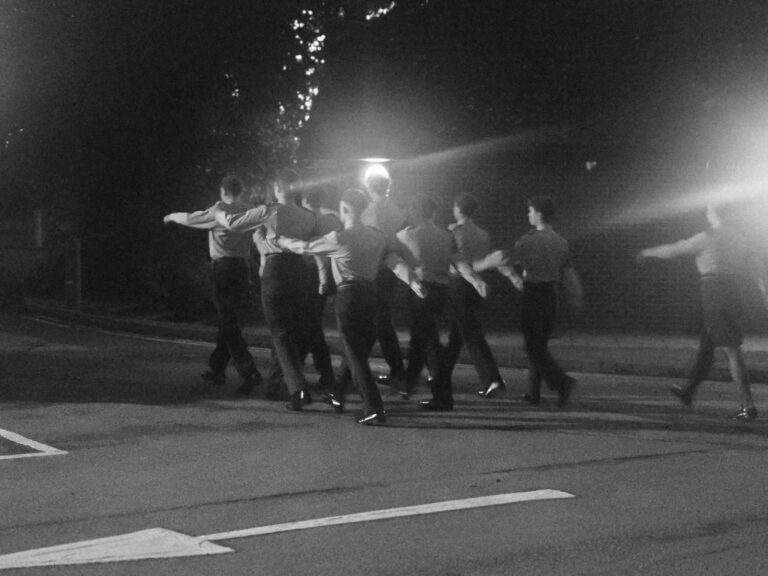
Lisa Helia of Hello Mind represented the IEMT Association at Sparsholt College, celebrating cadets, adult volunteers and opportunities to get involved.
Rose Ferguson explores how identity, pronouns and echoes of past relationships shape our responses after a breakup through the lens of IEMT.
By Rose Ferguson One of the hardest parts of recovering from a toxic relationship is what it does to the way you see and think about yourself. There's often a lot of regret. Could you have seen it sooner? Should…
Association Statement: Withdrawal of Recommendation for Sam Vaknin The Association for IEMT Practitioners no longer recommends Sam Vaknin, his teaching, training or services. Any previous recommendation or endorsement by the Association should now be regarded as withdrawn. This decision reflects…

Rose Ferguson reflects on blending IEMT and hypnosis in her practice, sharing a case involving long-standing headaches, jaw clenching and beliefs about tension.
A client came to see me because of her relationship with her mother. This wasn’t a bit of friction. This was decades of it. She could give me the full box set: every argument, every disappointment, every comment at every…
From Anxiety and Withdrawal to Choice: Finding freedom beyond anxiety and withdrawal When this client first came to see me, she described her world as becoming “smaller and smaller.” Over many years, she had lived through significant loss, bereavement, relationship…
Working with Shame and Guilt Working with Shame and Guilt in IEMT Emotions are not facts. But they can feel like them, especially when they have been present long enough to feel permanent. Shame and guilt are often among the…
“I don’t feel like myself anymore.” It might not always be said out loud. But it’s almost always felt. “I don’t feel like myself anymore.” For an athlete, those words carry a particular weight. Identity and performance are deeply intertwined.…
Reducing Emotional Imprint in a Life Shaped by Stress, Trauma and Survival There are certain clients you continue to think about long after sessions end. Their journey stays with you because you get to witness someone gradually reconnect with themselves…
When IEMT Isn’t The Right Fit An ethical practitioner will always prioritise transparency regarding whether a specific modality is appropriate for your unique situation. It’s wise to maintain a healthy scepticism toward any individual who offers absolute guarantees regarding therapeutic…
When Grief Doesn’t Shift When Grief Doesn’t Shift: A Client Case Story Using IEMT Significant loss changes the landscape of a person’s life. There is often a clear sense of before and after. For some, even when time has passed…
Diagnostics versus Experience Many people wonder whether IEMT can help with a particular condition. However, one of the defining features of IEMT is that it does not work through diagnostic labels. Rather than asking whether IEMT can help a specific…
IEMT Research: An Exploratory Comparison with EMDR Peer-reviewed IEMT research An exploratory comparison of IEMT and EMDR-directed eye movements A 2026 study compared IEMT-directed eye movements, EMDR-directed eye movements and a control condition in 33 adults recalling negative memories. The…
The Association for IEMT Practitioners Attends Defense-Led Networking Event The Association for IEMT Practitioners was recently invited to attend a Defence-led business networking event hosted by South East Reserve Forces and Cadets Association, in collaboration with British Army South East.…
When Insight Isn’t Enough When Insight Isn’t Enough: Why Understanding Doesn’t Always Create Change Many clients arrive believing they already understand a lot about their issue. They know where a reaction came from. They can cite back to childhood, past…
A Simple Case Story of IEMT in Trauma Recovery When Intrusive Memories Wouldn’t Shift: A Simple Case Story of IEMT in Trauma Recovery In February 2023, she reached a crisis point. Years of unresolved trauma had taken their toll. Her…
IEMT and Insomnia – A Client’s Experience This client’s story is shared with permission. Imagine waking in the middle of the night, fully conscious yet unable to move, trapped between sleep and wakefulness. For DJ, this was not an occasional…
How IEMT Supports Trauma-Informed Community Healing: Learning from Men MatterScotland and Trauma Informed Parenting Written by Emma Toms Nothing meaningful happens in places where people feel managed. Change happens where people feel safe and respected. Not rushed. Not pathologised. Not…
IEMT for Grief Note: The client’s name and identifying details have been changed to protect privacy. Holly is a young woman who has lived with an extraordinary degree of loss, largely through a series of sudden deaths involving family members…
A Practical Model for Establishing Personal Boundaries This model describes how personal boundaries are established, tested, eroded, and restored within everyday relational systems. It is particularly relevant where responsibility is displaced, emotions are used as leverage, or care is converted…
Empathy, Compassion, Sympathy, and Pity in Clinical Practice Empathy, Compassion, Sympathy, and Pity in Clinical Practice: Concepts, Mechanisms, and Practical Distinctions Why this matters: In healthcare and the psychotherapies, “empathy,” “compassion,” and “sympathy” are often used interchangeably, yet they are…
Clinical Decision-Making and Mechanisms in Integral Eye Movement Technique (IEMT): Practitioner Reflections and Theoretical Considerations Abstract. Integral Eye Movement Technique (IEMT) is an experiential therapeutic approach that utilises structured eye movement patterns to modify affective, somatic, and identity-level responses associated…
Memory, Emotional, Identity: What changes in an IEMT session? Guest Blog Post by Rose Ferguson Some clients want to understand how IEMT works. Others are less interested in the mechanics and more focused on a simple question: Will this help…