






The Human Biome · Article 5 of 26
Modifying the Biome for Emotional and Cognitive Well-Being
Educational and scope notice
This material is for education only and does not provide medical diagnosis or treatment advice. IEMT practitioners should remain within their professional scope and refer clients to an appropriately qualified healthcare professional where medical assessment, treatment, prescribed medication, supplements or restrictive diets are involved.
The gut microbiota is a dynamic ecosystem that can be shaped through diet, lifestyle, and environmental factors. Increasing evidence demonstrates that targeted modification of the gut biome has been associated with improvements in gastrointestinal health and may support mood, emotional regulation, and cognitive function. This module examines evidence-based strategies for optimising the gut–brain relationship and guides practitioners on discussing these topics within appropriate professional boundaries.
Dietary Interventions for a Balanced Biome
Diet remains the most potent modulator of the gut microbiota. The composition and metabolic activity of intestinal microbes can shift significantly within days of dietary change. A diet that supports microbial diversity and stability tends to promote better immune regulation, reduced inflammation, and improved mood.
Key dietary approaches include:
- Increased plant diversity: A wide range of vegetables, fruits, legumes, nuts, and seeds provides a diverse array of fibres and polyphenols that feed beneficial bacterial species and promote microbial resilience.
- Prebiotic-rich foods: Foods such as garlic, onions, leeks, asparagus, artichokes, oats, and bananas contain non-digestible fibres (e.g., inulin, fructooligosaccharides) that selectively stimulate the growth of beneficial bacteria such as Bifidobacterium and Lactobacillus.
- Fermented foods: Natural ferments such as kefir, sauerkraut, kimchi, miso, tempeh, and live yoghurt provide living microorganisms that can transiently colonise the gut and interact with resident microbes. Regular consumption has been associated with reduced markers of inflammation and improved affect regulation in some individuals.
- Polyphenols and antioxidants: Found in berries, green tea, olive oil, and dark chocolate, these compounds act as microbial substrates and reduce oxidative stress within the gut environment.
- Reduced ultra-processed foods: Diets high in refined sugar, emulsifiers, and artificial additives impair microbial diversity and increase intestinal permeability, which can perpetuate inflammatory and mood-related dysregulation.
Practitioners can encourage clients to cultivate curiosity about how dietary patterns affect their mood and physiology while remaining careful to avoid prescriptive or medicalised nutritional advice.
Please note: there are additional information pages about potential negative issues that can arise in some individuals when changing their diets as suggested above.
Targeted Supplementation and Psychobiotics
While diet forms the foundation of microbiota health, specific probiotic and prebiotic supplements can enhance particular physiological or psychological outcomes. These are most effective when strain-specific, evidence-based, and used to complement (not replace) nutritional improvements.
- Lactobacillus plantarum—Demonstrated to reduce perceived stress and anxiety while improving emotional resilience. It supports serotonin metabolism and may influence the regulation of cortisol release through the HPA axis pathways.
- Lactobacillus rhamnosus—Modulates GABA receptor expression via vagal signalling, contributing to reduced anxiety and improved sleep regulation.
- Bifidobacterium longum—Shown to alleviate low mood and cognitive sluggishness, enhancing emotional clarity and attentional stability.
- Saccharomyces boulardii—A beneficial yeast that restores microbial balance after antibiotic use and reduces intestinal inflammation.
Saccharomyces boulardii: A Beneficial Yeast for Microbial Restoration
Saccharomyces boulardii is a non-pathogenic, probiotic yeast isolated initially from tropical fruit skins in the early twentieth century. Unlike bacterial probiotics, this is a transient organism, meaning it does not permanently colonise the gut but exerts its effects while passing through the intestinal tract.
This yeast has been extensively studied for its ability to restore microbial balance following antibiotic therapy. Because it is a yeast rather than a bacterium, it remains unaffected by antibacterial drugs. It can therefore be co-administered during antibiotic treatment to help prevent antibiotic-associated diarrhoea and Clostridioides difficile infections.
Mechanistically, S. boulardii supports gut integrity and reduces inflammation through several pathways:
- It modulates immune signalling by increasing anti-inflammatory cytokines such as IL-10 while reducing pro-inflammatory mediators including TNF-α.
- It enhances intestinal barrier function by upregulating tight-junction proteins, thereby reducing intestinal permeability (“leaky gut”).
- It neutralises bacterial toxins and inhibits the adhesion of pathogens to intestinal epithelial cells.
Clinical trials have demonstrated that S. boulardii supplementation can reduce gastrointestinal inflammation, promote recovery from infection, and support gut homeostasis after antibiotic disruption. In the broader context of the microbiota–gut–brain axis, its anti-inflammatory and barrier-protective effects may indirectly contribute to improved emotional regulation and reduced stress reactivity.
Stomach Acid: Choosing a probiotic requires consideration of strain specificity, viability, and survival through gastric acid. Enteric-coated or delayed-release formulations are preferable, and probiotics should ideally be taken alongside food to buffer stomach acidity.
Scientific Insight: Probiotics and Survival Through the Stomach
Not all probiotic bacteria survive the acidic environment of the stomach. Strains such as Lactobacillus plantarum and Bifidobacterium lactis exhibit higher acid tolerance, while encapsulated or enteric-coated formulations further enhance viability. Taking probiotics before or with meals can improve their passage through the stomach and increase delivery to the intestines, where colonisation and immune interactions occur.
Lifestyle and Behavioural Modulation of the Gut–Brain Axis
Beyond nutrition, multiple lifestyle factors significantly influence gut health and emotional balance. These include:
- Stress management: Chronic psychological stress alters gut motility, reduces microbial diversity, and promotes inflammation. Techniques such as mindfulness, breathwork, and IEMT-based emotional regulation can indirectly stabilise the microbiota by reducing HPA axis overactivation.
- Physical activity: Regular moderate exercise enhances microbial diversity, increases short-chain fatty acid (SCFA) production, and improves emotional well-being through endorphin and vagal pathways.
- Sleep quality: Circadian rhythm disruption impairs microbial balance. Consistent sleep-wake cycles promote gut–brain synchrony and emotional stability.
- Exposure to natural environments: Interaction with soil, animals, and outdoor biodiversity introduces environmental microbes that enrich gut microbial composition, supporting immune tolerance and stress resilience.
Circadian Rhythm Disruption and Microbial Balance
The circadian rhythm is the body’s intrinsic 24-hour timing system that regulates sleep–wake cycles, metabolism, hormone secretion, and immune function. The gut microbiota mirrors this rhythm, with microbial populations fluctuating in both abundance and activity across the day–night cycle. This synchrony ensures optimal digestion, immune defences, and emotional stability.
When circadian rhythms are disrupted (through irregular sleep, late-night eating, jet lag, or long-term shift work), the gut microbiota loses its normal diurnal structure. Research shows that such disruption leads to reduced microbial diversity, impaired production of short-chain fatty acids (SCFAs), and increased intestinal permeability. These alterations promote low-grade inflammation and neurochemical imbalance, contributing to fatigue, mood instability, and cognitive decline.
A large-scale Dutch cohort study of shift workers (the Netherlands Cohort Study on Diet and Cancer, initiated in the 1980s) found that individuals engaged in long-term night or rotating shift work had a significantly higher incidence of breast, prostate, and colorectal cancers compared with day workers. These findings are thought to arise from circadian disruption-induced hormonal and immune dysregulation, including altered melatonin production, oxidative stress, and gut microbial imbalance.
Maintaining consistent sleep and meal schedules, prioritising exposure to natural daylight, and minimising artificial lighting at night can help realign circadian and microbial rhythms. This synchrony supports hormonal balance, immune regulation, and emotional well-being, highlighting the deep interconnection between time, light, and the human biome.
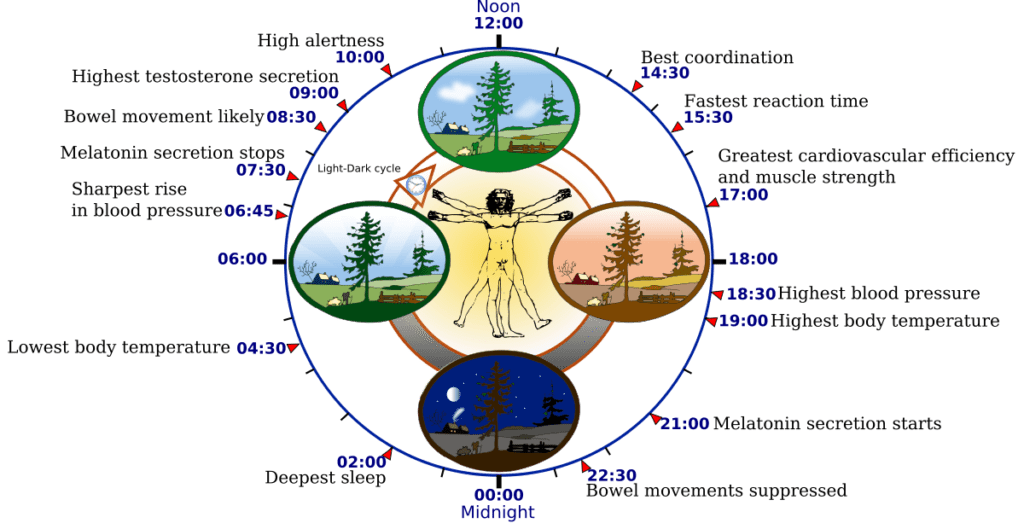
This diagram is used to illustrate circadian regulation of physiology; individual timing and chronotype may vary.
Overview of the biological circadian clock in humans: The biological clock affects the daily rhythm of many physiological processes. This diagram depicts the circadian patterns typical of someone who rises early in the morning, eats lunch around noon, and sleeps at night (10 p.m.). Although circadian rhythms tend to be synchronised with cycles of light and dark, other factors – such as ambient temperature, meal times, stress and exercise – can influence the timing as well.
Source: Mrabet, Y. (2007). Diagram created using Inkscape, based on information from The Body Clock Guide to Better Health by Smolensky & Lamberg (2000).
Landscape elements adapted from Open Clip Art Library (public domain).
License: Public domain.
Ethical and Clinical Considerations for IEMT Practitioners
IEMT practitioners are not expected to diagnose or prescribe for gastrointestinal or metabolic conditions. However, understanding how lifestyle and microbial balance influence emotional regulation allows for more nuanced case formulation. Discussions around gut health should remain educational and exploratory, supporting clients’ self-awareness rather than recommending medical or dietary regimens.
Practitioners may appropriately:
- Offer psychoeducation on the gut–brain axis and its relevance to emotional patterns.
- Encourage clients to monitor the relationship between diet, stress, and mood.
- Signpost clients to qualified nutritionists, GPs, or gastroenterologists when indicated.
This integrative awareness strengthens the practitioner’s ethical grounding and reinforces the holistic principles underpinning IEMT practice.
Summary
- The gut biome can be shaped through diet, supplementation, and lifestyle choices that promote microbial diversity and reduce inflammation.
- Fermented and fibre-rich foods support beneficial bacteria, while processed foods and chronic stress disrupt balance.
- Psychobiotic strains such as L. plantarum, L. rhamnosus, and B. longum show measurable effects on stress, mood, and cognition.
- Practitioners can discuss these concepts within scope, supporting client education without making medical recommendations.
Reflective Questions
- How might simple dietary or lifestyle awareness practices complement IEMT interventions?
- What ethical considerations arise when discussing gut health with clients?
- In what ways could the practitioner’s own diet, stress, and sleep patterns influence therapeutic presence and attunement?
Suggested Reading
- Jacka, F. N., et al. (2017). A randomised controlled trial of dietary improvement for adults with major depression (the SMILES trial). BMC Medicine, 15(23).
- Sarkar, A., et al. (2016). Psychobiotics and the manipulation of bacteria–gut–brain signals. Trends in Neurosciences, 39(11), 763–781.
- Foster, J. A., & Neufeld, K. A. M. (2013). Gut–brain axis: How the microbiome influences anxiety and depression. Trends in Neurosciences, 36(5), 305–312
Purchase Psychobiotic Supplements
Lactobacillus plantarum
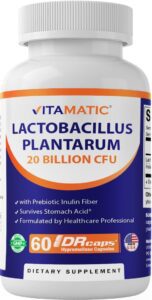
Lactobacillus plantarum is a psychobiotic that helps reduce perceived stress and anxiety and improves emotional resilience. This product delivers a high concentration of viable cultures in acid‑resistant DR‑caps and includes a prebiotic to help the bacteria thrive.
Buy it on Amazon
Lactobacillus rhamnosus
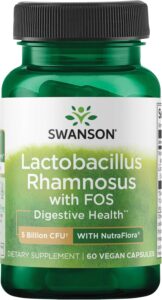
Lactobacillus rhamnosus modulates GABA receptors via vagal signalling, which supports calmer moods and better sleep. This product contains a high amount of live bacteria along with a prebiotic (FOS) and uses special vegan capsules that can survive stomach acid to make sure the bacteria get to your gut unharmed
Buy it on Amazon
Bifidobacterium longum
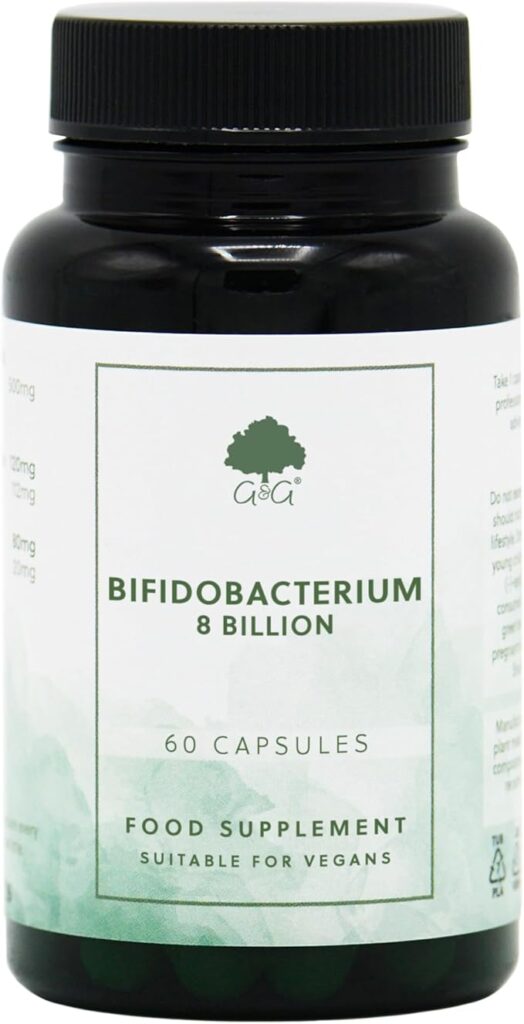
Bifidobacterium longum helps balance the microbiome, promotes attentional clarity and mood, and may ease low mood and cognitive sluggishness. This supplement includes billions of CFUs and a prebiotic in a capsule that can survive stomach acid, making sure it reaches the intestine.
Buy it on Amazon