






The Human Biome · Article 6 of 26
Integrating Gut Awareness into IEMT Practice
Educational and scope notice
This material is for education only and does not provide medical diagnosis or treatment advice. IEMT practitioners should remain within their professional scope and refer clients to an appropriately qualified healthcare professional where medical assessment, treatment, prescribed medication, supplements or restrictive diets are involved.
The gut–brain axis provides a robust framework for understanding how emotional states, bodily sensations, and physiological processes interconnect. Within IEMT practice, awareness of gut physiology and its metaphorical representations enriches the practitioner’s capacity to interpret kinaesthetic responses and support emotional transformation holistically. This module explores how to integrate an informed, ethical awareness of gut–brain communication into therapeutic dialogue, observation, and self-regulation.
The Gut as a Centre of Emotional and Kinaesthetic Experience
Clients often describe their emotions through visceral language: “I felt it in my gut,” “my stomach dropped,” or “I had a sinking feeling.” These expressions are not merely figurative; they are often associated with lived neurovisceral experience mediated by the enteric nervous system and vagal pathways. During emotionally charged experiences, signals between the gut and the limbic system alter motility, muscle tone, and visceral sensation, creating tangible bodily markers of emotion.
Interoception: Common Gut and Abdominal Idioms
Interpretive Note for Practitioners
These idioms often represent literal interoceptive experiences encoded in everyday language. Within IEMT, they provide a bridge between metaphor and embodied sensation, allowing practitioners to explore how clients linguistically externalise visceral awareness, often revealing emotionally charged kinaesthetic patterns stored in the gut and abdomen.
“I’ve got a gut feeling about this.”
“Go with your gut.”
“It’s just a gut instinct.”
“My stomach dropped.”
“I felt sick to my stomach.”
“It makes me sick to my stomach.”
“I can’t stomach it.”
“That turns my stomach.”
“I haven’t got the stomach for it.”
“He’s got a strong stomach.”
“I’ve got butterflies in my stomach.”
“It ties me up in knots.”
“I feel it in the pit of my stomach.”
“I’ve got a knot in my stomach.”
“A sinking feeling in my gut.”
“I’m gutted.”
“It was a gut-wrenching experience.”
“It hit me in the gut.”
“He’s got guts.” / “She’s gutsy.”
“It took a lot of guts to do that.”
“My gut was telling me something was wrong.”
“I had to gut it out.”
“A punch to the gut.”
“I was doubled over.”
“My insides are in turmoil.”
“It churns my stomach.”
“I feel hollow inside.”
“It’s eating me up inside.”
“I’ve got a bad feeling in my gut.”
“A gut reaction.”
“To spill your guts.”
“To hate someone’s guts.”
“He had the nerve / the guts to stand up to them.”
“To wrench one’s gut.”
“I can feel it deep down inside.”
“My gut’s in knots.”
“It turned my insides out.”
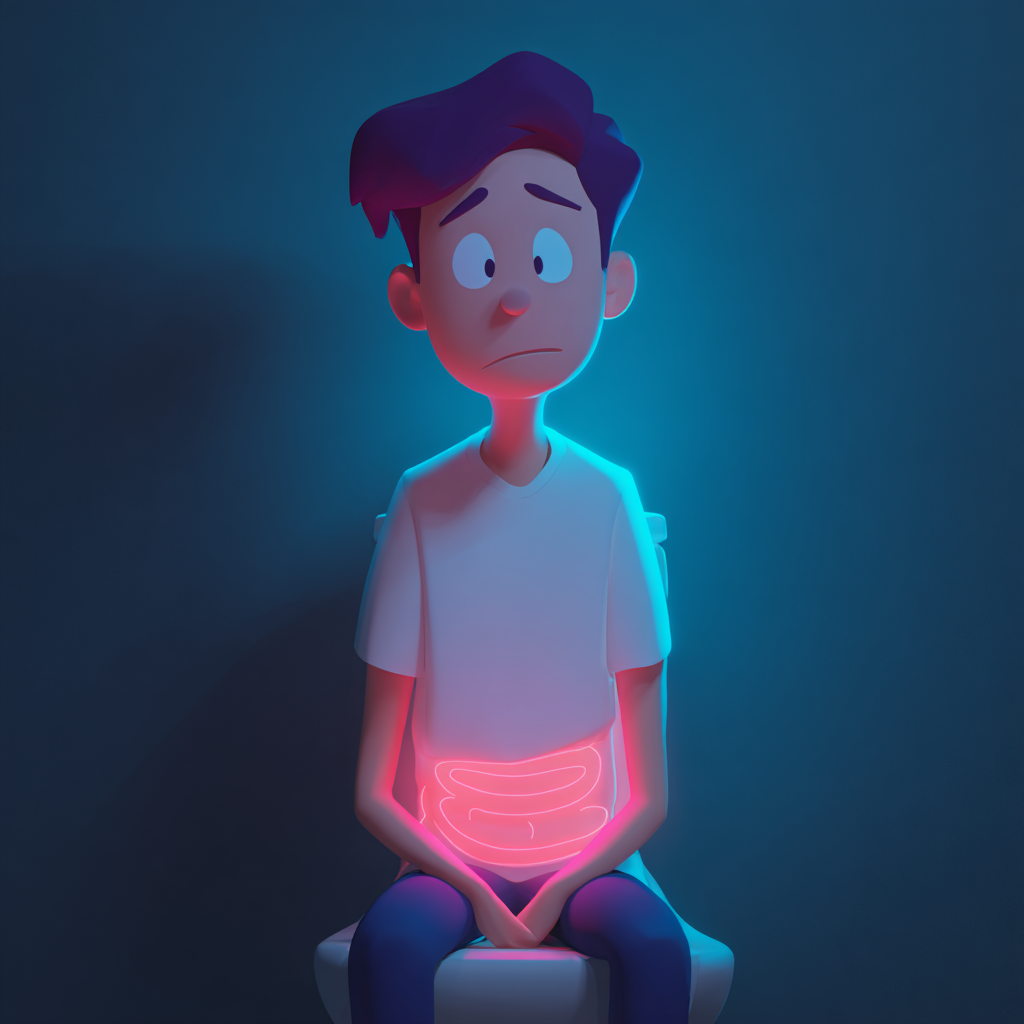
In IEMT sessions, recognising these gut-based sensations as part of the client's emotional map can provide valuable information. Visceral constriction may accompany fear or suppressed anger; warmth or release may signal resolution. Rather than interpreting these sensations diagnostically, practitioners can invite clients to explore them as somatic expressions of emotional memory, consistent with the IEMT emphasis on kinaesthetic patterning.
Andrew T. Austin, the developer of IEMT, also developed "Metaphors of Movement", a model built on IEMT that explores the autogenic metaphors of experience.
Practitioner Reflection
When a client refers to a “gut feeling”, consider whether this sensation represents a metaphorical truth, a physiological response, or both. Exploring the location, quality, and movement of visceral sensations can help uncover deeper emotional imprints stored within the body’s kinaesthetic system.
Recognising Gut–Brain Influences During IEMT Sessions
Emotional states influenced by gut imbalance often present with characteristic features that may become apparent during IEMT work:
- Somatic hyperreactivity: Clients may exhibit heightened visceral responses, such as nausea, tension, or heat, during emotional recall, reflecting vagal dysregulation or inflammatory signalling.
- Emotional volatility: Rapid fluctuations in affect or irritability may mirror microbiota-induced changes in serotonin or cytokine activity.
- Fatigue and cognitive dullness: Reduced microbial diversity or chronic inflammation may contribute to slower processing, low motivation, or a sense of “mental fog”.
- Persistent emotional rigidity: Clients with chronic digestive distress or dysbiosis may struggle to access fluid emotional states, reflecting physiological as well as psychological constriction.
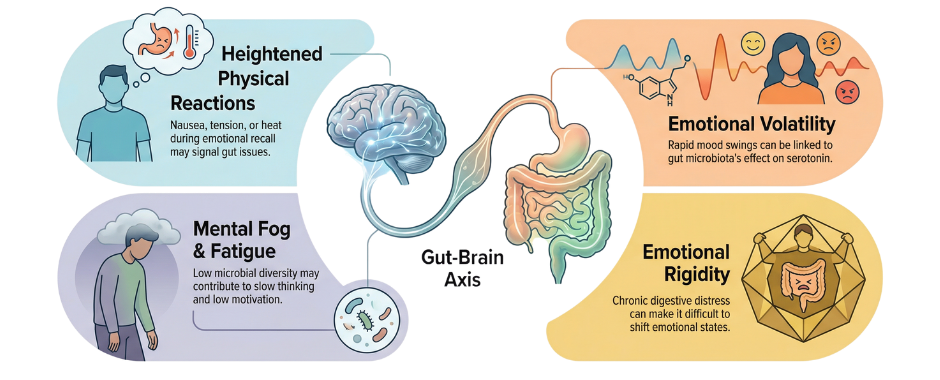
Awareness of these dynamics allows practitioners to approach such responses with curiosity and compassion, reframing them as possible reflections of the body’s communication rather than resistance or avoidance. This may be particularly relevant in "high drama" individuals with chronic low-level health issues that defy medical diagnosis and treatment and have resulted in catch-all diagnostic frames such as "irritable bowel syndrome", "chronic fatigue", "fibromyalgia", etc.
Working Safely with Visceral Sensations
Visceral sensations can evoke strong emotional responses, particularly in clients with histories of trauma or chronic illness. The practitioner’s task is to facilitate safe exploration while maintaining a clear boundary between emotional processing and medical interpretation.
- Encourage clients to describe sensations using neutral, phenomenological language rather than pathologising terms. Resist the temptation to diagnose!
- Support the client in regulating breath and posture when gut sensations intensify, promoting vagal tone and grounding.
- Use IEMT’s structured questioning and eye movement protocols to facilitate change at the level of kinaesthetic patterning, rather than attempting physiological intervention.
- Where symptoms such as persistent pain, bloating, or digestive irregularity arise, recommend medical consultation or nutritional assessment as appropriate.
Note for Practitioners
While IEMT is not a somatic therapy in the medical sense, its emphasis on embodied awareness makes it uniquely suited to integrate visceral cues. Recognising gut sensations as part of a client’s kinaesthetic landscape expands therapeutic insight without departing from the method’s ethical scope.
Important note: The Association for IEMT Practitioners does not support or endorse any aspect of what is often called "German New Medicine" (Ryke Geerd Hamer) or the metaphorical ideas on healing posited by Louise L. Hay.
Integrating Metaphor and Physiology
The language of the gut often emerges metaphorically in clients’ narratives, phrases such as “gut instinct”, “sick to my stomach”, or “stomach in knots” reflect embodied cognition. IEMT’s framework for working with metaphor can help practitioners unpack these expressions as both symbolic and physiological.
For example:
- “I can’t stomach it” may refer to both a metaphorical rejection and a literal tightening of the abdominal muscles.
- “It makes me sick to my stomach” may reflect disgust, moral violation, or an inflammatory response pattern.
- “I feel it in my gut” may indicate intuitive cognition mediated by vagal feedback and interoceptive awareness.
We can take these reports kinaesthetically and apply the K-Pattern:
"And on a score out of ten, how strong is this feeling of being sick to your stomach...?"
Etc.
Embodied Cognition and Barsalou’s Simulation Theory
The theory of embodied cognition proposes that thinking, emotion, and perception are not abstract mental processes separate from the body but are instead grounded in sensorimotor experience. Cognitive representations are formed through the body’s interactions with the physical and social world, meaning that understanding and memory are inherently linked to bodily states such as posture, movement, and visceral sensation.
Psychologist Lawrence W. Barsalou advanced this perspective through his Simulation Theory of Cognition. According to Barsalou, when we recall or imagine an event, literally or metaphorically, the brain reactivates - or “simulates” - the same sensory, motor, and emotional systems that were active during the original experience. For example, recalling a threatening encounter may reproduce subtle patterns of muscular tension, gut constriction, or autonomic arousal that mirror the original emotional state.
This process of neural “re-simulation” allows embodied memory to influence present emotional experience, providing a physiological basis for the kinaesthetic phenomena observed in IEMT. When clients access emotionally charged memories, their bodies often re-enact aspects of those states (through changes in breathing, posture, or visceral sensation), revealing how cognition is both embodied and enacted.
Understanding Barsalou’s framework helps practitioners recognise that emotional change involves not only cognitive reframing but also the re-patterning of sensorimotor and interoceptive simulations, aligning closely with IEMT’s focus on transforming kinaesthetic imprints.
In these moments, practitioners can bridge metaphorical and biological perspectives, helping clients appreciate the coherence between their language, sensations, and emotions. This integrative approach deepens insight and fosters self-compassion through embodied understanding.
Practitioner Self-Regulation and Embodied Presence
The practitioner’s own physiological state influences the therapeutic field. Elevated stress, irregular sleep, or poor dietary habits can affect the practitioner’s vagal tone and presence. Maintaining awareness of one’s own gut–brain balance supports clearer attunement and emotional stability during client sessions.
Simple practices such as mindful breathing, consistent meal timing, and adequate hydration can strengthen the practitioner’s parasympathetic regulation. A calm, grounded practitioner provides a physiological model of safety that facilitates client co-regulation, particularly when visceral or emotionally charged material arises.
Summary
- The gut is both a physiological and metaphorical centre of emotion and intuition.
- IEMT practitioners can integrate awareness of visceral responses to enhance understanding of kinaesthetic and emotional states.
- Visceral cues should be explored phenomenologically, not medically interpreted.
- Practitioner self-regulation and embodied awareness are key to working safely and effectively with gut-related phenomena.
Reflective Questions
- How do gut-based sensations appear in your clients’ descriptions of emotional experience?
- In what ways might your own physiological state influence the session dynamics?
- How can metaphorical and biological perspectives on the gut complement each other in IEMT practice?
Suggested Reading
- Craig, A. D. (2002). How do you feel? Interoception: The sense of the physiological condition of the body. Nature Reviews Neuroscience, 3(8), 655–666.
- Damasio, A. (1999). The Feeling of What Happens: Body and Emotion in the Making of Consciousness. Harcourt.
- Farb, N. A. S., et al. (2015). Interoception, contemplative practice, and health. Frontiers in Psychology, 6, 763.