







The Human Biome · Article 4 of 26
Dysbiosis, SIBO, and Chronic Emotional Dysregulation
Educational and scope notice
This material is for education only and does not provide medical diagnosis or treatment advice. IEMT practitioners should remain within their professional scope and refer clients to an appropriately qualified healthcare professional where medical assessment, treatment, prescribed medication, supplements or restrictive diets are involved.
Disturbances in the gut microbiota are increasingly recognised as significant modulators of both physical and emotional dysregulation. Imbalances in this ecosystem (whether due to infection, antibiotic exposure, stress, or diet) can provoke inflammatory and neurochemical changes that affect mood, cognition, and behavioural stability. This module explores the mechanisms and manifestations of gut dysbiosis and Small Intestinal Bacterial Overgrowth (SIBO) and considers their implications for emotional processing within IEMT practice.
Understanding Dysbiosis
Dysbiosis refers to a disruption in the composition or function of the gut microbiota, resulting in a decline of beneficial bacterial species and an overgrowth of opportunistic or pathogenic organisms. This imbalance can compromise intestinal barrier integrity, immune modulation, and metabolic signalling, leading to a cascade of physiological and psychological effects.
Common causes of dysbiosis include:
- Prolonged or repeated antibiotic use
- Dietary deficiencies or high intake of processed foods and refined sugars
- Chronic psychological stress and disrupted circadian rhythms
- Excessive alcohol consumption and environmental toxins
When the microbiota loses stability, inflammatory molecules such as lipopolysaccharides (LPS) may translocate across the intestinal barrier, triggering systemic immune responses and neuroinflammation. These inflammatory processes influence neurotransmitter balance and can heighten emotional reactivity, contributing to chronic anxiety, irritability, and depressive symptoms.
Scientific Insight: The Connection Between "Leaky Gut" and Emotional Regulation
Increased intestinal permeability (commonly referred to as “leaky gut”) occurs when tight junctions between intestinal epithelial cells become compromised. This allows microbial fragments and toxins to enter systemic circulation, activating immune and stress responses. Elevated inflammatory cytokines such as IL-6 and TNF-α have been linked to depressive mood and heightened emotional sensitivity. Interventions aimed at supporting gut integrity, such as dietary changes and stress reduction, may indirectly support emotional stability.
Inflammatory Cytokines: IL-6 and TNF-α
Cytokines are small protein messengers that coordinate communication between immune cells. Among them, interleukin-6 (IL-6) and tumour necrosis factor-alpha (TNF-α) are two of the most influential pro-inflammatory cytokines in the human body.
When the immune system detects stress, infection, or tissue injury, cytokines are released, triggering inflammation and recruiting immune defences. While essential for short-term protection, sustained elevation of IL-6 and TNF-α - often driven by chronic stress, infection, or gut dysbiosis - can produce systemic low-grade inflammation that affects the brain as well as the body.
Both IL-6 and TNF-α can cross the blood–brain barrier or signal across it, influencing neurotransmitter metabolism, neuroplasticity, and hypothalamic–pituitary–adrenal (HPA) axis activity. Elevated levels are consistently associated with depressive mood, anxiety, fatigue, and cognitive slowing, reflecting the immune system’s impact on emotional regulation.
A balanced gut microbiota helps modulate cytokine activity by promoting anti-inflammatory mediators such as interleukin-10 (IL-10) and short-chain fatty acids (SCFAs), highlighting the crucial role of gut health in maintaining both immune and emotional homeostasis.
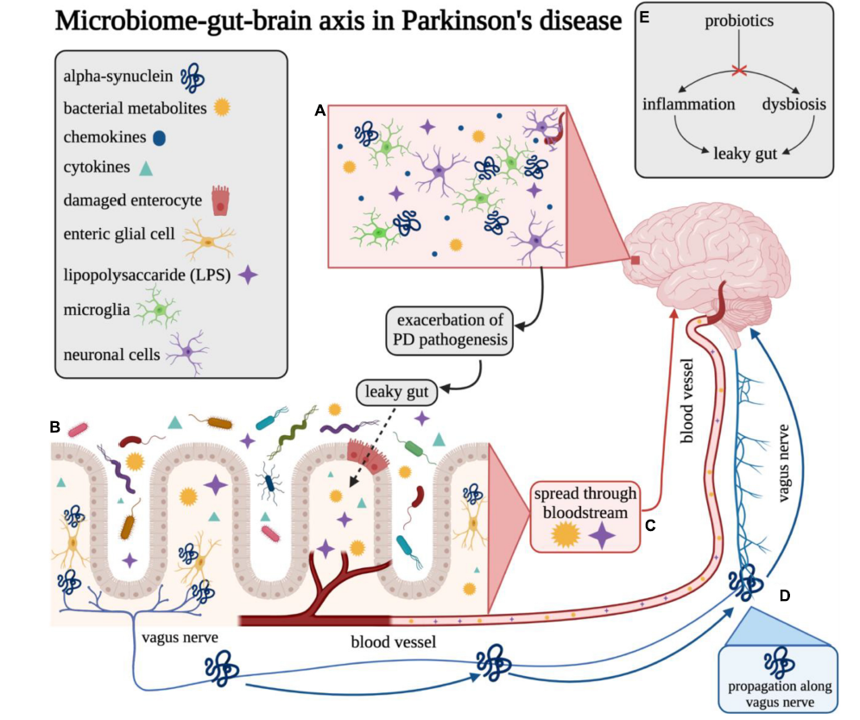
Overview of the gut–brain axis in Parkinson’s disease.
[This figure is used illustratively to demonstrate general gut–brain inflammatory and neural signalling pathways, not to imply Parkinson’s disease mechanisms in IEMT clients.]
Visual overview of the proposed microbiome–gut–brain axis in Parkinson’s disease. (A) LPS and other bacterial metabolites may be able to enter the brain across the blood–brain barrier (BBB) and may elicit the release of various chemokines/cytokines that promote an inflammatory response in Parkinson’s disease. (B) Microbes in the gut lumen can promote inflammatory pathways and cause damage to enterocytes, which may lead to compromised gut epithelial barrier integrity (“leaky gut”). (C) Bacterial metabolites, such as LPS, can translocate from the gut lumen to the bloodstream across the compromised gut barrier and cause possible systemic and neuroinflammation in the brain. (D) Misfolded a-synuclein may be induced by microbes at the intersection of the gut lumen and ENS and may be propagated to neurons in the brain through the vagus nerve. (E) Probiotic interventions are thought to reverse dysbiosis through altering the composition of the microbiome. This change is also purported to result in a reduction of inflammation and improvement of gut epithelial barrier integrity, thereby preventing or reducing microbial translocation.
Source: Klann, E. M., et al. (2022). The Gut–Brain Axis and Its Relation to Parkinson’s Disease: A Review.
Frontiers in Aging neuroscience.
License: CC BY 4.0. Created with BioRender.com.
Small Intestinal Bacterial Overgrowth (SIBO)
Small Intestinal Bacterial Overgrowth (SIBO) is a specific form of dysbiosis in which excessive bacterial populations colonise the small intestine, an area that typically contains relatively few microbes. These bacteria ferment carbohydrates prematurely, producing gas and toxins that irritate the intestinal mucosa.
Common symptoms of SIBO include bloating, abdominal discomfort, irregular bowel movements, food sensitivities, and fatigue. However, SIBO has also been associated with systemic manifestations such as anxiety, brain fog, and depressive mood in some individuals, reflecting the gut–brain axis involvement.
Mechanistically, SIBO can:
- Disrupt nutrient absorption, particularly of B vitamins and amino acids essential for neurotransmitter synthesis
- Induce low-grade inflammation and cytokine release, which influence mood regulation
- Alter tryptophan metabolism, reducing serotonin availability
- Interfere with vagal signalling and autonomic balance
Clinically, treatment of SIBO is medical and may involve antimicrobial therapy, dietary management, and probiotic supplementation. For IEMT practitioners, awareness of SIBO’s potential emotional consequences can inform a more holistic understanding of a client’s presenting state, without overstepping into diagnostic territory.
Antibiotics and Gut Microbiome Disruption
Antibiotics, while essential for treating bacterial infections, can significantly disturb the gut microbiome by reducing microbial diversity and depleting beneficial species. This disruption can lead to digestive issues, reduced immune resilience, and increased susceptibility to opportunistic infections such as Clostridioides difficile.
Most Disruptive Antibiotics:
- Clindamycin – highly disruptive; often associated with C. difficile overgrowth.
- Fluoroquinolones (e.g., ciprofloxacin, levofloxacin) – broad-spectrum; strongly affect Bacteroides and Lactobacillus species.
- Macrolides (e.g., azithromycin, clarithromycin) – can reduce Bifidobacteria and alter long-term gut composition.
- Tetracyclines (e.g., doxycycline) – inhibit a wide range of commensal bacteria and promote fungal overgrowth.
- β-lactams (e.g., amoxicillin, ampicillin, cephalosporins) – disrupt major bacterial groups, including Firmicutes and Bacteroidetes.
Recovery Considerations:
Microbial balance can take weeks to months to recover. Diets rich in prebiotic fibres, fermented foods, and, when appropriate, probiotic supplementation may help restore microbiome diversity and stability after antibiotic use.
Note: don't die from sepsis – take the antibiotics if they are prescribed for you!
Note for Practitioners
Clients with chronic digestive problems, food intolerances, or unexplained fatigue may also have emotional instability or poor body awareness. While IEMT interventions address the emotional imprinting of such experiences, practitioners should remain alert to possible physiological contributors and, where appropriate, suggest medical evaluation or nutritional support.
The Inflammation–Mood Connection
Inflammation represents one of the principal mediators linking gut dysfunction to psychological distress. Chronic circulation of pro-inflammatory cytokines can affect important neurotransmitter pathways, like the production of serotonin and dopamine, and neuroendocrine systems, like the HPA axis. Elevated inflammation is known to reduce tryptophan availability for serotonin production and increase its diversion into the kynurenine pathway, generating metabolites associated with fatigue and low mood.
The Hypothalamic–Pituitary–Adrenal (HPA) Axis
The HPA axis is the body’s central neuroendocrine stress-regulation system, linking the brain and endocrine glands in a finely tuned feedback loop that governs how we respond to threat, challenge, and emotional arousal.
When the brain perceives stress, the hypothalamus releases corticotropin-releasing hormone (CRH), which stimulates the anterior pituitary gland to secrete adrenocorticotropic hormone (ACTH). ACTH travels through the bloodstream to the adrenal cortex, prompting the release of cortisol, the primary stress hormone. Cortisol increases blood glucose, alters immune activity, and prepares the body for action, while simultaneously feeding back to the hypothalamus and pituitary to modulate its production.
Under normal conditions, this system provides adaptive short-term stress management. However, chronic activation of the HPA axis, caused by prolonged psychological stress, inflammation, or gut dysbiosis, leads to sustained cortisol elevation or, paradoxically, eventual cortisol depletion due to feedback exhaustion. Both states can produce emotional dysregulation, fatigue, anxiety, and impaired concentration.
The gut microbiota plays an important modulatory role: healthy microbial populations can dampen HPA reactivity, whereas microbial imbalance amplifies stress responses. This bidirectional feedback demonstrates the value of gut–brain communication in maintaining emotional equilibrium and resilience.

This immune-neurochemical interaction contributes to the so-called "sickness behaviour" pattern (characterised by apathy, low motivation, cognitive slowing, and social withdrawal) which can mimic or exacerbate depressive symptoms. Chronic inflammatory signalling may therefore underlie the persistent emotional dysregulation observed in some clients.
Scientific Insight: Cytokines and Emotional States
Cytokines are small protein messengers that coordinate immune responses. Pro-inflammatory cytokines such as IL-1β, IL-6, and TNF-α can influence brain function by altering neurotransmission and HPA activity. Elevated cytokine levels are consistently observed in depressive and anxiety disorders. Conversely, anti-inflammatory cytokines (e.g., IL-10) and short-chain fatty acids from beneficial bacteria help dampen this response, restoring homeostasis.
Dysbiosis and Chronic Emotional States in IEMT Practice
For IEMT practitioners, recognising the physiological context of chronic emotional patterns enhances their understanding of why certain states are resistant to change. Clients with long-standing dysbiosis or inflammatory imbalance may display emotional rigidity, fatigue, or cyclical mood patterns that correlate with digestive fluctuations. These presentations are not necessarily psychological resistance but may reflect physiological interference with neurotransmission or autonomic regulation.
During IEMT sessions, practitioners may notice kinaesthetic cues such as abdominal tension, warmth, or constriction accompanying emotionally charged memories. These visceral responses often parallel gut-derived autonomic activity and should be approached with curiosity and non-pathologising language. Integrating brief psychoeducation on gut–brain connections can normalise the experience and encourage self-care outside the therapeutic context.
Summary
- Dysbiosis and SIBO represent imbalances in gut microbiota that can influence mood and emotional regulation through inflammatory and neurochemical pathways.
- Chronic inflammation and intestinal permeability contribute to anxiety, fatigue, and depressive symptoms via cytokine and HPA axis interactions.
- Gut dysfunction can produce kinaesthetic and emotional patterns observable during IEMT sessions.
- Practitioners should remain within scope, offering awareness and referral rather than medical treatment.
Reflective Questions
- What signs in a client’s history or presentation might indicate possible gut dysbiosis or SIBO?
- How might awareness of gut-derived inflammation alter your interpretation of chronic emotional states?
- In what ways can practitioners address physiological factors indirectly through IEMT framing and self-regulation education?
Suggested Reading
- Maes, M., Kubera, M., & Leunis, J. C. (2008). The gut–brain barrier in major depression: Intestinal mucosal dysfunction and inflammation. Neuro Endocrinology Letters, 29(1), 117–124.
- Foster, J. A., & Neufeld, K. A. M. (2013). Gut–brain axis: How the microbiome influences anxiety and depression. Trends in Neurosciences, 36(5), 305–312.
- Rea, K., Dinan, T. G., & Cryan, J. F. (2016). The microbiome: A key regulator of stress and neuroinflammation. Neurobiology of Stress, 7, 124–136.