







What if a dog owner could change how they felt, to change how their dog behaved? By Janette Bishop
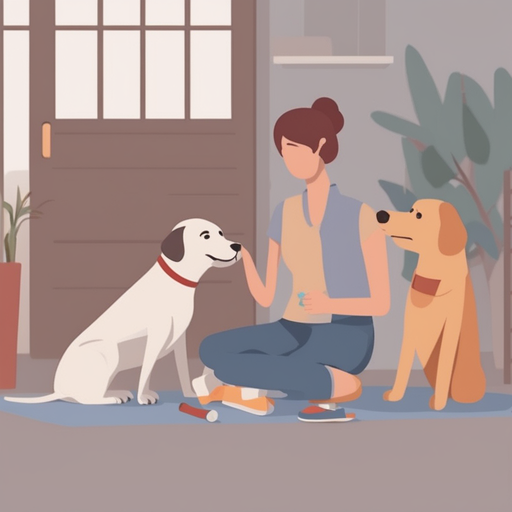
Dog owners try behaviourists, trainers, and advice on the internet to help with their dog's problems, but it doesn't always help. Through my work with dog owners, I was beginning to suspect that dogs are often just being dogs, responding to their environment and that they may not have a problem. It is a fact that dogs find themselves living in a human world, designed for humans and not for dogs.
I wanted to discover if it is actually the complexity of the dog human relationship that could sometimes be responsible for the dog's behaviour. Could the owner's emotions be affecting the dogs emotions, resulting in different responses from their dogs? Of course, there are many other factors that influence dogs behaviour including genetics, past history etc, but sometimes a well bred and raised dog can develop behavioural problems.
I could debate this theory with my behaviourist friends all day long and I wrote my canine thesis on anxiety in humans, hypothesising if it could affect dogs behaviour. But the theory didn't help me much as a behaviour practitioner for dogs. But when I trained in IEMT, it became clear I had a possible way of finding out and in turn improve the lives of many dogs.
My first volunteer was probably my most clear cut example and is available to watch on the IEMT YouTube channel. You will see how I incorporated my knowledge of dog behaviour, NLP thought structures and Social Panorama to help my subject locate the issues she was having with her dog. This gave her a glimpse of the possibility of emotional change. Then I used IEMT to hone in on the original memory that was causing these intense feelings, thoughts and emotions.
Her dog Macey was a rescue, who had been refusing walks for several months, thought to be due to leg pain. She had tried various forms of pain relief, including laser treatment and prescribed pain medication, which helped with the limp. However, for several months she still shied away from her harness before walks, despite her owner (who is a trainer) trying to carefully counter condition her to it. Her owner mentioned she herself was feeling anxious, stressed and self doubting, subtly and innocently putting pressure on her dog to go for walks. So we started the session there and discovered she was worried what other people would think if she didn't take her for walks.
Temporarily stopping walks to reduce stress would have been one of my recommendations on a normal dog consult, along with mental stimulation, gentle exercise and enrichment at home. This is often met with reservations by the owners for the same reason as it is in this case, but in a normal case a dog behaviourist can't influence their decision, because there would be values and emotions running that choice. The case could then be unsuccessful, as the full treatment plan would not be adhered to and any other training would be undermined, because the dog was still too stressed.
At the start of the IEMT session we quickly discovered that the owner was worried about the views of others, if she told them she hadn't walked her dog for weeks. This led to and came from self doubt and guilt, which had been internalised from others in her life during previous childhood events.
After using the Kinaesthetic Pattern and Identity Pattern eye movements, we can see in the video that she had dissociated from the memory enough to see the event from her past more clearly. She had age progressed from a 4 year old and discovered that she no longer cared so intensely what others thought of her.
She finished the session feeling hopeful. The very next day she texted to say the following. "Today for the first time in months and months Macey let me put her harness on and ran outside!" The IEMT results speak for themselves. Macey's owner had never done anything like this before, but was able to be guided through this method with ease. She's now still enjoying walks months later and all from a few eye movements on a memory or cluster of memories.
In another case, the owner knew logically that her dog needed to wear a muzzle, as she was concerned she would bite and would have to be put down. She had employed a behaviourist, but the underlying issue of the owner's emotional response to the muzzle, hadn't been processed or healed. This meant that there was limited improvement in the situation despite lots of hard work. The owner was deleting the positive intent of the muzzle (protecting the dog and others), because she had a belief that she had failed if her dog needed a muzzle.
So we worked on the phrase 'I feel like a failure'. Here are the results. The memory faded and a new feeling arrived. She realised that shame and fear of rejection were linked to her dog. When we worked on those feelings the new memory had moved further away and wasn't as strong anymore. She said the memory no longer felt solid. It was slippery and getting away from her. She said that before the eye movements the fear of failure had been like a walnut in her stomach and that it was just 'part of me' and 'was never going to go away', but after the eye movements it didn't feel attached any more. In an email 2 weeks later she said 'There's been real, noticeable improvements with her responses to other dogs and cats. She has been more relaxed and I feel like our relationship is improving.'
Although these cases are anecdotal, I think you'll agree they lead to exciting possibilities for dogs and their owners. I continue working as a canine behaviour practitioner, but along with other emotional change work methods, I have a powerful tool to create change in dogs from a new approach.
I am a qualified member of the Association of IEMT Practitioners and hold various other qualifications in emotional change work, including Hypnotherapy.
You can contact me on: 07527 577987
Visit my Facebook group, Help! My Mind.. Emotional Change Therapy
https://www.facebook.com/groups/894614191533327/
Visit my Facebook group, Help! My Dog..with Janette
https://www.facebook.com/groups/jbcanines/
Janette Bishop