






The Human Biome · Article 21 of 26
Urogenital and Vaginal Microbiome
Educational and scope notice
This material is for education only and does not provide medical diagnosis or treatment advice. IEMT practitioners should remain within their professional scope and refer clients to an appropriately qualified healthcare professional where medical assessment, treatment, prescribed medication, supplements or restrictive diets are involved.
The urogenital microbiome - particularly the vaginal microbiota - plays a vital role in reproductive, hormonal, and psychological health. Once considered a relatively simple bacterial environment, it is now recognised as a complex ecosystem whose balance influences fertility, immunity, and even mood regulation through neuroendocrine pathways.
Composition and Function
A healthy vaginal microbiome is typically dominated by Lactobacillus species (it's why your gran always had a live yoghurt in her fridge), which produce lactic acid and other antimicrobial factors to maintain an acidic pH (3.5–4.5). This acidic environment inhibits pathogenic bacteria, viruses, and fungi, thereby protecting against infection and inflammation. The vaginal flora works dynamically with the gut and urinary tract microbiota, forming part of a broader urogenital axis that supports reproductive and immune homeostasis.
- Lactobacillus crispatus and Lactobacillus jensenii are most associated with vaginal health and reduced infection risk.
- Gardnerella vaginalis, Atopobium vaginae, and Mobiluncus species are often associated with dysbiosis or bacterial vaginosis (BV).
- Oestrogen levels modulate vaginal glycogen availability, directly influencing bacterial composition and metabolic activity.
Bacterial Vaginosis (BV)
Bacterial vaginosis is a common condition caused by an imbalance in the vaginal microbiome, where protective Lactobacillus species are replaced by anaerobic bacteria such as Gardnerella vaginalis, Atopobium vaginae, and Mobiluncus.
This shift raises vaginal pH, leading to symptoms such as unusual discharge, odour, and discomfort, although many cases remain asymptomatic. BV is not strictly a sexually transmitted infection, but sexual activity, antibiotics, and hormonal changes can all disrupt microbial balance.
BV is associated with inflammation, pelvic discomfort, and an increased risk of STIs, miscarriage, and preterm birth. Recurrent cases often reflect deeper microbial or immune dysregulation. Supporting restoration of Lactobacillus dominance (through probiotics, diet, and stress reduction) can promote recovery and reduce recurrence, complementing medical treatment.
Hormonal Interactions and Oestrogen Metabolism
Vaginal microbial communities are closely linked to oestrogen metabolism. Oestrogen promotes glycogen deposition in epithelial cells, which feed Lactobacilli, which in turn produce lactic acid and maintain a healthy mucosal barrier. When oestrogen declines (such as during menopause, postpartum, or due to hormonal contraception), this can lead to reduced Lactobacillus populations and increased susceptibility to infection and inflammation.
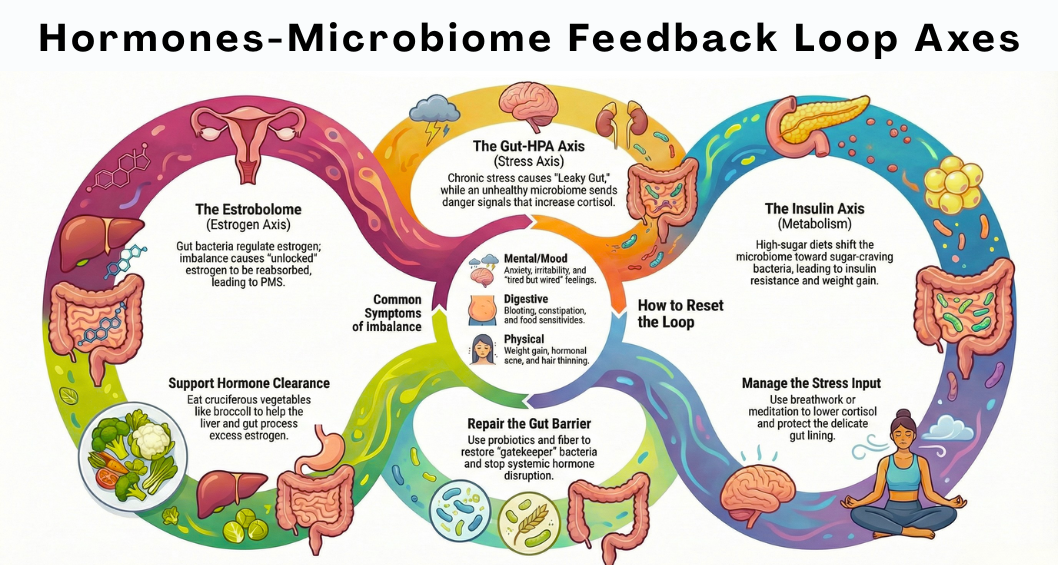
The estrobolome, a subset of gut bacteria capable of metabolising oestrogens, also affects systemic hormone balance. Dysbiosis in either the gut or vagina can disrupt oestrogen recycling, contributing to symptoms such as premenstrual mood changes, anxiety, or depressive states. This emerging connection between microbial metabolism and neuroendocrine function highlights the gut–vaginal–brain axis as an important pathway in women’s mental health.
Dysbiosis and Common Conditions
Microbial imbalance in the vaginal environment - termed vaginal dysbiosis - is associated with several gynaecological and reproductive conditions:
- Bacterial Vaginosis (BV): Characterised by reduced Lactobacillus and overgrowth of anaerobic bacteria such as Gardnerella vaginalis and Atopobium vaginae. BV is associated with pelvic inflammation, infertility, increased miscarriage risk, and preterm birth. It also increases susceptibility to sexually transmitted infections (STIs).
- Polycystic Ovary Syndrome (PCOS): Women with PCOS often exhibit both gut and vaginal dysbiosis, with elevated inflammatory markers and androgen imbalance. Altered microbial metabolism may contribute to insulin resistance and mood instability, which are commonly seen in PCOS.
- Recurrent Urinary Tract Infections (UTIs): Loss of vaginal Lactobacillus protection allows colonisation by uropathogenic Escherichia coli. Supporting microbial balance—through medical treatment, appropriate probiotics, lifestyle factors, and stress reduction—can promote recovery and reduce recurrence. (hence Granny's live yoghurts).
Polycystic Ovary Syndrome (PCOS)
PCOS is a common endocrine–metabolic disorder affecting around 1 in 10 women of reproductive age. It is characterised by irregular or absent ovulation, elevated androgens (male hormones), and multiple small ovarian follicles that are visible on ultrasound. Diagnosis is based on a combination of clinical features, biochemical findings, and ultrasound criteria.
Symptoms often include irregular periods, acne, weight gain, hair thinning or excess hair growth, and fertility difficulties. Beyond reproduction, PCOS is associated with insulin resistance, chronic low-grade inflammation, and an increased risk of type 2 diabetes and metabolic syndrome.
Emerging evidence shows that gut and vaginal microbiome imbalance may interact with hormonal and metabolic regulation in PCOS, potentially influencing mood, appetite, and stress responses. Supporting microbial balance through diet, lifestyle, and emotional regulation (alongside medical guidance) may help support hormonal regulation and psychological wellbeing.
Links to Mental Health and the Gut–Vaginal Axis
Emerging research reveals bidirectional communication between the vaginal microbiome, the gut microbiome, and the central nervous system. This gut–vaginal–brain axis involves immune signalling, hormone metabolism, and microbial metabolites that influence neurotransmitter systems such as serotonin and GABA. Dysbiosis within this axis may contribute to mood disorders, anxiety, and sexual dysfunction through:
- Reduced oestrogen metabolism and impaired tryptophan–serotonin pathways.
- Increased systemic inflammation and altered cytokine signalling.
- Disturbances in the hypothalamic–pituitary–gonadal (HPG) axis and stress reactivity.
Several studies have linked bacterial vaginosis and hormonal dysregulation with elevated rates of anxiety, irritability, and depressive symptoms. Conversely, some studies have associated improved mood and emotional stability with the restoration of microbial balance through probiotic therapy or lifestyle interventions.
Implications for IEMT Practitioners
While Integral Eye Movement Technique (IEMT) does not directly target biological processes, understanding the interplay between microbial health, hormones, and emotional regulation can deepen a practitioner’s systemic awareness. Clients presenting with chronic stress, fatigue, or emotional volatility linked to hormonal or reproductive factors may be experiencing underlying dysbiosis affecting the gut–vaginal axis.
IEMT interventions can be applied to reduce chronic stress responses and facilitate re-patterning of emotional imprints associated with body-based symptoms. Practitioners might also encourage clients to explore complementary lifestyle support (such as diet, probiotic supplementation, or medical consultation) to help restore microbial and hormonal balance.
Emerging Research and Future Directions
Recent studies highlight that microbiome-targeted therapies, including vaginal probiotics and dietary modulation, may improve not only reproductive outcomes but also mental well-being. For example:
- Restoration of Lactobacillus crispatus dominance correlates with reduced inflammation and improved sexual health scores.
- Oestrogen replacement combined with probiotic therapy enhances vaginal pH and reduces anxiety-like behaviour in animal models, with human relevance still under investigation.
- Integrative approaches that consider the gut–vaginal axis show promise for managing conditions like PCOS, endometriosis, and perimenopausal mood instability.
Understanding this axis opens new perspectives for mind–body therapies like IEMT, providing practitioners with insights into how physiological and microbial states may influence emotional resilience, self-regulation, and chronicity patterns.
Key Takeaway
The vaginal and urogenital microbiome plays a central role in reproductive health, hormonal regulation, and mood balance. Dysbiosis in this ecosystem can contribute to gynaecological conditions and affect emotional well-being through the gut–vaginal–brain axis. Integrative awareness of these mechanisms supports a more holistic therapeutic approach: combining microbiome health, hormonal stability, and emotional processing for optimal well-being.
References
- Baker, J.M., Al-Nakkash, L., & Herbst-Kralovetz, M.M. (2017). Estrogen–gut microbiome axis: Physiological and clinical implications. Maturitas, 103, 45–53.
- Baker, J.M., Chase, D.M., Herbst-Kralovetz, M.M. (2018). Uterine Microbiota: Residents, Tourists, or Invaders? Front Immunol. 2;9:208.
- Chen, X., et al. (2021). The Female Vaginal Microbiome in Health and Bacterial Vaginosis. Frontiers in Cellular and Infection Microbiology, 11: 631972.
- Torres, P. J., et al. (2018). Gut Microbial Diversity in Women With Polycystic Ovary Syndrome Correlates With Hyperandrogenism. The Journal of Clinical Endocrinology & Metabolism, 103 (4), 1502–1511.
- Hokanson, K. C., et al. (2024). Sex shapes gut–microbiota–brain communication and disease. Trends in Microbiology, 32(2), 151–161.
- Xu P, Mageswaran UM, et al. (2025). Roles of probiotics against HPV through the gut-vaginal axis. Int J Gynaecol Obstet, 169(1), 1-8.