







The Human Biome · Article 1 of 26
Introduction to the Gut–Brain Axis
Educational and scope notice
This material is for education only and does not provide medical diagnosis or treatment advice. IEMT practitioners should remain within their professional scope and refer clients to an appropriately qualified healthcare professional where medical assessment, treatment, prescribed medication, supplements or restrictive diets are involved.
The connection between the gut and the brain is one of the most significant discoveries in modern neuroscience and psychophysiology. Far from being a simple digestive organ, the human gut is a complex ecosystem that hosts trillions of microorganisms which continuously communicate with the central nervous system. This relationship, known as the microbiota–gut–brain axis, plays a vital role in regulating mood, cognition, stress response, and emotional processing.
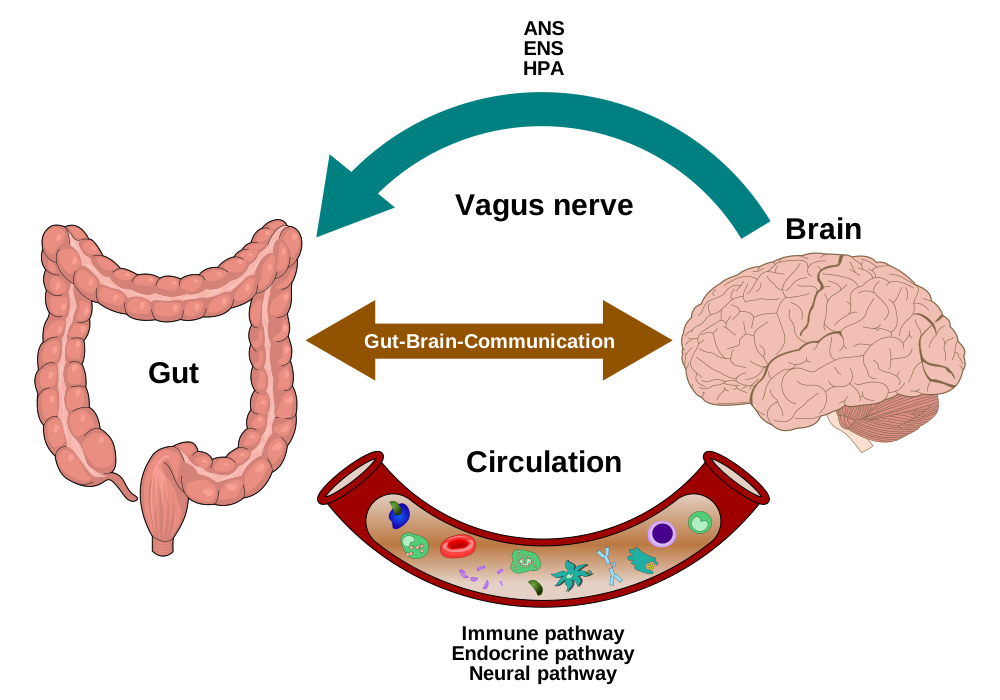
Source: Suganya, K., Kanmani, P., & Koo, B.-S. (2020). Schematic diagram showing the communication between the gut and brain.
Attribution:
Attribution: Suganya, Kanmani, and Byung-Soo Koo, Thinkpins Mister Pommeroy Vectorization: Mrmw, CC BY-SA 4.0, via Wikimedia Commons.

The Human Biome
The term 'biome' refers to the total ecological community of microorganisms - including bacteria, archaea, fungi, protozoa, and viruses - that coexist within and upon the human body. These microbial populations collectively constitute the human microbiota, while their collective genetic content is referred to as the microbiome. Estimates suggest that microbial cells within the human host are roughly equivalent in number to, or may slightly exceed, human somatic and germ cells, and that the microbiome contains more than 100 times the number of genes found in the human genome.
The gut microbiota is the most densely populated and metabolically active microbial ecosystem in the body, harbouring over 1,000 species that together form a dynamic symbiotic relationship with the host. These microorganisms perform a multitude of essential physiological functions, including:
- The fermentation of indigestible polysaccharides and fibres into short-chain fatty acids (SCFAs), such as acetate, propionate, and butyrate, which provide energy for colonocytes and influence systemic metabolism;
- The modulation of immune tolerance through the regulation of T-cell differentiation and cytokine production; and
- The synthesis of neuroactive compounds, including serotonin, dopamine, acetylcholine, and gamma-aminobutyric acid (GABA), thereby influencing neural signalling within the gut–brain axis.
Through these biochemical and immunological pathways, the gut microbiota contributes directly to homeostatic regulation of both bodily and psychological processes, positioning it as a fundamental determinant of emotional and cognitive health.
Understanding T-Cell Differentiation and Cytokine Production
T-cells (or T-lymphocytes) are a class of white blood cells that play a central role in the body’s adaptive immune response. They originate from stem cells in the bone marrow and mature within the thymus, where they undergo a process known as differentiation: developing into specialised subtypes such as helper T-cells (CD4⁺), cytotoxic T-cells (CD8⁺), and regulatory T-cells (Tregs). Each subtype has distinct functions for recognising pathogens, coordinating immune defences, and maintaining immune tolerance.
Cytokines are small signalling proteins secreted by immune cells, including T-cells, macrophages, and dendritic cells. They act as chemical messengers that regulate inflammation, immune activation, and communication between cells. Different cytokines can either promote inflammation (pro-inflammatory) or suppress it (anti-inflammatory), and the balance between these signalling molecules is critical for overall immune and emotional homeostasis.
In the context of the gut–brain axis, certain gut microbes influence T-cell differentiation and cytokine release, thereby modulating both local intestinal immunity and systemic inflammatory responses that can affect mood and cognition.
From “Gut Feelings” to Modern Science
Historically, the gut has been regarded as a centre of instinctive awareness and emotional intuition, a perception captured in common expressions such as “gut feeling”, “butterflies in the stomach”, and “a sinking feeling”. Modern neuroscience has provided substantial empirical validation for these observations. The gastrointestinal tract is now recognised as a highly complex neurophysiological system that both responds to and modulates affective and cognitive processes.
At the core of this relationship lies the enteric nervous system (ENS), a vast network comprising approximately 100 million neurones embedded within the walls of the gastrointestinal tract. The ENS possesses intrinsic reflex circuits capable of independent sensory processing, motor coordination, and neurotransmitter activity. Although it operates autonomously, the ENS maintains continuous, bidirectional communication with the central nervous system (CNS) via multiple signalling routes, most notably the vagus nerve, the hypothalamic–pituitary–adrenal (HPA) axis, and immune–cytokine pathways.
Through this integrated communication system - often referred to as the microbiota–gut–brain axis - the gut exerts measurable influence on mood, cognition, and behaviour. Neural signals from the viscera inform limbic and cortical regions involved in emotional regulation, while descending signals from the brain modulate gut motility, secretion, and immune responses. This dynamic interaction forms the neurobiological substrate underlying visceral sensations associated with emotion, thereby transforming long-standing metaphors of “gut instinct” into demonstrable psychophysiological phenomena.
Pathways of Communication
- Neural pathways: The vagus nerve serves as the primary communication channel between the gut and the brain. Around 80% of vagal fibres are afferent, meaning that information flows predominantly from the gut to the brain rather than the reverse.
- Endocrine pathways: Gut hormones such as ghrelin, leptin, and peptide YY influence appetite, mood, and energy regulation.
- Immune pathways: Microbiota regulate the production of cytokines—chemical messengers that influence inflammation, mood, and cognition.
- Metabolic pathways: Microbial metabolites, such as short-chain fatty acids (SCFAs), directly affect blood–brain barrier integrity and neurotransmitter synthesis.
The Emotional Dimension of the Gut
From an IEMT perspective, the gut can be understood both metaphorically and physiologically as a centre of kinaesthetic awareness. Emotional states frequently register as visceral sensations (such as tightness, nausea, heaviness, or warmth) reflecting the embodied nature of affective processing. Growing evidence suggests that disturbances in the biome are associated with increased emotional reactivity, anxiety, or emotional numbing, likely mediated through immune, neurochemical, and vagal signalling pathways. Conversely, chronic emotional stress is known to alter gut motility, intestinal permeability, and microbiota composition, thereby establishing a reciprocal feedback loop between body and mind.
Visceral hypersensitivity
Visceral hypersensitivity is an increased sensitivity of the internal organs (particularly within the gastrointestinal tract) to normal sensations or stimuli. It means that signals from the gut, such as stretching or movement, are perceived as painful or uncomfortable, even when they wouldn’t cause discomfort in most people. This phenomenon is commonly seen in conditions like irritable bowel syndrome (IBS) and is thought to result from altered communication between the gut and the brain (the gut–brain axis).
Potential role of enterochromaffin cells in early life stress-induced irritable bowel syndrome

Abbreviations: DC (dendritic cell); Hrh (histamine H receptor); TGR5 (G protein-coupled receptor 5); FFAR (free fatty acid receptor); NGF (neurotrophic factors).
Source: Tao, E., Zhu, Z., Hu, C., Long, G., Chen, B., Guo, R., Fang, M., & Jiang, M. (2022). Potential Roles of Enterochromaffin Cells in Early Life Stress-Induced Irritable Bowel Syndrome. Frontiers in Cellular Neuroscience, 16, 837166.
Licence: CC BY 4.0.
The Relevance of the Gut–Brain Axis to IEMT Practitioners
IEMT practitioners frequently work with clients who experience chronic emotional states, anxiety, or trauma-related symptoms. Increasing evidence suggests that gut imbalance or dysbiosis can contribute to such presentations through inflammatory or neurochemical mechanisms. While IEMT interventions focus on changing kinaesthetic and visual imprints, understanding the biological backdrop of the gut–brain relationship allows practitioners to appreciate why certain emotional patterns may persist or fluctuate.
Practitioners are not expected to diagnose or treat gastrointestinal conditions. However, an informed awareness of gut health offers valuable context when exploring a client’s emotional physiology. For example, practitioners may notice that certain clients display heightened visceral responses, such as stomach tension or nausea, during emotional recall. These signals may represent both metaphorical and biological expressions of dysregulated gut–brain communication.
Summary
- The gut–brain axis represents a bidirectional communication system between the digestive system and the central nervous system.
- The gut microbiota influences emotion, cognition, and behaviour through neural, immune, endocrine, and metabolic mechanisms.
- Emotional stress can alter gut function and microbiota balance, creating reciprocal influences on emotional states.
- For IEMT practitioners, awareness of gut–brain interactions enhances understanding of kinaesthetic responses and chronic emotional patterns.
Reflective Questions
- How do you notice gut-based sensations presenting during IEMT sessions?
- In what ways might chronic stress or poor diet contribute to the emotional patterns your clients experience?
- How could you integrate awareness of gut physiology into your therapeutic framing without overstepping into medical territory?
Suggested Reading
- Cryan, J. F., & Dinan, T. G. (2012). Mind-altering microorganisms: The impact of the gut microbiota on brain and behaviour. Nature Reviews Neuroscience, 13(10), 701–712.
- Mayer, E. A. (2016). The Mind–Gut Connection. Harper Wave.
- Foster, J. A., Rinaman, L., & Cryan, J. F. (2017). Stress and the gut–brain axis: Regulation by the microbiome. Neurobiology of Stress, 7, 124–136.
Brilliant and insightful read, thank you for taking the time to produce this- gut health is key!