







The Human Biome · Article 25 of 26
Effects of Different Antibiotics on the Human Microbiome
Educational and scope notice
This material is for education only and does not provide medical diagnosis or treatment advice. IEMT practitioners should remain within their professional scope and refer clients to an appropriately qualified healthcare professional where medical assessment, treatment, prescribed medication, supplements or restrictive diets are involved.
Do not start, stop, change or avoid prescribed antibiotics on the basis of this material. Decisions about antibiotic treatment should be made with the prescribing clinician.
Antibiotics are vital for treating bacterial infections, yet extensive research shows they also reshape the human microbiome. These ecological disturbances can influence digestion, immune function, metabolic pathways, and susceptibility to opportunistic infections. The scale and duration of these effects vary across antibiotic classes, depending on antimicrobial spectrum, pharmacokinetics, dose, and treatment duration.
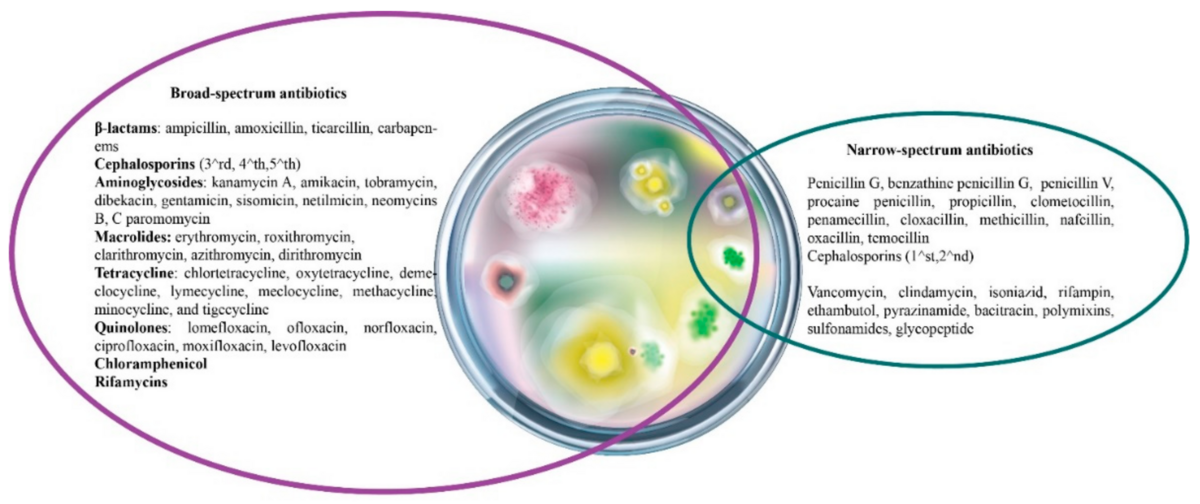
Date: 2021. Source: https://www.mdpi.com/2079-6382/10/4/401
Author: Daniel Florin Pancu ,Alexandra Scurtu ,Ioana Gabriela Macasoi,Daniela Marti ,Marius Mioc ,Codruta Soica,Dorina Coricovac ,Delia Horhat,Marioara Poenaru,Cristina Dehelean
General Patterns of Microbiome Disruption
- Broad-spectrum antibiotics produce the most significant and most prolonged reductions in bacterial diversity.
- Narrow-spectrum agents still cause measurable ecological shifts but typically allow faster recovery.
- Bactericidal agents often reduce abundance more sharply than bacteriostatic drugs.
- Short courses can still produce sustained compositional changes, particularly in low-diversity microbiomes.
- Repeated or long-term exposure increases the likelihood of enduring dysbiosis.
| Antibiotic Class | Examples | Spectrum | Impact on Microbiome | Recovery Time | Notable Clinical Concerns |
|---|---|---|---|---|---|
| Penicillins | Penicillin V, Amoxicillin, Amoxicillin–Clavulanate | Narrow → Broad | Moderate disruption; broad formulations reduce Bifidobacterium and increase resistant strains. | Weeks; sometimes longer with broad-spectrum forms. | Opportunistic overgrowth with clavulanate-containing drugs. |
| Cephalosporins | Cefuroxime, Ceftriaxone, Cefixime | Broad | Large reduction in diversity; strong impact on anaerobes. | Months in some cases. | High association with C. difficile infection. |
| Macrolides | Azithromycin, Clarithromycin, Erythromycin | Broad (but tissue-specific) | Reduces Bifidobacterium and Lactobacillus; increases macrolide-resistant taxa. | Months; persistent changes seen in childhood exposure. | Selection for long-lasting resistance genes. |
| Fluoroquinolones | Ciprofloxacin, Levofloxacin | Very Broad | Marked reduction in richness and evenness; major ecological disturbance. | Months; some taxa never fully recover. | High risk of opportunistic pathogen expansion. |
| Tetracyclines | Doxycycline, Minocycline | Broad | Moderate disruption; shifts in gut, oral, and skin microbiota. | Generally weeks; varies by course length. | Increase in resistant Enterobacteriaceae. |
| Lincosamides | Clindamycin | Broad (anaerobe-targeting) | Severe reduction of anaerobic commensals including Bacteroides. | Months to over a year in some studies. | Very high C. difficile risk. |
| Carbapenems | Meropenem, Imipenem | Ultra-Broad | Extensive depletion across gut phyla; major shifts in metabolic pathways. | Prolonged recovery; often incomplete. | Expansion of carbapenem-resistant organisms. |
| Aminoglycosides | Gentamicin, Amikacin | Narrow (mainly Gram-negative) | Minimal gut impact when systemic; major changes when given orally for decontamination. | Varies; minimal gut effects unless oral. | Selective pressure in respiratory or urogenital sites. |
| Sulfonamides & Trimethoprim | Co-trimoxazole | Moderate Broad | Moderate reductions in susceptible Gram-negatives. | Typically weeks. | Resistance selection during prolonged use. |
| Glycopeptides | Vancomycin (oral vs IV) | Narrow (Gram-positive) | IV: minimal gut effect. Oral: profound depletion of Gram-positive commensals. | Months after oral treatment. | Sustained ecological imbalance after oral use. |
Beta-Lactams
What Are Beta-lactams?
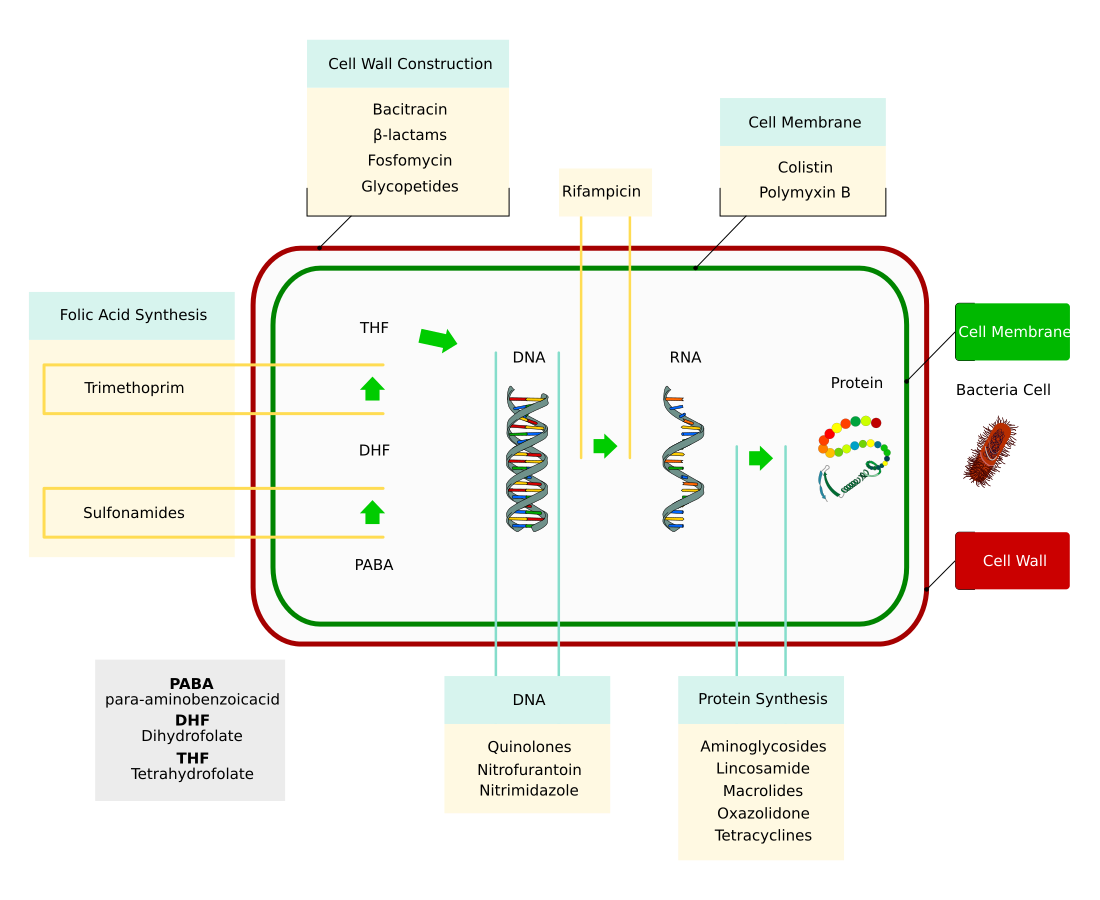
Beta-lactams are a large family of antibiotics defined by the presence of a beta-lactam ring in their chemical structure. This ring is essential to their ability to kill bacteria. They work by binding to and inhibiting bacterial enzymes known as penicillin-binding proteins, which are required for constructing and maintaining the peptidoglycan cell wall (i.e. a complex polymer found in the cell walls of most bacteria, composed of unique chains of sugars and amino acids that form a mesh-like layer.) Without a functioning cell wall, bacteria weaken and eventually rupture under internal pressure.
The beta-lactam group includes penicillins, cephalosporins, carbapenems, and monobactams. Although their spectra differ, they share the same core mechanism of action. Beta-lactams are among the most widely used antibiotics in clinical practice because they are generally effective, well-tolerated, and safe across many populations. However, misuse and overuse have driven the evolution of resistance mechanisms, particularly the production of beta-lactamase enzymes that break open the beta-lactam ring and render these drugs inactive.
Penicillins
Traditional penicillins (e.g., phenoxymethylpenicillin) are narrow-spectrum and exert moderate effects on gut diversity, primarily reducing susceptible Gram-positive taxa. Amoxicillin and amoxicillin–clavulanate have broader impacts, often reducing Bifidobacterium and promoting overgrowth of resistant organisms. Recovery typically occurs within weeks but may remain incomplete in some individuals.
Cephalosporins
Cephalosporins (especially second- to fourth-generation agents) produce substantial reductions in gut microbial diversity. They are strongly associated with loss of colonisation resistance and increased risk of Clostridioides difficile overgrowth due to their broad Gram-positive and Gram-negative activity. Microbiome recovery can take months.
Macrolides
What Are Macrolides?
Macrolides are a class of antibiotics characterised by a large, macrocyclic lactone ring. They bind to the 50S subunit of the bacterial ribosome, blocking protein synthesis. By preventing bacteria from producing essential proteins, macrolides inhibit bacterial growth and replication, making them primarily bacteriostatic (i.e. no growth); however, they can be bactericidal against certain organisms at higher concentrations (i.e. murders them).
Because they achieve high tissue penetration, macrolides can significantly influence the microbiome, particularly in the gut and respiratory tract. Their use is associated with reductions in beneficial bacterial groups and increased carriage of macrolide-resistance genes, with some ecological changes persisting long after treatment.
Common macrolides include azithromycin, clarithromycin, and erythromycin. They are widely used to treat respiratory, skin, and soft-tissue infections, as well as certain sexually transmitted infections. Macrolides also have notable anti-inflammatory and immunomodulatory properties, which contribute to their use in chronic airway diseases such as asthma or COPD.
Macrolides (e.g., azithromycin, clarithromycin) consistently reduce key commensal genera such as Bifidobacterium and Lactobacillus, while enabling expansion of macrolide-resistant species. Evidence from longitudinal studies shows macrolide exposure in early childhood is associated with persistent shifts in gut community structure and increased antibiotic resistance gene carriage.
Fluoroquinolones
What Are Fluoroquinolones?
Fluoroquinolones are a class of broad-spectrum antibiotics distinguished by their fluorinated quinolone structure. They act by inhibiting two essential bacterial enzymes, DNA gyrase and topoisomerase IV, required for DNA replication, transcription, and repair. By blocking these enzymes, fluoroquinolones cause lethal damage to bacterial DNA, making them strongly bactericidal.
Common examples include ciprofloxacin, levofloxacin, and moxifloxacin. They are used to treat a wide range of infections, including urinary tract infections, gastrointestinal infections, respiratory illnesses, and some invasive Gram-negative infections. Their broad coverage, high oral bioavailability, and deep tissue penetration made them extremely popular, although safety restrictions have increased in recent years due to concerns about side effects.
Fluoroquinolones exert some of the most profound effects on the human microbiome. A single course can markedly reduce microbial diversity, disrupt major commensal groups, and alter metabolic activity. Recovery may take months, and some taxa fail to return entirely. Their use also strongly selects for resistant Gram-negative organisms and can increase susceptibility to opportunistic infections.
Fluoroquinolones (e.g., ciprofloxacin, levofloxacin) are among the most disruptive antibiotic classes. A single course can significantly reduce microbial richness and alter metabolic activity, with some taxa failing to recover even after six months. Their broad-spectrum, bactericidal action exerts strong selective pressure, increasing the risk of opportunistic pathogen expansion.
Tetracyclines
What Are Tetracycines?
Tetracyclines are a class of broad-spectrum antibiotics defined by their four-ring molecular structure (i.e. tetra = 4, cycline = rings). They bind to the 30S subunit of the bacterial ribosome, blocking the attachment of transfer RNA (tRNA) during protein synthesis. This prevents bacteria from producing the proteins they need to grow and replicate, making tetracyclines primarily bacteriostatic.
Common members of this class include doxycycline, minocycline, and tetracycline itself. They are used to treat a wide variety of infections, including respiratory tract infections, acne and other skin conditions, zoonotic infections (such as Lyme disease), and some intracellular pathogens like Rickettsia and Chlamydia. Their ability to accumulate inside cells makes them particularly effective against organisms that survive within host tissues.
Tetracyclines have documented effects on the human microbiome. They can alter both gut and oral microbial communities by reducing susceptible Gram-positive and Gram-negative bacteria. Their use is associated with increases in resistant Enterobacteriaceae, shifts in skin microbiota, and changes in metabolic activity. Although microbiome recovery is generally quicker than with fluoroquinolones, repeated or long-term use can lead to persistent ecological changes and increased antimicrobial resistance.
Tetracyclines (e.g., doxycycline, minocycline) alter gut and oral microbiota by reducing susceptible Gram-positive and Gram-negative organisms. They are associated with increases in resistant Enterobacteriaceae and shifts in skin microbiota. Although recovery is generally faster than with fluoroquinolones, repeated courses contribute to long-term resistance patterns.
Lincosamides
What Are Lincosamides?
Lincosamides are a class of antibiotics that inhibit bacterial protein synthesis by binding to the 50S subunit of the bacterial ribosome. This blocks the elongation of peptide chains, preventing bacteria from producing essential proteins. Lincosamides are primarily bacteriostatic, although they can be bactericidal at high concentrations against certain organisms.
The most clinically meaningful lincosamide is clindamycin, with lincomycin used far less frequently today. Clindamycin is effective against many Gram-positive bacteria and a wide range of anaerobes, which makes it valuable for treating deep tissue infections, dental infections, bone and joint infections, and infections involving anaerobic organisms.
Lincosamides have well-documented and significant effects on the human microbiome. Clindamycin, in particular, can drastically reduce populations of key anaerobic commensals such as Bacteroides species. This loss of microbial diversity weakens colonisation resistance and creates ecological conditions that favour the overgrowth of opportunistic pathogens, especially Clostridioides difficile. Because of this, clindamycin is one of the antibiotics most strongly associated with C. difficile infection. Microbiome recovery after lincosamide therapy can take many months, and in some cases, remains incomplete.
Clindamycin is one of the most disruptive antibiotics for the gut microbiome. It profoundly reduces anaerobic commensals, including Bacteroides species, often for months or longer. Its association with Clostridioides difficile infection is well documented and stems from loss of colonisation resistance and selective pressures favouring toxin-producing strains.
Carbapenems
What Are Carbapenems?
Carbapenems are a class of ultra–broad-spectrum β-lactam antibiotics designed to withstand many forms of bacterial resistance, including most β-lactamase enzymes. They bind strongly to multiple penicillin-binding proteins, thereby disrupting the synthesis of the bacterial cell wall. This leads to rapid bacterial death, making carbapenems highly bactericidal. Their structural stability and potent activity make them often reserved for severe or hospital-acquired infections.
Common carbapenems include meropenem, imipenem, ertapenem, and doripenem. They are used for complicated intra-abdominal infections, sepsis, multidrug-resistant Gram-negative infections, and life-threatening conditions where other antibiotics may fail. Because of their critical role, they are among the most tightly controlled antibiotic classes in clinical practice.
Carbapenems exert profound effects on the human microbiome due to their broad spectrum of activity. They dramatically reduce microbial diversity across major gut phyla, including both anaerobic and aerobic commensals. Their use often leads to ecological domination by carbapenem-resistant Enterobacteriaceae or other hospital-associated pathogens, driven by intense selective pressure. Recovery of the microbiome after carbapenem exposure is typically slow and may remain incomplete, especially during prolonged treatment courses. Their impact on metabolic pathways and colonisation resistance highlights the importance of cautious, judicious use.
Carbapenems (e.g., meropenem, imipenem) cause extensive depletion of gut microbial diversity due to their ultra-broad-spectrum activity. They commonly lead to the expansion of carbapenem-resistant Enterobacteriaceae and other hospital-associated pathogens. Recovery can be slow and incomplete, especially during prolonged treatment courses.
Aminoglycosides
What Are Aminoglycosides?
Aminoglycosides are a class of antibiotics that target bacterial protein synthesis by binding to the 30S ribosomal subunit. They cause misreading of messenger RNA, leading to the production of faulty proteins and ultimately resulting in bacterial cell death. Unlike many protein synthesis inhibitors, aminoglycosides are highly bactericidal. Their activity is oxygen-dependent, which means they are effective mainly against aerobic Gram-negative bacteria.
Common aminoglycosides include gentamicin, amikacin, tobramycin, and streptomycin. They are usually administered intravenously because they are poorly absorbed from the gastrointestinal tract. Clinically, they are used for severe infections such as sepsis, complicated urinary tract infections, hospital-acquired pneumonia, and some instances of endocarditis. Their use often requires therapeutic drug monitoring due to the risks of nephrotoxicity and ototoxicity.
Aminoglycosides have a limited direct impact on the gut microbiome when given systemically, because little of the drug reaches the intestinal lumen. However, when administered orally for bowel decontamination - such as in some preoperative or intensive-care settings - they significantly reduce susceptible Gram-negative organisms and can alter community structure. Even with systemic use, changes in the respiratory or urogenital microbiota may still occur due to drug distribution in those tissues. Although less disruptive to the gut than broad-spectrum antibiotics, aminoglycosides still exert selective pressure on resistant Gram-negative pathogens.
Aminoglycosides have limited oral bioavailability and therefore exert little direct effect on gut microbiota when administered systemically. However, when given orally for bowel decontamination, they profoundly reduce Gram-negative organisms. Systemic aminoglycosides may still influence respiratory or urogenital microbiota due to tissue distribution.
Sulfonamides and Trimethoprim
What Are Sulfonamides and Trimethoprim?
Sulfonamides and trimethoprim are antibiotics that work by blocking sequential steps in bacterial folate synthesis, a pathway essential for nucleic acid synthesis. Sulfonamides inhibit the incorporation of para-aminobenzoic acid into dihydropteroic acid, while trimethoprim blocks the enzyme dihydrofolate reductase. When used together (as co-trimoxazole), they produce a synergistic, largely bactericidal effect.
This combination is used to treat a wide range of infections, including urinary tract infections, Pneumocystis pneumonia, certain gastrointestinal infections, and some respiratory illnesses. Their selective effects on folate metabolism make them ineffective against organisms that do not rely on this pathway or that can scavenge folate from the environment.
Sulfonamides and trimethoprim exert a moderate impact on the human microbiome. They reduce susceptible Gram-negative species and can shift community composition, though the disruption is generally less severe than that caused by fluoroquinolones or clindamycin. Prolonged or repeated use can select for resistant Enterobacteriaceae and increase the carriage of trimethoprim-resistance genes. In most individuals, gut microbiome recovery occurs within weeks, although longer courses may lead to more persistent ecological changes.
Co-trimoxazole has moderate effects on microbiome composition, reducing the abundance of susceptible Gram-negative organisms. It is less disruptive than fluoroquinolones or clindamycin, but can promote the emergence of resistant strains and reduce beneficial taxa during extended use.
Glycopeptides
What Are Glycopeptides?
Glycopeptides are a class of antibiotics that inhibit bacterial cell wall synthesis by binding tightly to the D-Ala–D-Ala termini of peptidoglycan precursors. This prevents the formation of a functional cell wall, leading to bacterial death. They are primarily effective against Gram-positive organisms because their large molecular size prevents them from crossing the outer membrane of Gram-negative bacteria.
The best-known glycopeptide is vancomycin, which is widely used for serious infections caused by resistant Gram-positive organisms, including methicillin-resistant Staphylococcus aureus (MRSA) and Enterococcus species. Teicoplanin is another clinically used agent, though less common in some regions.
Glycopeptides have very different effects on the microbiome depending on the route of administration. Intravenous vancomycin has a minimal direct impact on the gut microbiota because it does not achieve significant concentrations in the intestinal lumen. In contrast, oral vancomycin (used to treat Clostridioides difficile infection) produces profound changes. It substantially reduces many Gram-positive commensals, disrupts ecological balance, and can lead to long-lasting reductions in microbial diversity. These shifts may persist long after treatment ends and can promote the expansion of resistant organisms.
Intravenous vancomycin has a limited impact on the gut microbiome due to poor intestinal penetration. However, oral vancomycin, used to treat C. difficile - dramatically reduces many Gram-positive commensals and can produce long-lasting ecological imbalance. Its effects on microbial diversity often persist after treatment completion.
Clinical Implications
- Reduced colonisation resistance increases susceptibility to pathogens such as C. difficile, Klebsiella, and Pseudomonas.
- Immune modulation occurs as microbial signals involved in maintaining mucosal immunity are diminished.
- Metabolic alterations include changes to short-chain fatty acid production and bile acid metabolism.
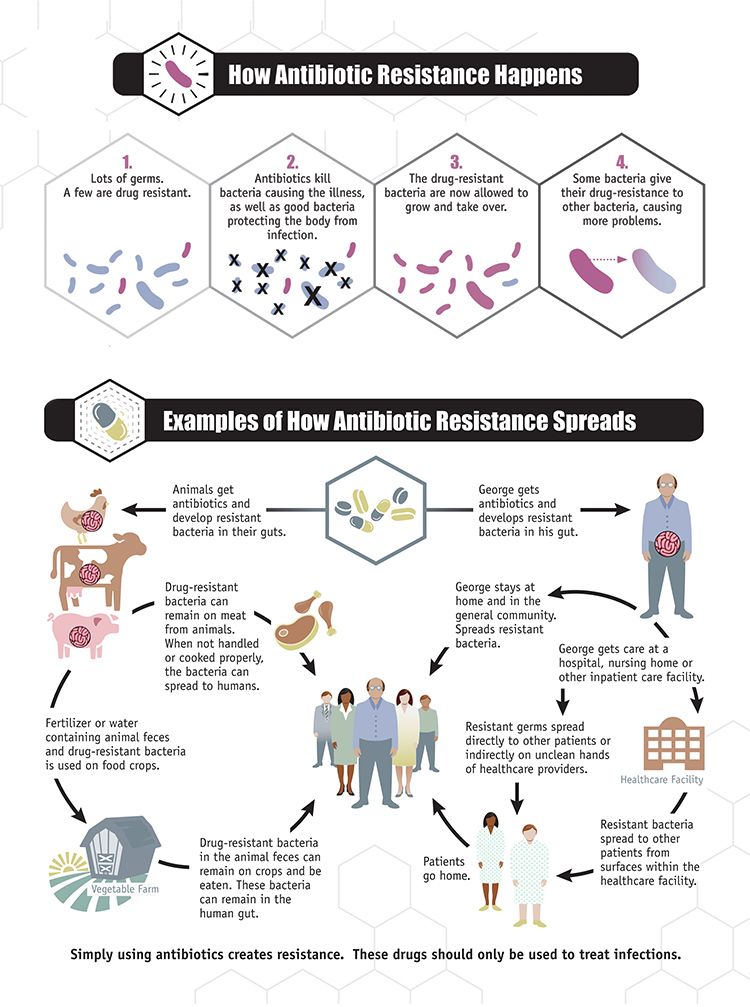
- Resistance gene selection increases with broad-spectrum or repeated antibiotic exposure.
Recovery and Resilience
Microbiome recovery depends on baseline diversity, age, diet, and cumulative exposure. Some taxa recover within weeks, whereas others remain depleted for months or fail to return entirely. Evidence suggests that maintaining a fibre-rich diet supports reconstitution of commensal populations following treatment.